Donald Trump’s post-midterm shakeup at the White House points to a narrower but more politically dangerous course on immigration: a harder-edged enforcement team paired with a tacit admission that the previous approach cost him support.
Trump immigration shift lifts dollar, automation stocks
White House Policy Direction
That matters because immigration was not just a campaign issue, but a fault line running through labor markets, consumer demand and the broader policy mix. If Trump is replacing his chief of staff while floating a successor known as a “hardliner” against illegal immigration, investors should read it as an attempt to regain political control without abandoning one of the administration’s defining priorities.
Sentiment Indicators
The economic stakes are broader than the politics. A crackdown that tightens the flow of undocumented workers can ripple through agriculture, construction, logistics, hospitality and food service — sectors already sensitive to labor shortages, wage pressure and turnover. At the same time, a more selective recalibration, rather than a wholesale rollback, suggests the White House may be trying to preserve the deterrent effect while reducing the political damage that helped produce the heavy defeat.
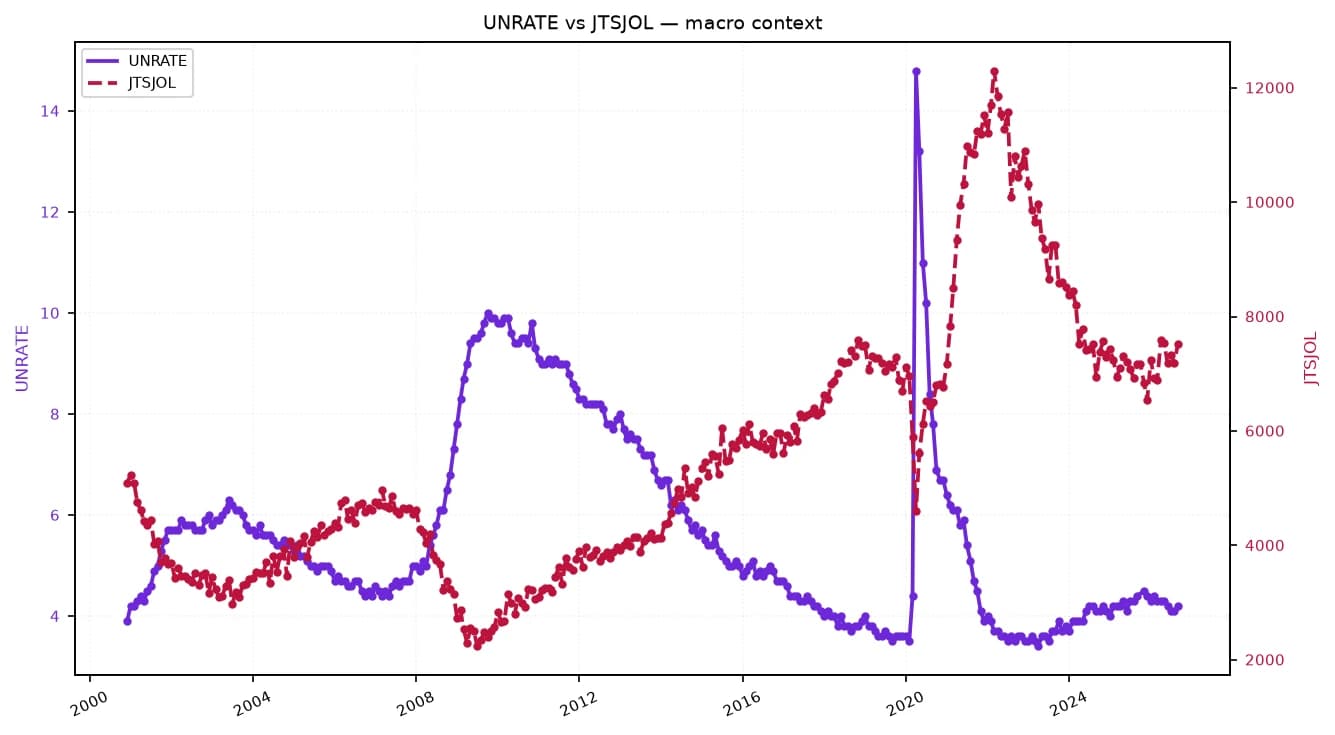
That is where markets will focus next. The current backdrop already shows a nervous economy: U.S. unemployment is forecast around 4.11% for November after a recent 4.1% reading, while GDP is still projected to expand at a 1.34% annualized pace in the October quarter. In other words, growth is positive but not robust enough to absorb a sustained policy shock without consequences. Any tighter immigration enforcement would likely arrive into an economy where firms are still hunting for labor and where wage sensitivity is high.
White House Policy Direction vs UUPadalytica.com
Explore this data interactively — full history, time series and cross-market comparisons.
The market read-through is clearest in rate-sensitive and labor-intensive businesses. If enforcement gets tougher, companies with the thinnest staffing buffers could face rising labor costs, slower openings and more supply-chain friction. That is why shares tied to labor substitution, automation and efficiency gains deserve attention now. Industrial automation, warehouse technology and workforce software should benefit if employers move faster to replace constrained labor with capex-heavy solutions.
The dollar is another immediate market channel. U.S. Dollar Index ETF UUP has climbed to 29.42 and is trading above both its 50-day and 200-day moving averages, with RSI readings near 67, showing a strengthening trend. A more restrictive immigration posture can reinforce U.S. growth exceptionalism relative to trading partners and keep the dollar supported, even if the policy mix weighs on some domestic employers. For investors, that means currency strength and tighter labor availability may travel together.
Small caps look more exposed. The Russell 2000 ETF IWM has rebounded from a sharp spring drawdown but remains below its 50-day moving average, and its momentum indicators are still not fully repaired. That matters because smaller companies tend to have less pricing power and fewer options to offset labor disruption than megacaps. If immigration policy hardens faster than expected, the market may reward large employers with scale and punish smaller, labor-dependent names.
The broader narrative is not simply that Trump is changing personnel. It is that he is being forced by the election result to repackage a signature policy in a way that is less politically toxic but still ideologically intact. That leaves investors with a classic second-order opportunity: own the beneficiaries of labor scarcity, automation and a potentially firmer dollar, while staying cautious on sectors that depend on abundant, low-cost labor.
This is an inflection point, not a reversal. If Trump’s new team doubles down on enforcement while narrowing the optics, the trade is less about headline politics and more about capital allocation into productivity, security and substitution. I believe the market underestimates how quickly a harder immigration line can redirect money into the companies that help businesses do more with fewer workers.
| Entity | Gains | Losses |
|---|---|---|
| Automation and robotics firms | ▲Higher demand for labor substitution | ▼Slower near-term capex if firms hesitate |
| Large-cap employers | ▲Scale to absorb labor shocks | ▼None meaningfully |
| Small-cap labor-intensive companies | ▲None meaningfully | ▼Higher wage pressure and staffing strain |
| U.S. dollar bulls | ▲Policy-driven support for the dollar | ▼Importers and foreign earners |