The next Democratic leader in Congress is setting up a direct clash with Donald Trump, and the market’s first read is clear: Washington’s next phase of political warfare is likely to be defined by investigations, subpoenas and heightened headline risk rather than any quick policy reset.
Trump Media (DJT) falls as House oversight risk rises
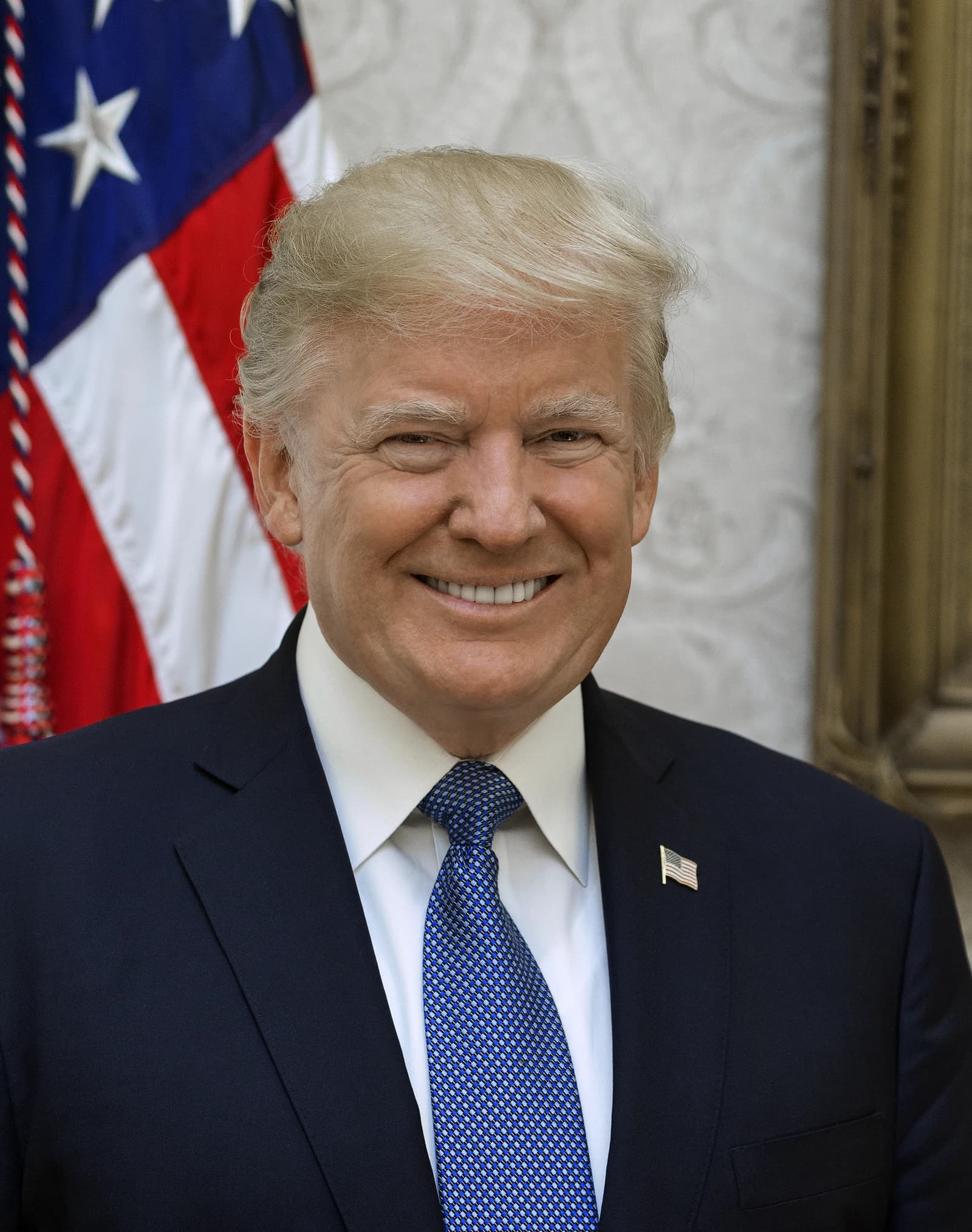
Hakeem Jeffries, the New York representative poised to become House speaker when the new Congress convenes, said Democrats will use their majority to hold “the corrupt, the chaos and the cruelty” accountable, including scrutiny of Trump and the business interests tied to his family. That matters because control of the House gives Democrats the subpoena power, committee agenda and public platform to force months of confrontation with the White House just as voters have already punished Republicans for the midterm cycle.
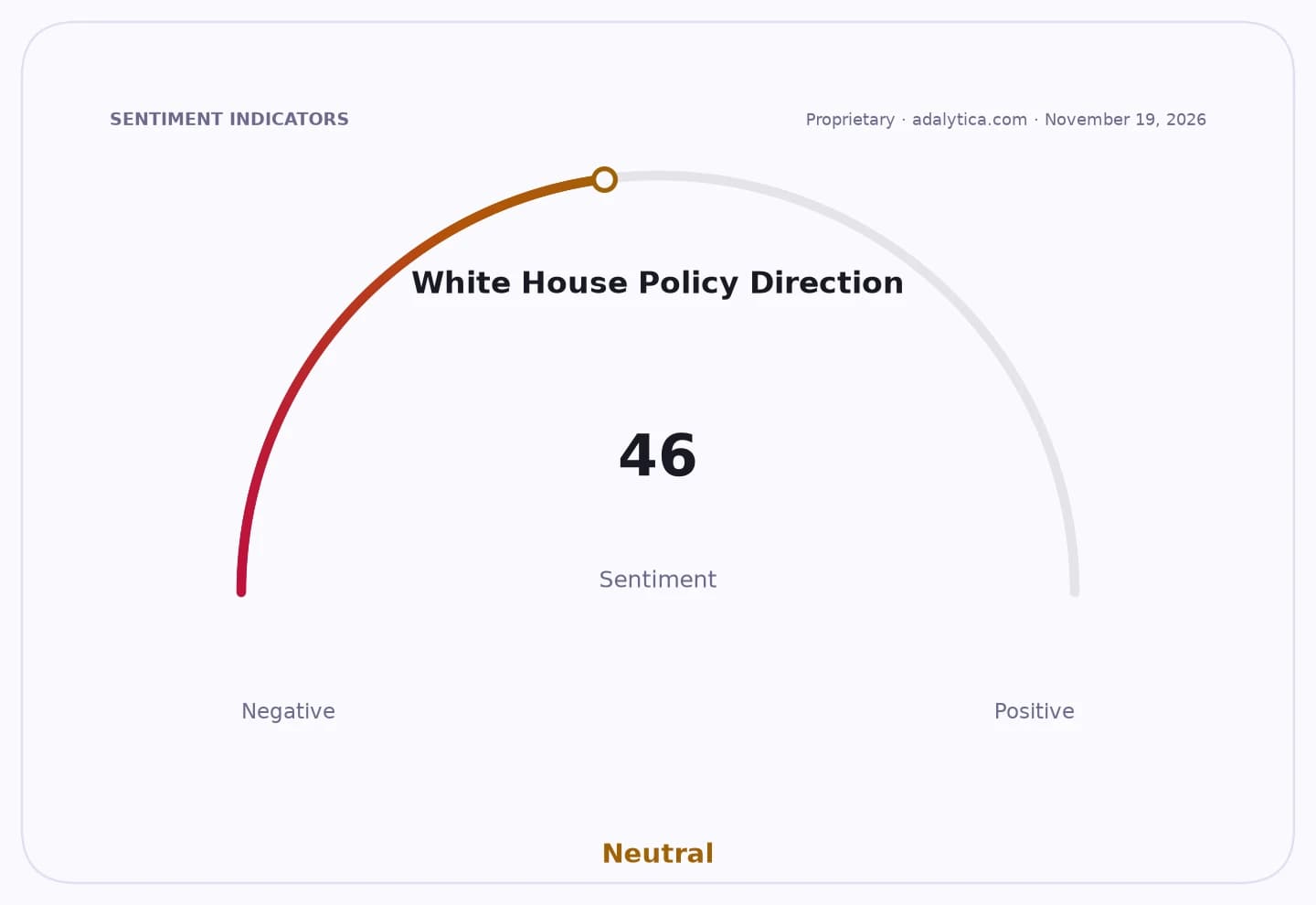
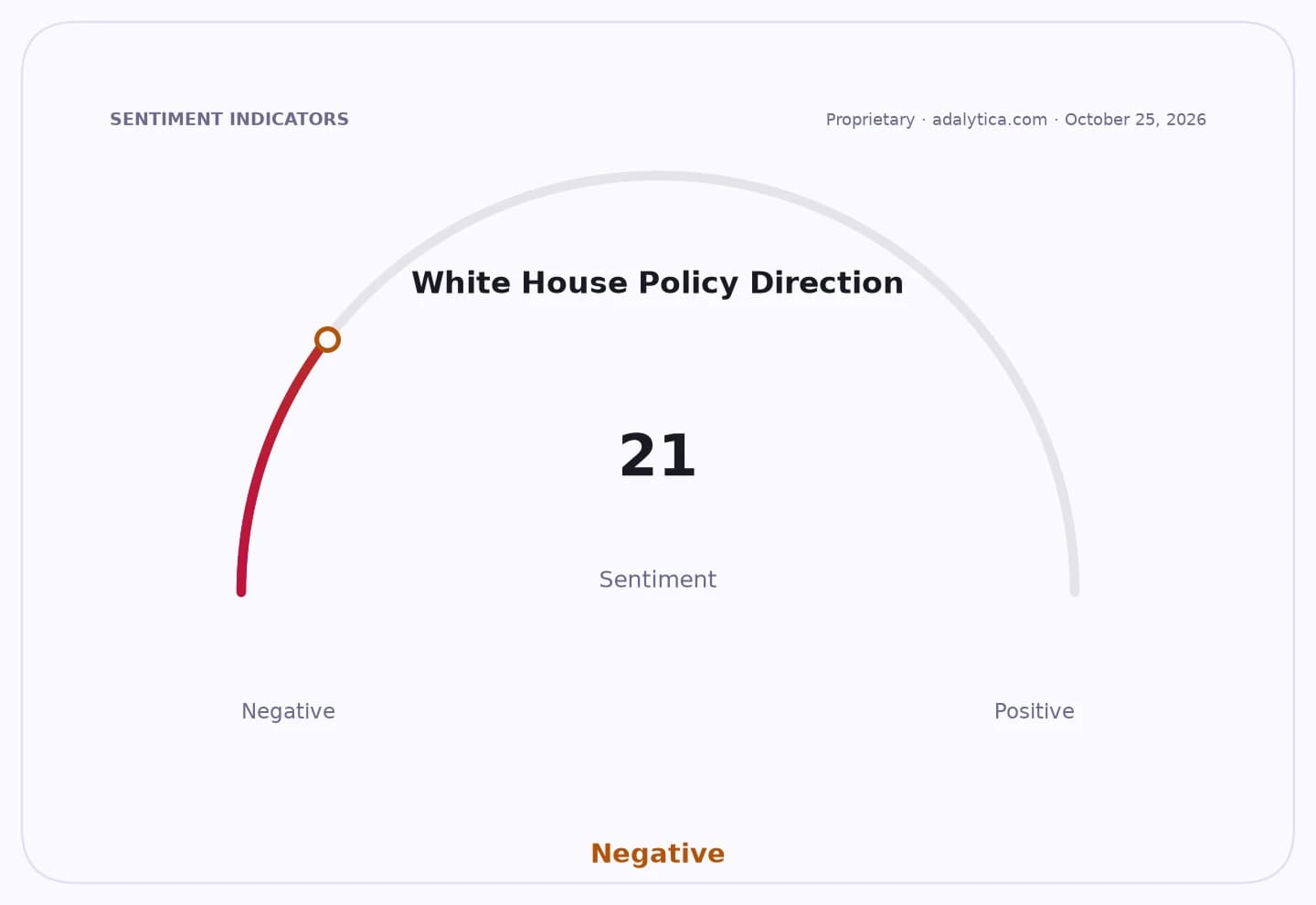
Sentiment Indicators
For investors, this is not simply cable-news noise. It raises the odds of a protracted legislative stalemate, more volatility in policy-sensitive sectors and a fresh overhang on Trump-linked assets. Trump Media & Technology Group, whose shares trade under DJT, has already been battered: the stock closed at $4.05 on Wednesday, down from $16.09 in mid-December, and sits well below its 50-day and 200-day moving averages. The recent technical picture underscores how quickly political risk can overwhelm retail enthusiasm once the market starts pricing in governance and legal uncertainty.
The bigger economic issue is that Washington is moving from campaign rhetoric to institutional pressure. Democrats have signaled they will focus on cost of living and the economy, but the opening act looks more like oversight warfare than productivity politics. That usually means more uncertainty around regulation, federal spending priorities and the direction of the administration’s agenda. Businesses tied to defense procurement, healthcare, energy and media will all have to navigate a more adversarial Congress, even if the Democrats’ stated aim is to squeeze Trump on issues that poll well with voters.
The timing also matters. The post-election reset has not produced calm; it has intensified the fight. Trump has already directed the Justice Department to investigate Democrats, setting up a reciprocal probe cycle that could dominate headlines for months. That kind of institutional escalation can freeze investment decisions at the margin, keep risk premiums elevated and leave markets reacting to subpoenas and hearings instead of earnings and guidance.
Jeffries’ rise also signals a generational handoff inside the Democratic Party, with Katherine Clark and Pete Aguilar joining the leadership team, but the investment story is less about party branding than about what the next Congress will do with power. The market underestimates how quickly oversight battles can become valuation events when they collide with political-media stocks, donor networks and any company exposed to federal scrutiny.
Our view: the investable opportunity is not in chasing the noise, but in positioning for the second-order winners. Expect lawyers, compliance-heavy companies, defense contractors with stable backlogs and broad-market hedges to outperform if Washington turns into a sustained investigations market. The losers are the obvious ones: Trump-aligned names, politically exposed media assets and any speculative trade that depends on a benign policy backdrop.
| Entity | Gains | Losses |
|---|---|---|
| Democrats in Congress | ▲Oversight power | ▼Compromise leverage |
| Trump and allies | ▲Base mobilization | ▼Legal and political pressure |
| DJT / Trump-linked stocks | ▲Volatility traders | ▼Long-only investors |
| Defense and compliance-heavy firms | ▲Safe-haven flows | ▼Policy visibility |