The biggest market story right now is not inflation, it is the growing risk that President Donald Trump’s effort to rewrite global trade flows will slow the U.S. economy enough to force investors to reprice risk across stocks, commodities and Treasuries.
Trump tariffs, SPY, USO, TLT, and market risks

That matters because trade shocks do not stay confined to customs tables. They seep into corporate margins, consumer prices, capital spending and hiring, and then into demand itself. The message from markets is already clear: tariff stress is lifting oil and industrial input costs, while equity investors are paying up for protection and trimming risk in the face of a policy shock that could become self-reinforcing.
The 10-year Treasury yield is sitting around 4.79%, a level that still leaves financing conditions tight even before any second-round damage from tariffs works through the economy. The Fed funds rate is running at 3.63%, and unemployment is forecast at 4.02% in September, a combination that suggests the labor market has not broken yet but is vulnerable if trade disruption starts biting into growth. History says that when governments reorganize trade on the fly, the lagged effect is usually weaker output, not just higher prices.
That is exactly why the market is reading tariff policy as more than a negotiating tactic. U.S. protectionism has already been blamed for a surge in copper prices to historic highs and for severe strain on Canadian firms facing retaliatory measures. Everyday goods in Canada are reportedly rising by as much as 50%, a sign that the pain is moving from abstract policy into real household budgets and corporate balance sheets. For investors, that is the early stage of a stagflationary impulse: higher input costs, lower real purchasing power and softer final demand.
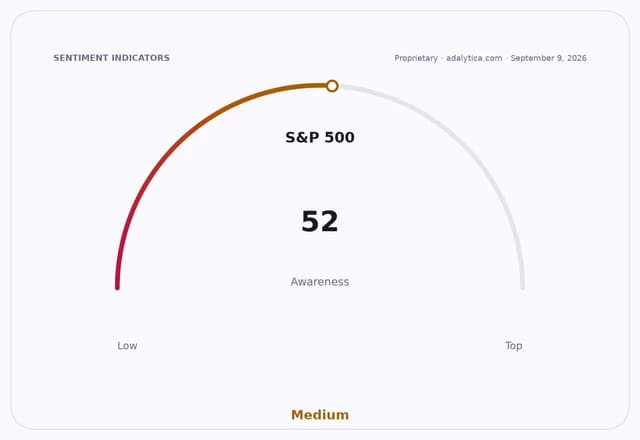
Equities are not ignoring it. The S&P 500, tracked by SPY, is trading near 762.57 after a sharp round trip from its May peak, with RSI readings and other standard technical indicators showing the index has been volatile rather than trending cleanly higher. Adalytica’s S&P 500 trade signals show extreme fear, which tells you positioning is defensive even as the broader index remains above its 200-day moving average. That combination often appears when investors sense the policy regime is changing before the macro data fully confirms it.
Oil is another tell. USO has ripped to 149.25, with RSI readings in overbought territory and price action pressing the upper Bollinger Band. That is not just a commodity trade; it is a tax on transport, manufacturing and consumer spending. If tariffs persist, energy and raw-material inflation can remain sticky even as growth slows, squeezing exactly the cyclical sectors most exposed to trade flows.
Bonds are sending a mixed but important signal. TLT has weakened back to 81.77, below its 200-day moving average, which says investors are not yet fully embracing a recession hedge in duration. That leaves room for a bigger move if the tariff shock starts appearing in payrolls, capital spending and import volumes. In other words, the bond market has not priced the full macro damage yet.
The investment implication is straightforward: the market underestimates the second-order winners and losers of trade disruption. I believe the best opportunities are in domestic infrastructure, defense, reshoring, and energy self-sufficiency themes, while the most vulnerable names remain freight, globally exposed manufacturers, and companies dependent on cross-border volume and imported inputs. The SEC filings already hint at the pressure points: Caterpillar expects about $2.2 billion of tariff costs in 2026, while FedEx has warned that changes in U.S. and international trade policy are weakening business conditions for transportation.
If Trump’s trade overhaul keeps tightening, the next catalyst will not be another speech, but a visible slowdown in freight, industrial orders and consumer spending. That is when consensus catches up. Until then, this is an asymmetric setup for investors willing to own the toll roads of a more fragmented world and avoid the businesses most exposed to the tariff recession.
| Entity | Gains | Losses |
|---|---|---|
| Domestic industrials | ▲Reshoring demand | ▼Import-cost pressure |
| Energy producers | ▲Higher crude prices | ▼Demand destruction risk |
| Freight and logistics | ▲None | ▼Lower shipment volumes |
| Treasuries/defensive assets | ▲Safe-haven flows | ▼Rising yields if inflation stays sticky |