Donald Trump’s blunt criticism of Volodymyr Zelenskyy has sharpened a diplomatic break that could complicate any peace track on Ukraine and raise the market risk around oil prices, sanctions policy and broader geopolitical stability.
Trump Criticizes Zelenskyy Over Russia Peace Talks
The former U.S. president said he was “not a big fan” of Zelenskyy because the Ukrainian leader does not want to negotiate with Russia, adding that Kyiv’s strikes on Russian oil refineries were “a shame” because they were helping push up global crude prices. The comments matter because they link Trump’s view of the war directly to energy-market stability, suggesting that if his approach gains influence in Washington it could reshape U.S. pressure on both Kyiv and Moscow.
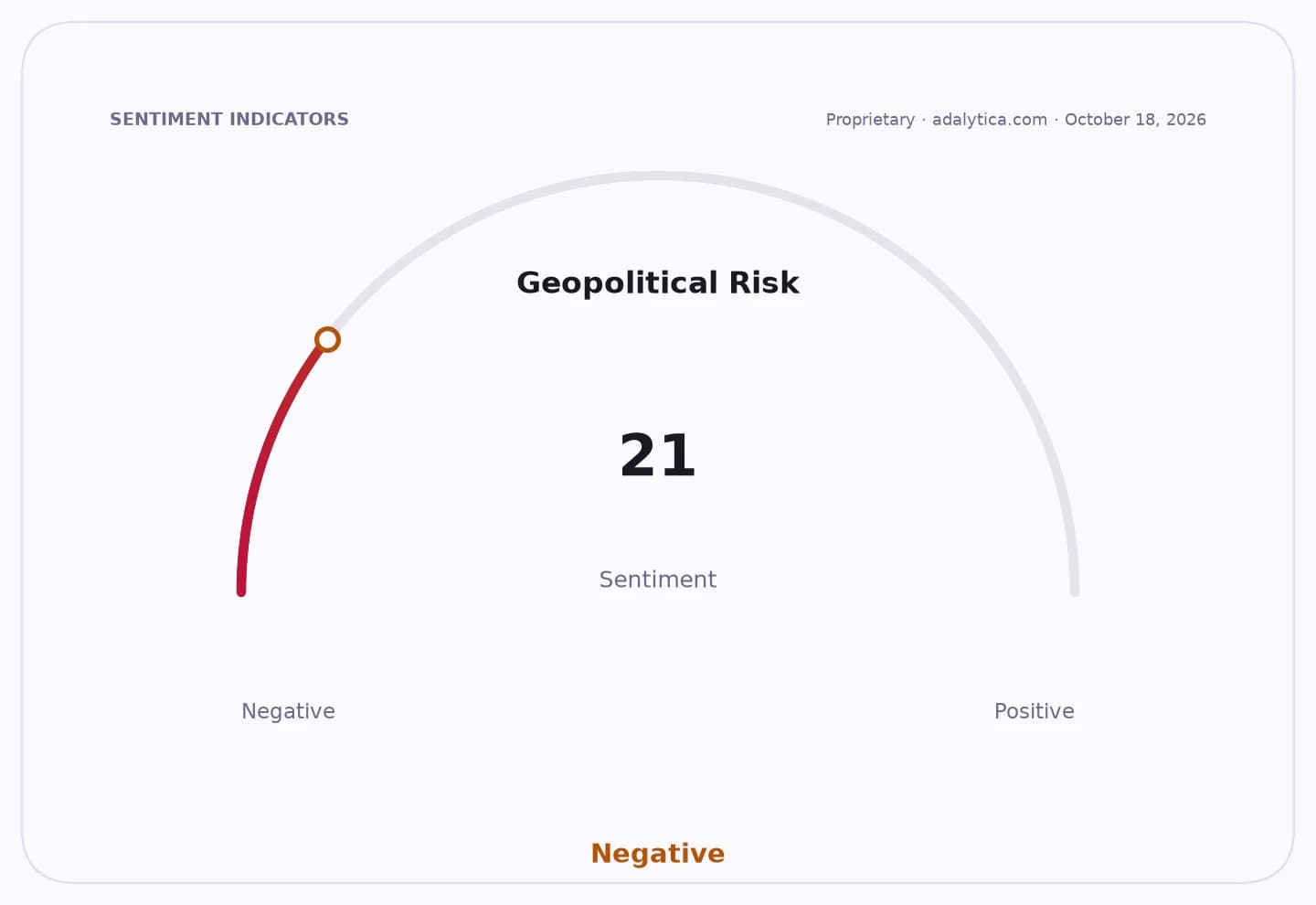
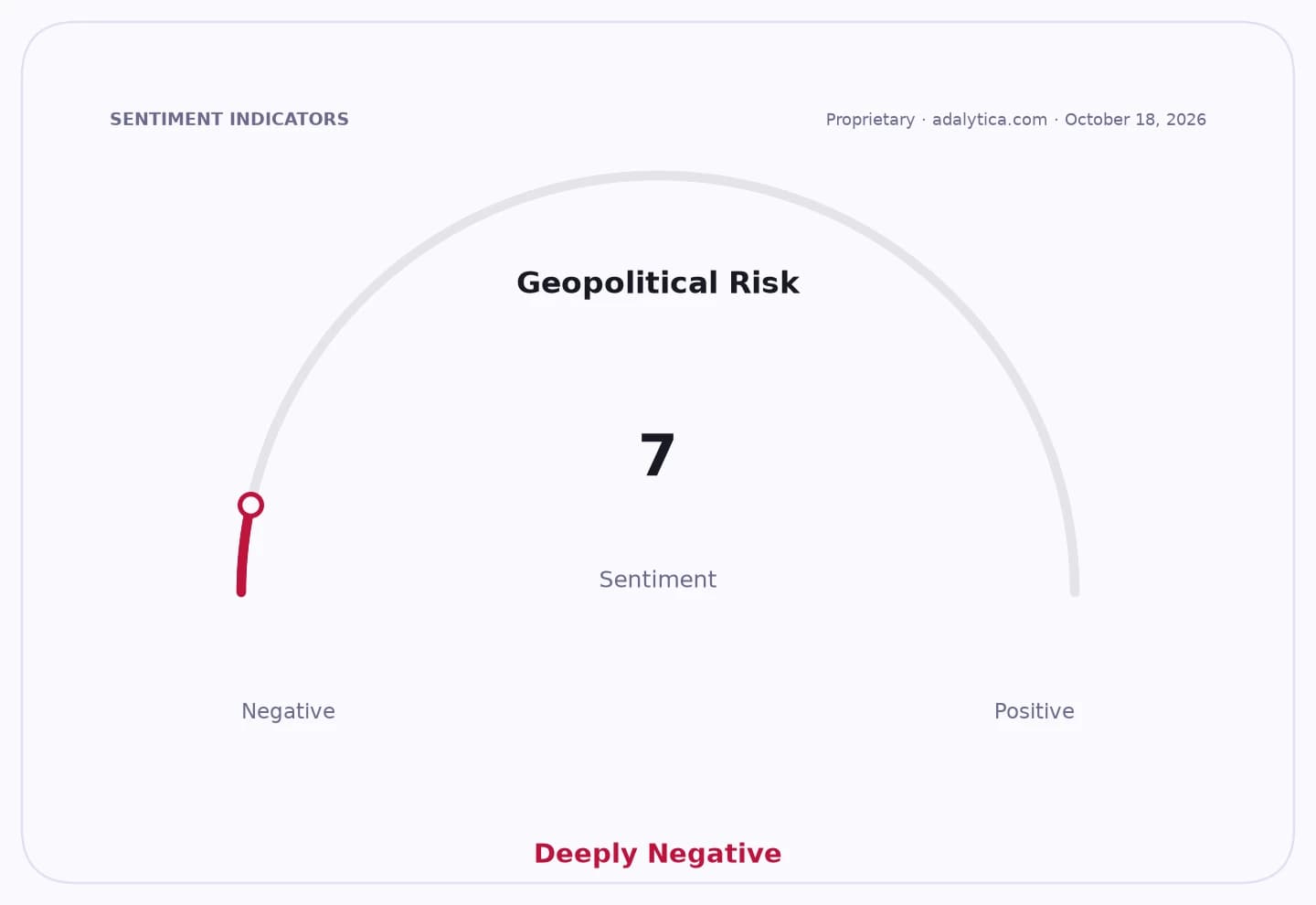
Sentiment IndicatorsⓘProprietary · adalytica.com · October 18, 2026
This is a snapshot — live sentiment, awareness and momentum for 130+ markets update continuously in the dashboard.Open AlphaPulse
Trump argued that Ukraine has been “destroyed” and lacks Russia’s manpower, while blaming the conflict’s roots on earlier U.S. policy and Crimea’s loss under Barack Obama. He also said he wanted Zelenskyy to stop the refinery attacks and would like Vladimir Putin to do the same, framing both sides as responsible for keeping the war alive and feeding inflationary pressure through energy markets.
For investors, the immediate relevance is twofold. First, Trump’s remarks reinforce the risk that any future U.S. policy tilt could be less supportive of Ukraine and more accommodative toward a ceasefire shaped on Moscow’s terms, which would have implications for European security assets, defense spending assumptions and sanctions risk. Second, his focus on refinery strikes highlights the sensitivity of oil markets to infrastructure damage in Russia, one of the world’s most important energy suppliers. Even limited disruptions can ripple through refined-product spreads, crude benchmarks and inflation expectations.
The market backdrop already reflects elevated geopolitical anxiety. Adalytica’s Global Stability Sentiment gauge is at 7, marked “Extreme Fear,” after a steep drop over the past week, while its U.S. White House policy-direction sentiment sits at 25, also in fear territory. The dollar’s trade-signal snapshot is similarly weak, with sentiment at 26. Those readings do not predict policy, but they show how quickly traders are pricing in instability when Washington rhetoric turns more erratic.
Ukraine’s strategy of striking Russian energy infrastructure has become a central part of the war’s economic dimension, aiming to constrain Moscow’s export revenue and logistics. Trump’s criticism suggests he sees those attacks not as leverage against Russia but as a driver of higher global fuel costs — a view that could resonate with voters and policymakers focused on inflation. That makes the issue more than a battlefield tactic: it is now a potential election-year market variable.
For Europe, the stakes are broader than oil. A harder line from Trump toward Zelenskyy could unsettle NATO allies, widen uncertainty over future U.S. military aid and increase pressure on the continent to shoulder more of Ukraine’s financing and defense burden. For energy traders, the key question is whether the war remains contained to intermittent disruption or escalates into more sustained damage to Russian refining capacity.
The near-term catalyst is whether the rhetoric feeds into actual policy signals from Washington. If it does, investors will have to weigh a possible easing of support for Kyiv against a higher probability of a ceasefire push — a combination that could lower some geopolitical risk premia while raising questions about the durability of any settlement.
| Entity | Gains | Losses |
|---|---|---|
| Russia | ▲More room for leverage | ▼Refineries and energy assets |
| Ukraine | ▲International attention | ▼U.S. political backing |
| Oil bulls | ▲Supply-risk premium | ▼Lower fuel-price pressure |
| Europe/NATO allies | ▲None | ▼More security uncertainty |