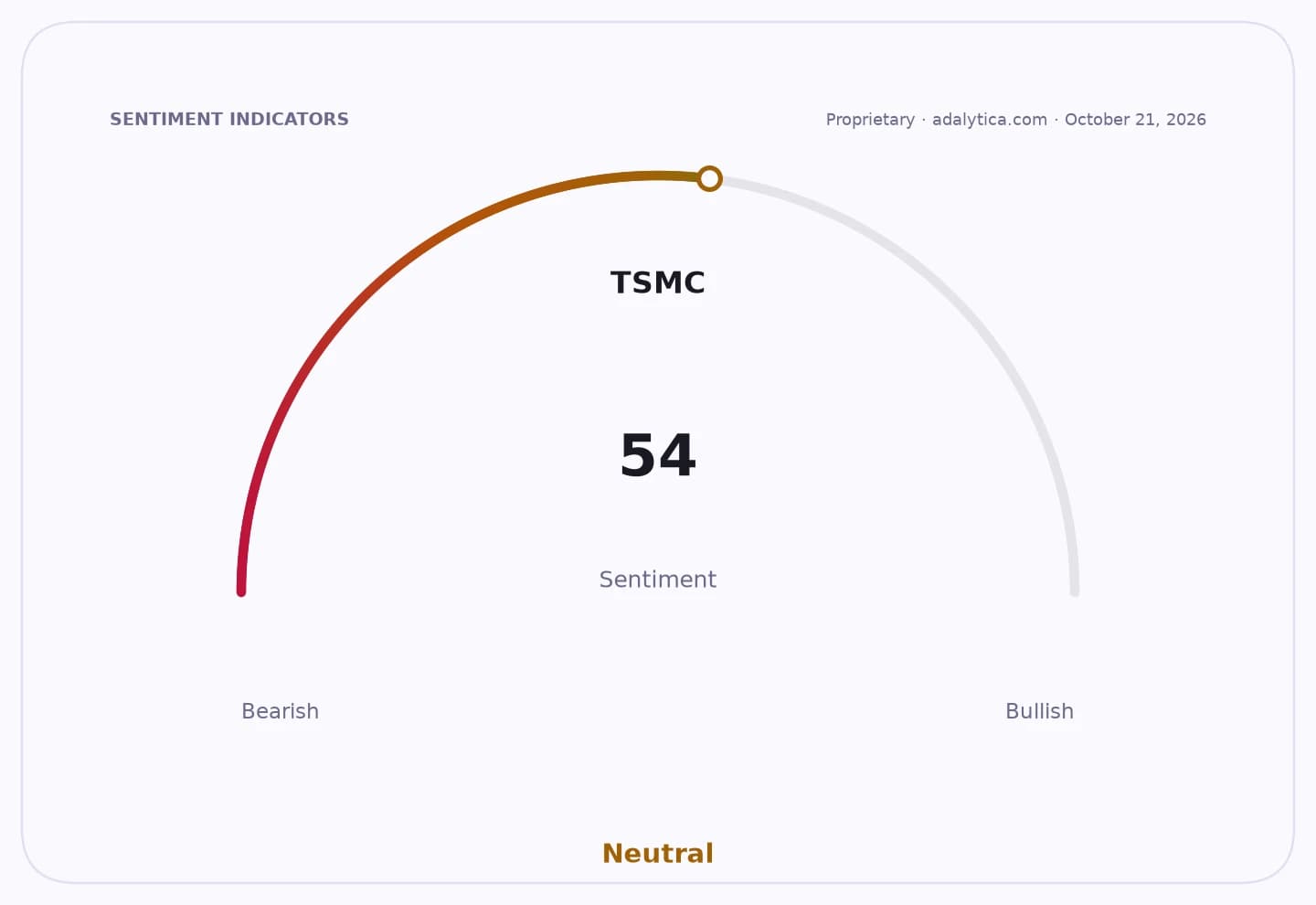
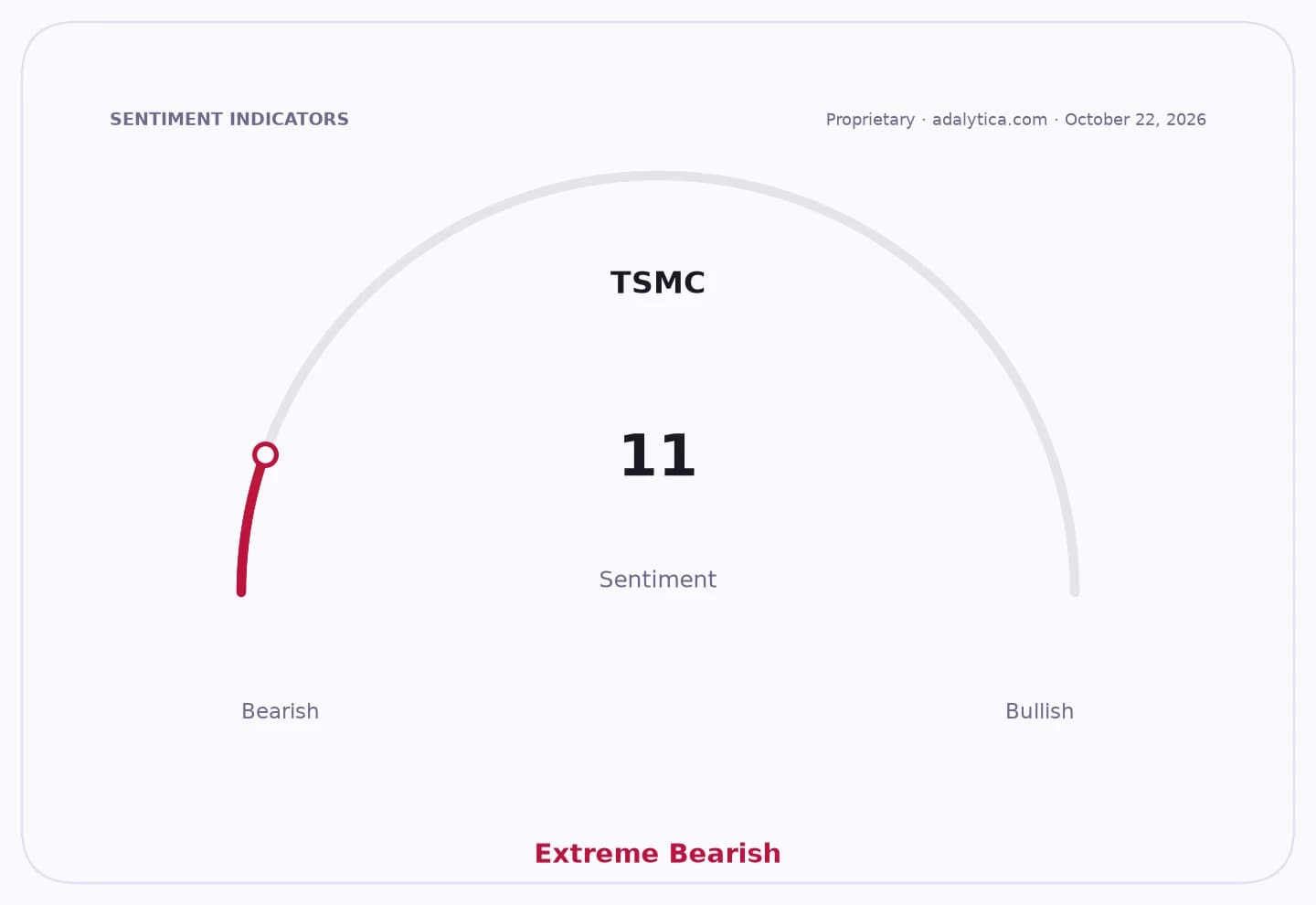
TSMC posted stronger-than-expected third-quarter results and raised its outlook, reinforcing that artificial intelligence and high-performance computing are still driving the most important growth engine in semiconductors.
TSMC Raises Outlook on Stronger Q3 AI Demand
For investors, the message is bigger than a quarterly beat. Taiwan Semiconductor Manufacturing Co. sits at the center of the global AI supply chain, fabricating the advanced chips that power Nvidia, AMD and custom accelerators from cloud giants. A higher forecast from TSMC is one of the clearest read-throughs available on whether AI capital spending is still expanding, and whether demand is broadening beyond a narrow set of launch-cycle orders.
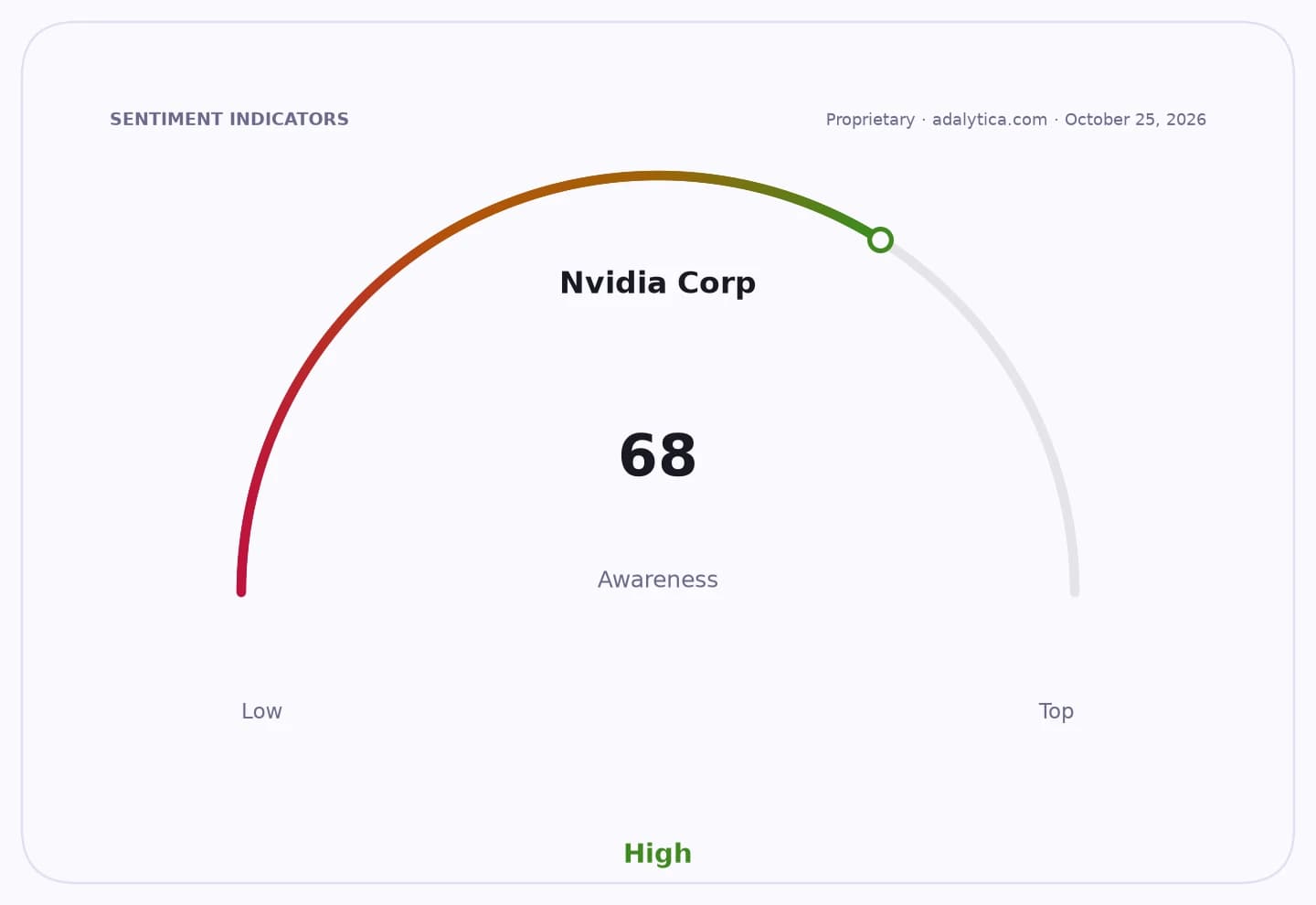
Sentiment IndicatorsⓘProprietary · adalytica.com · October 25, 2026
This is a snapshot — live sentiment, awareness and momentum for 130+ markets update continuously in the dashboard.Open AlphaPulse
The company’s strength matters economically because advanced semiconductors remain one of the few manufacturing segments with enough pricing power and capacity tightness to support growth even as broader electronics demand softens. That makes TSMC’s performance an important barometer for export flows in Taiwan, capital investment across the chip equipment industry and the sustainability of the AI buildout that has supported equity markets for more than a year.
The stock reaction, however, is more nuanced. TSMC shares have recently been volatile, with the stock closing at 418.51 on Oct. 23 after a steep pullback from levels above 440 earlier this month. The shares remain well above the 200-day moving average of 396.05, but recent technical readings show weakening momentum, with the 50-day average at 433.62 and RSI down to 21.9, a sign the stock had already been heavily sold before the latest catalyst.
The earnings beat also arrives against a mixed backdrop for the wider chip complex. Nvidia has been under pressure in recent sessions, even as its own business remains tied to the same AI spending cycle that benefits TSMC. Nvidia shares closed at 210.96 on Oct. 23, below both its 50-day average of 222.39 and 200-day average of 203.36, as investors reassessed how long the current AI spending boom can last and which companies capture the economic surplus.
TSMC’s raise suggests the spending wave has not yet crested. That is especially important because the company’s order book is an indirect but powerful signal for the rest of the market: foundry demand needs to stay firm not just for TSMC’s revenue but for the ecosystem of wafer equipment makers, packaging suppliers and AI server vendors that depend on high-volume advanced-node production.
Still, the bull case is not without limits. A stronger quarter can reflect near-term inventory pulls or customer timing rather than a durable step-up in end demand. Valuation is also a risk after a major run in semiconductor names this year, and any slowdown in hyperscaler capex or a shift in AI spending toward software and inference efficiency rather than new chip deployments could cool the cycle.
For now, TSMC’s results argue that the AI infrastructure trade remains intact even as sentiment around chip stocks wobbles. The key question for the next leg is whether the company’s raised outlook proves to be the start of another upward revision cycle for the sector, or simply confirmation that demand is still strong before growth inevitably normalizes.
| Entity | Gains | Losses |
|---|---|---|
| TSMC | ▲Higher revenue outlook | ▼Lower pricing skepticism |
| Nvidia | ▲Validation of AI demand | ▼Near-term stock momentum |
| AI server makers | ▲Continued capacity support | ▼If capex slows |
| Chip bears | ▲Limited | ▼Momentum on caution |