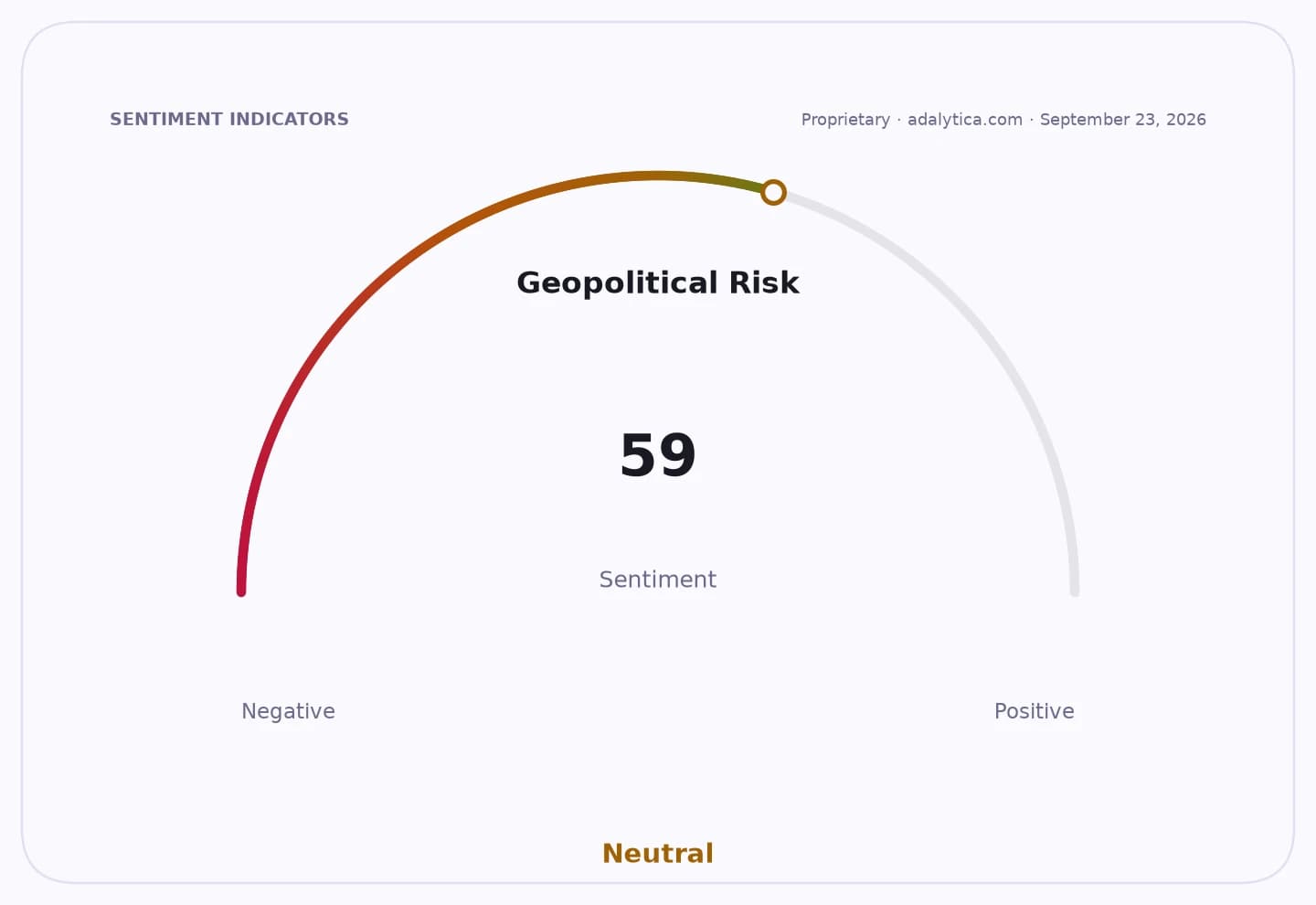
Turkey and Azerbaijan are trying to turn the South Caucasus cease-fire into a broader regional reset, with a meeting in Istanbul on Iran set to test whether diplomacy can ease the geopolitical friction that has kept traders cautious on the corridor linking the Caspian, Turkey and Central Asia.
Turkey and Azerbaijan Seek Wider Caucasus Reset
That matters economically because the region sits on a set of overlapping trade, energy and transit routes that are increasingly important as countries look for alternatives to Russia-linked supply chains and to shorter, less secure paths through conflict zones. Any reduction in tension around Nagorno-Karabakh and neighboring frontiers would support cross-border transport, pipeline reliability and investment in logistics and energy infrastructure, while renewed uncertainty would keep a geopolitical risk premium embedded in regional assets.
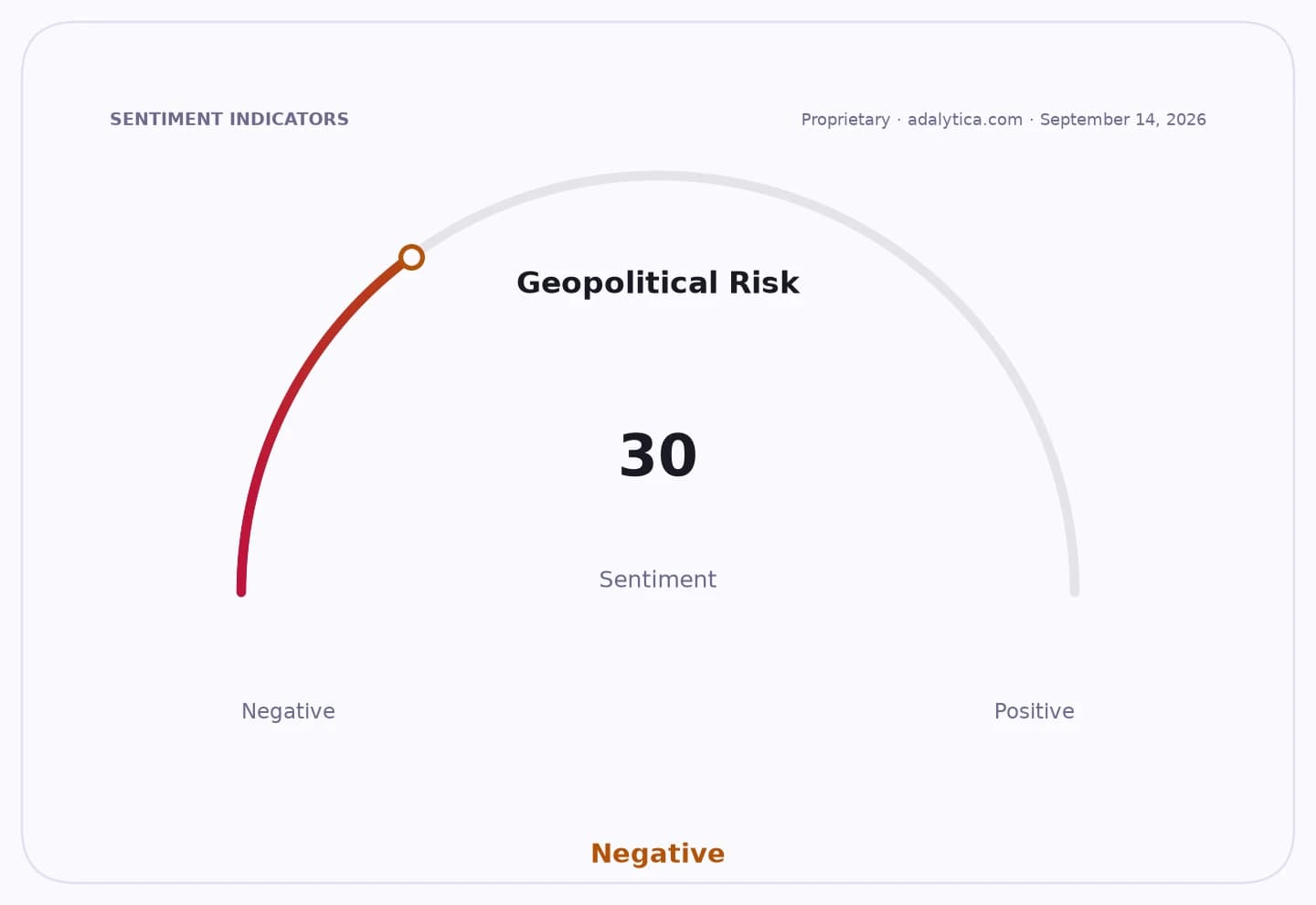
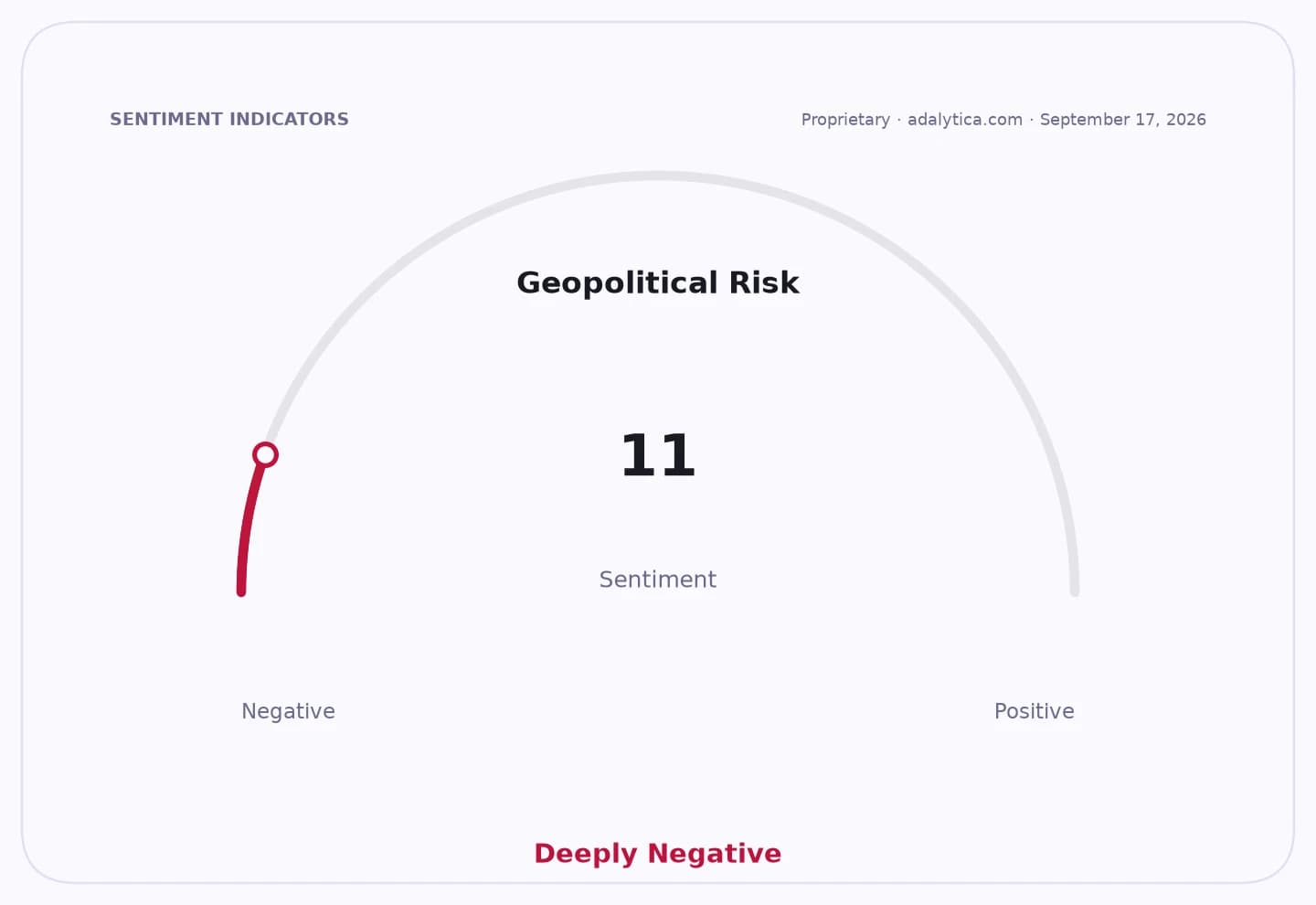
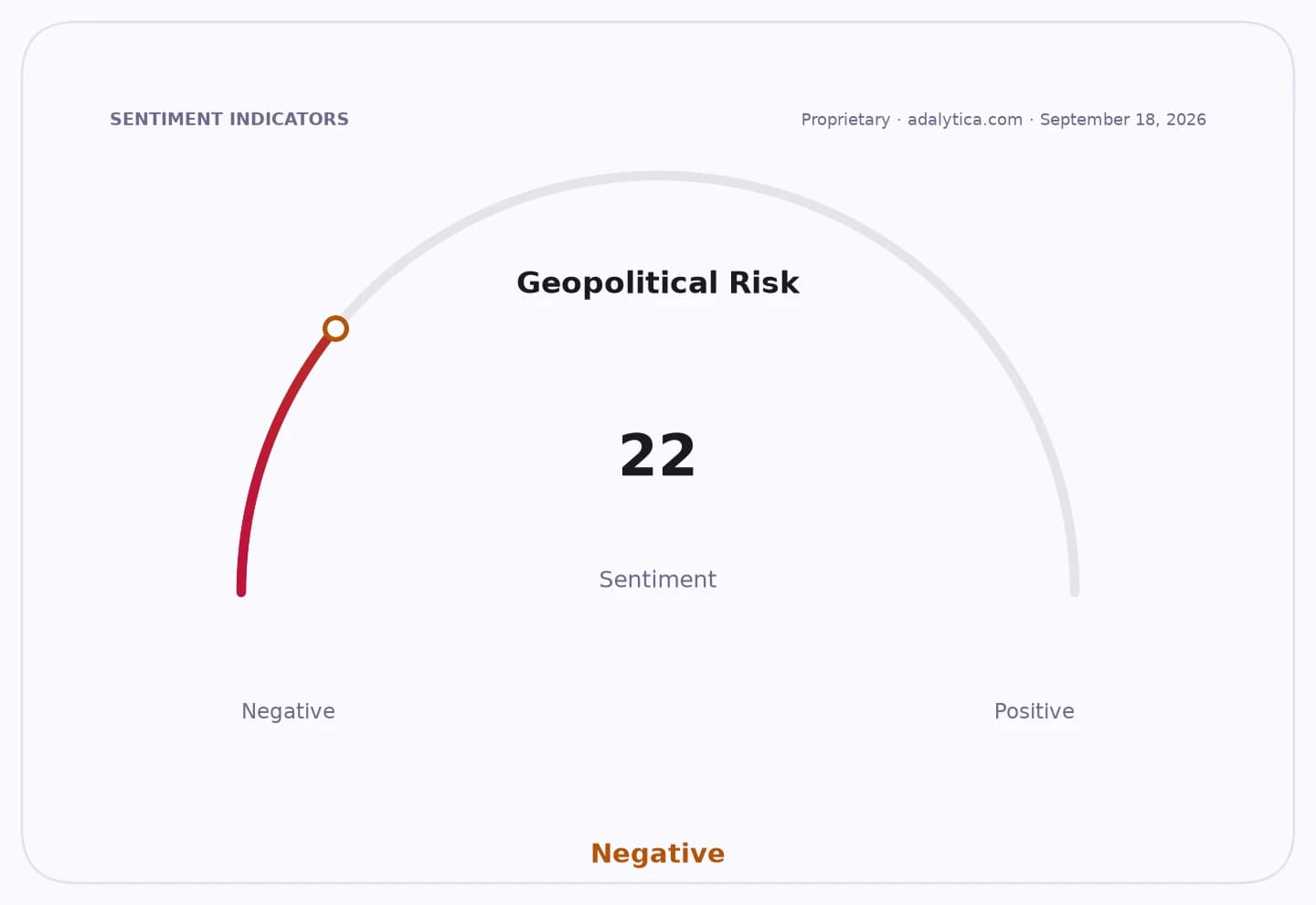
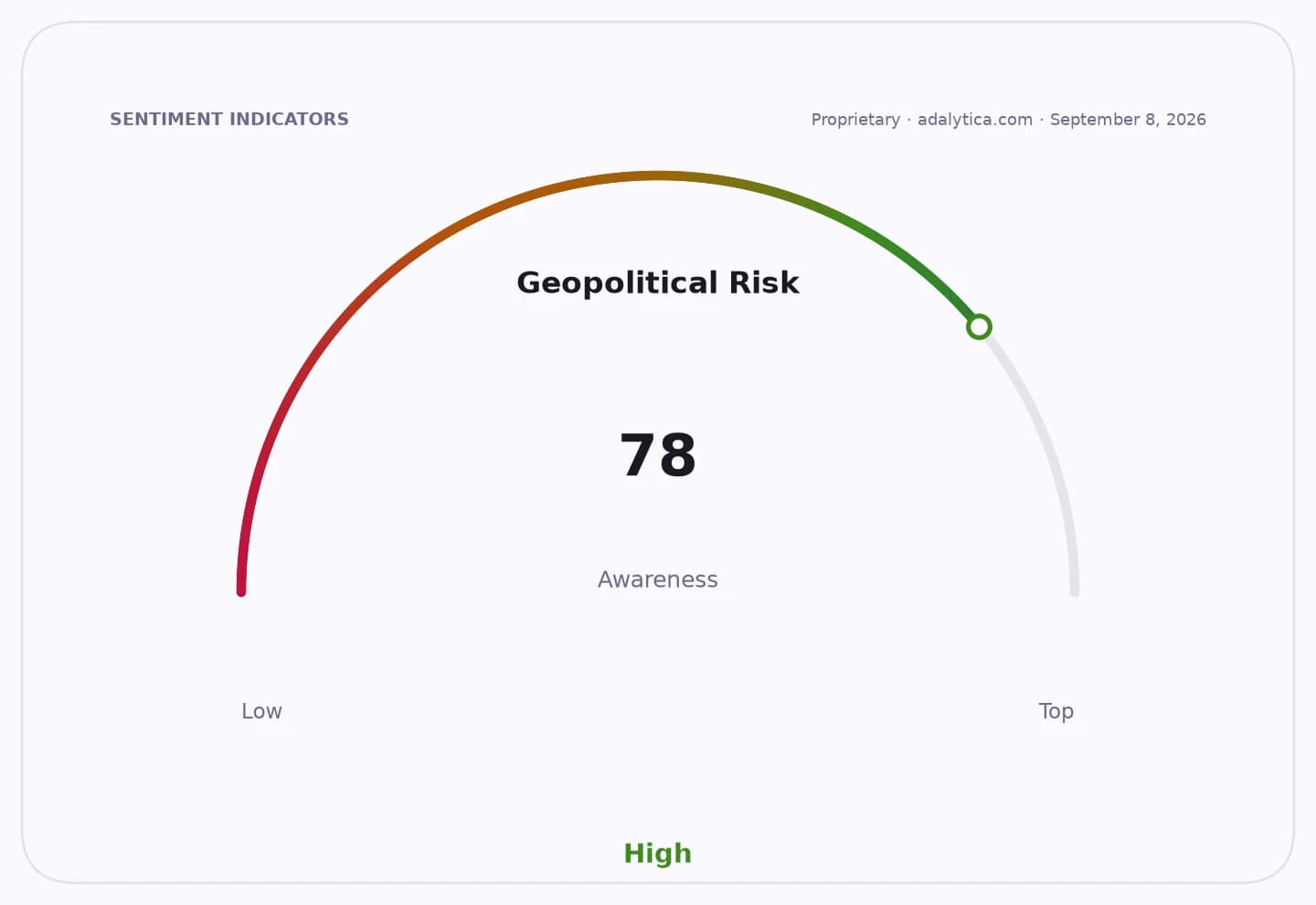
Sentiment IndicatorsⓘProprietary · adalytica.com · September 8, 2026
This is a snapshot — live sentiment, awareness and momentum for 130+ markets update continuously in the dashboard.Open AlphaPulse
For investors, the story is less about one summit than about the direction of capital flows. Turkish and Azerbaijani equities have both responded to the prospect of a more stable regional order, with the XLE energy ETF extending a strong run and trading at 64.06 on Sept. 4, well above its 50-day moving average of 59.20, while Brazil’s EWZ has also stayed firm. Those moves do not reflect the Caucasus alone, but they show how quickly markets reprice when geopolitical stress recedes and global growth-sensitive assets regain favor.
By contrast, China-facing KWEB has been weaker, closing at 26.05 on Sept. 4 and below its 200-day average of 30.11, underscoring that investors are still discriminating between regions and sectors rather than simply buying broad risk. The U.S. dollar’s trade-signal reading of 89, labeled extreme greed by Adalytica, suggests positioning remains crowded in dollar assets, leaving room for volatility if diplomacy improves risk appetite or if tensions flare again.
The narrative connecting the facts is a regional contest between conflict and connectivity. Ankara and Baku have been pushing to consolidate post-war gains from the Nagorno-Karabakh settlement into a wider commercial and strategic corridor reaching Iran, Georgia and Central Asia. Tehran remains a pivotal variable because of its borders, transport links and influence over nearby security dynamics, and because any shift in its posture can reshape shipping, energy and sanctions-related flows across the broader Eurasian map.
The bullish case is that sustained diplomacy lowers transport risk, supports investment in pipelines, rail and ports, and strengthens Turkey and Azerbaijan as transit hubs. The bear case is that the region remains vulnerable to political spoilers, border tensions and outside-power rivalry, which would cap valuations and keep investors favoring liquid, defensive exposures over frontier-story assets.
What to watch next is whether the Istanbul meeting produces concrete follow-up on trade, transit or security coordination, and whether that translates into lower volatility in regional currencies, energy routes and emerging-market risk assets.
| Entity | Gains | Losses |
|---|---|---|
| Turkey and Azerbaijan | ▲Transit leverage | ▼Geopolitical uncertainty |
| Iran | ▲Diplomatic engagement | ▼Isolation from routes |
| Georgia and Central Asia | ▲Trade connectivity | ▼Disrupted corridors |
| Risk-averse investors | ▲Stability premium | ▼Conflict hedge demand |