Turkey’s inflation fight is not over, but the easy part may be behind it as Citigroup expects consumer prices to end 2026 at 30%, with the central bank likely to keep cutting rates even as price pressures remain stubbornly structural.
Turkey Inflation Seen Near 30% at End-2026
That outlook matters because it suggests Turkey is entering a slower, more politically and economically delicate phase of disinflation: one where headline inflation is easing from extreme levels, but not fast enough to deliver a clean victory for households, companies or policymakers. Citi’s forecast sits just below the 30.9% year-end reading seen in 2025, implying only modest improvement despite weaker growth and a softer demand backdrop.
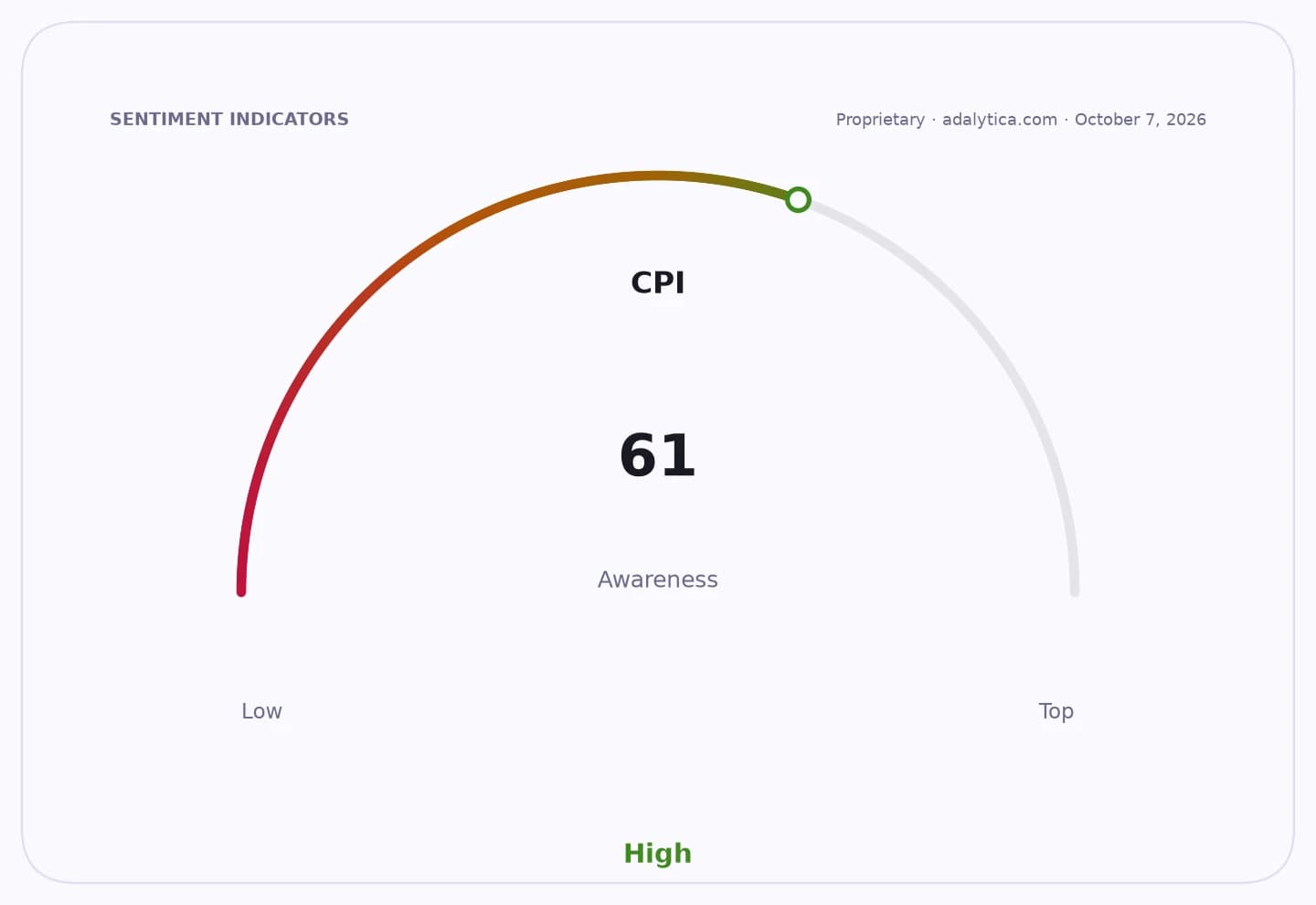
Sentiment IndicatorsⓘProprietary · adalytica.com · October 7, 2026
This is a snapshot — live sentiment, awareness and momentum for 130+ markets update continuously in the dashboard.Open AlphaPulse
The bank’s economists, İlker Domaç and Gültekin Işıklar, said the inflation problem in Turkey remains largely supply-driven and structural, a crucial distinction for investors. If inflation were mainly cyclical, slower demand would do more of the work for the central bank. Instead, Citi argues the pass-through from demand weakness is limited, which means price stability will likely improve only gradually and keep real incomes under pressure.
For the Central Bank of the Republic of Turkey, that sets up a difficult trade-off. Citi expects a 100-basis-point rate cut at the Oct. 22 policy meeting and sees the policy rate ending 2026 at 35%. That combination points to a central bank still easing, but cautiously, after inflation fell below 30% for the first time since 2021. September consumer prices rose 1.84% on the month and 29.73% on the year, both below expectations, reinforcing market bets that rate cuts can continue.
For investors, the message is that Turkey is not yet out of the high-inflation regime, but the direction of travel is becoming clearer. Lower policy rates should eventually support domestic credit, selected equities and duration-sensitive assets, but persistent inflation and a still-loose nominal environment argue for selectivity rather than broad risk-taking. The winners are likely to be companies with pricing power, hard-currency revenues or exposure to exports and tourism, while households and rate-sensitive domestic consumers remain squeezed.
The bigger narrative is that Turkey is trying to engineer disinflation without breaking growth. That is a narrow path, and it leaves markets focused on whether the central bank can keep credibility intact while easing. If inflation slows only gradually toward Citi’s 30% year-end view, the next leg for Turkish assets will depend less on the headline rate itself and more on whether policymakers can anchor expectations enough to keep capital flowing in.
| Entity | Gains | Losses |
|---|---|---|
| CBRT | ▲room to cut rates gradually | ▼credibility if easing outpaces disinflation |
| Exporters | ▲weaker real lira support | ▼higher input costs |
| Domestic consumers | ▲eventual relief from lower rates | ▼still-weak purchasing power |
| Turkish bonds/equities | ▲lower discount rates | ▼inflation persistence risk |