Türkiye’s markets are pricing in more policy easing, not less, even as the country’s benchmark index has slid into a bear market and the lira and long-term borrowing costs have come under heavy pressure.
Türkiye Markets Brace for JPMorgan Rate-Cut Call
That is the tension at the center of JPMorgan’s call for 100-basis-point rate cuts in October and December: if the central bank does deliver easier money, it could help cushion growth and improve sentiment around Turkish assets, but it also risks reviving concern that inflation is not yet under control.
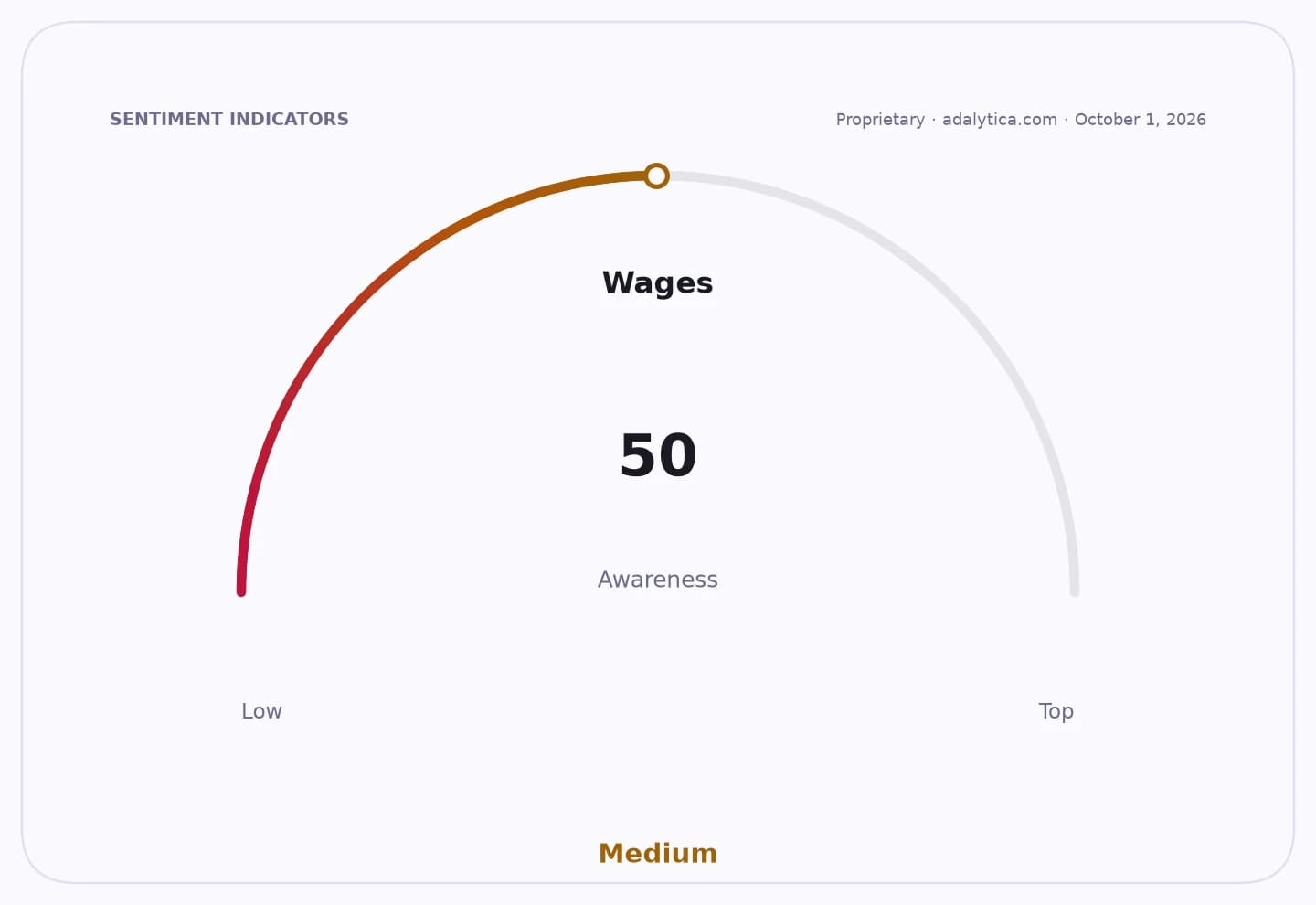
Sentiment IndicatorsⓘProprietary · adalytica.com · October 1, 2026
This is a snapshot — live sentiment, awareness and momentum for 130+ markets update continuously in the dashboard.Open AlphaPulse
For investors, the key question is not whether rates are coming down — it is whether cuts would be enough to stabilize a market that has already been punished by a record-weak lira, rising 10-year yields and a deteriorating growth-inflation outlook. Turkey’s main equity index has fallen about 31% from its recent peak and is now in a bear market, marking its worst monthly performance since 2008. That kind of drawdown tells you capital is demanding a bigger risk premium for holding Turkish assets.
At the same time, expectations for the policy path are being shaped by a broader macro squeeze. The OECD has raised its inflation forecasts for Türkiye while trimming growth projections, a combination that leaves policymakers with fewer easy options. Cutting rates can support credit, construction and domestic demand, but if inflation remains sticky, the lira can weaken further and wipe out some of the benefit by lifting import costs and financial stress.
That is why JPMorgan’s forecast matters beyond the next two meetings. Rate cuts would likely be read as an attempt to protect growth and support confidence, but they could also test how much pain the currency and bond market can absorb. Turkish stocks, which had already been volatile through the year, are now trading with investors clearly focused on capital preservation rather than expansion stories.
The technical picture in the iShares MSCI Turkey ETF, ticker TUR, reinforces that caution. The fund finished September at $33.80, well below both its 50-day and 200-day moving averages, with a relative strength index near 20, a level that typically reflects deeply oversold conditions. In other words, the market looks washed out, but washed-out markets do not automatically mean attractive entry points when the policy backdrop is still uncertain.
For long-term investors, Turkey remains a story about whether policy can regain credibility fast enough to beat inflation without choking growth. If the central bank follows through with October and December cuts, the market response will likely hinge on whether officials can frame those moves as measured normalization rather than the start of another destabilizing cycle. Until then, Turkish assets are likely to stay on the watchlist rather than the buy list.
| Entity | Gains | Losses |
|---|---|---|
| Borrowers and domestic growth sectors | ▲Lower financing costs | ▼If inflation reaccelerates |
| Turkish equities | ▲Easier policy support | ▼Weak lira and higher risk premium |
| Bondholders and lira bulls | ▲Stability if cuts restore confidence | ▼Currency weakness and yield pressure |
| JPMorgan’s rate-cut thesis | ▲Validation if easing arrives | ▼Credibility if markets sell off anyway |