Turkey’s next minimum wage is shaping up to be one of the most important economic decisions of the year, with five inflation-linked scenarios pointing to a net pay range of 35,936 lira to 36,608 lira.
Turkey Minimum Wage Scenarios Point to 36,608 Lira
That matters because the size of the increase will shape household purchasing power, business labor costs and the government’s wider inflation fight. For investors, it is a reminder that wage-setting in Turkey is not just a social policy issue — it is a macro variable that can influence consumption, margins and the pace of disinflation.
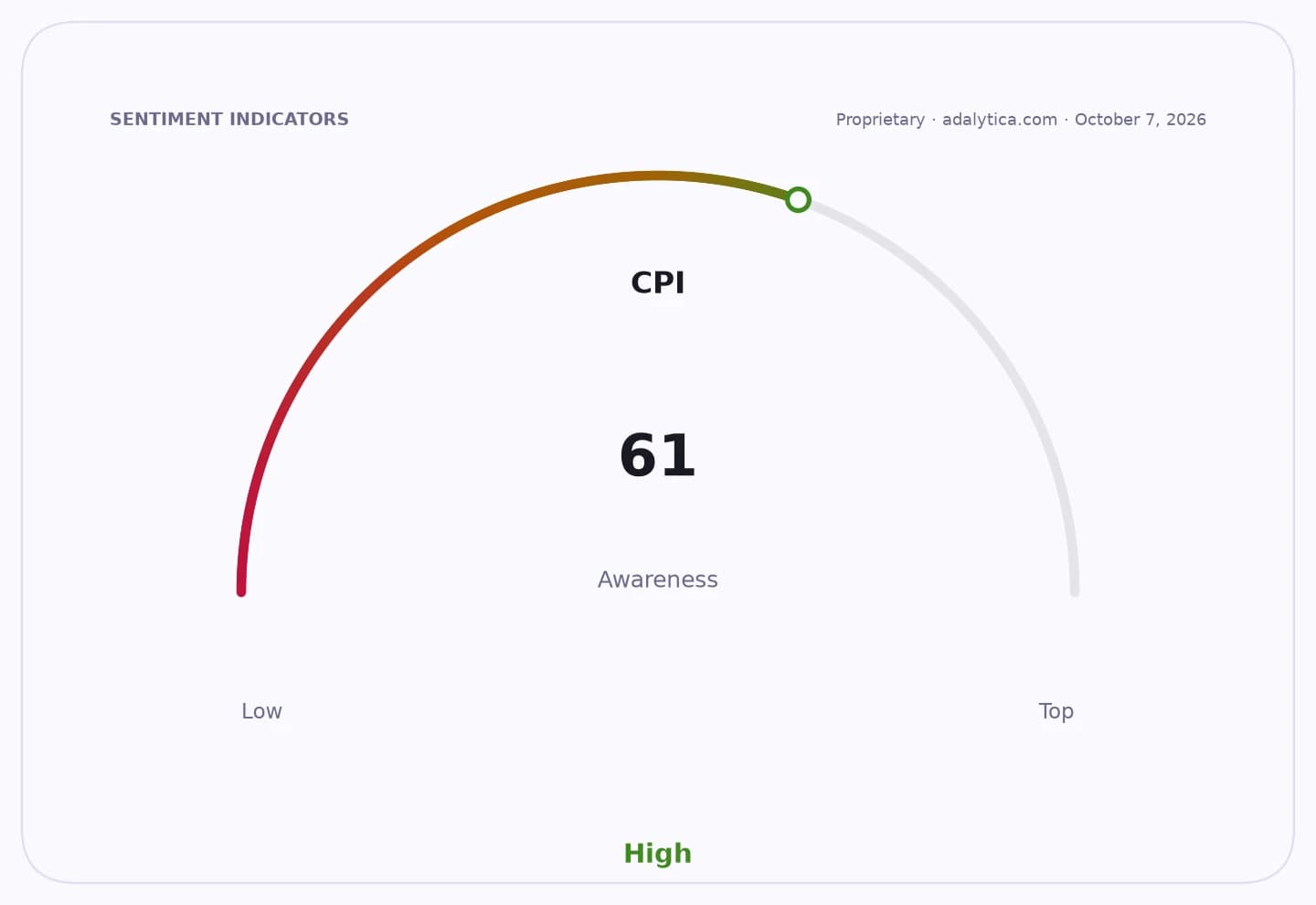
Sentiment IndicatorsⓘProprietary · adalytica.com · October 7, 2026
This is a snapshot — live sentiment, awareness and momentum for 130+ markets update continuously in the dashboard.Open AlphaPulse
The debate has intensified after official inflation data showed annual CPI rising 29.73% and monthly inflation up 1.84%. On an annual basis, prices have climbed sharply enough to keep pressure on workers’ real incomes, while the government is still trying to avoid letting higher wages feed another round of price increases.
The current minimum wage, set for 2026, is 28,075.50 lira net, after a 27% increase. The gross wage was raised to 33,030 lira. Against that backdrop, the market is already gaming out how far next year’s adjustment may go once the Minimum Wage Determination Commission begins its talks in December.
The most conservative scenario in the market’s calculations assumes a 28% increase, in line with the central bank’s revised year-end CPI forecast. That would lift the net minimum wage to 35,936 lira, an increase of 7,861 lira. An increase tied to the government’s medium-term program inflation estimate of 28.4% would push the figure to 36,049 lira, or 7,973 lira more.
A stronger wage settlement tied to the central bank’s survey of market participants, which puts year-end inflation at 29.61%, would imply a net wage of 36,389 lira. AA Finance’s own economists’ average forecast of 29.66% points to 36,403 lira. The highest scenario in the set, based on the Financial Institutions Association’s economic outlook index and a 30.39% inflation estimate, would take the minimum wage to 36,608 lira, an 8,532 lira increase.
For workers, even the lower end of that range would represent a meaningful nominal gain after a long stretch of elevated inflation. For employers, especially labor-intensive businesses in retail, food service, logistics and manufacturing, the difference between a 28% hike and a 30.39% hike is not trivial. It can determine how much pricing power companies need, how quickly they pass costs to consumers and whether margins hold up.
That is why this debate reaches far beyond Turkey’s low-paid workforce. A bigger wage increase would support consumer spending in the short term, but it could also complicate the central bank’s efforts to bring inflation down in a sustained way. A smaller increase would be easier for businesses and disinflation, but politically harder at a time when living costs remain a central public concern.
The commission is expected to begin meetings in the first weeks of December, with a final figure likely to be set by month-end. Investors should watch the outcome closely: in Turkey, the minimum wage is often a read-through on inflation expectations, domestic demand and the government’s willingness to prioritize price stability over immediate relief for households.
| Entity | Gains | Losses |
|---|---|---|
| Workers | ▲Higher take-home pay | ▼Inflation if prices keep rising |
| Employers | ▲Predictable policy outcome | ▼Higher labor costs |
| Consumers | ▲Short-term spending support | ▼Potentially higher prices |
| Central bank | ▲Clearer policy coordination | ▼Harder disinflation path |