Turkey’s 2027 minimum wage is likely to rise by at least 30%, a move that would lift the monthly floor to about 36,500 lira but still leave many workers below the cost of a basic food basket and keep wage pressure alive across the broader labor market.
Turkey minimum wage likely to rise 30% in 2027
The prospect of a double-digit raise well into the 30% range matters because minimum wage decisions in Turkey spill far beyond the lowest-paid workers. As in previous years, pay scales tied directly or indirectly to the minimum wage tend to be reset off the same benchmark, meaning the decision can affect roughly three-quarters of the workforce and feed through to consumer demand, business margins and inflation expectations.
Sentiment Indicators
Social security expert Murat Bal said on Habertürk that the increase would likely come in around inflation or slightly above it, with “no scenario below 30%” looking likely. He pointed to the central bank’s year-end inflation expectation of 29.6% and said recent price data suggested the annual rate could move into the low-30% range. That would make a minimum wage settlement broadly consistent with the government’s inflation path, while still failing to restore lost purchasing power in real terms.
The current net minimum wage is 28,075.50 lira a month for 2026. A 30% increase would take it to about 36,500 lira, still below the estimated hunger threshold that Bal said has already moved above 38,000 lira and could reach 39,000-40,000 lira by year-end. That gap is politically sensitive as households face stubborn living-cost pressure and unions argue that nominal wage gains are being eroded almost as soon as they are awarded.
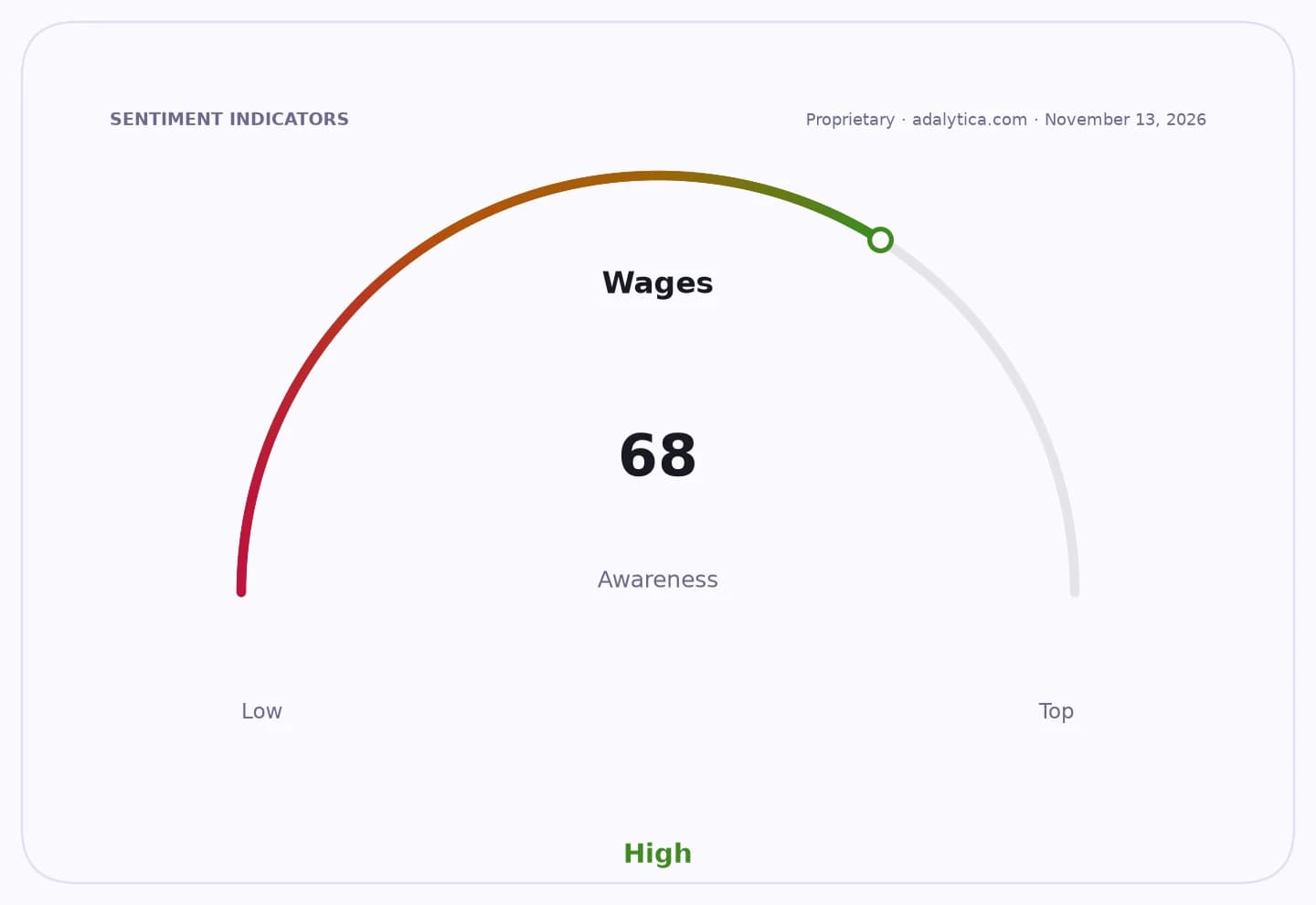
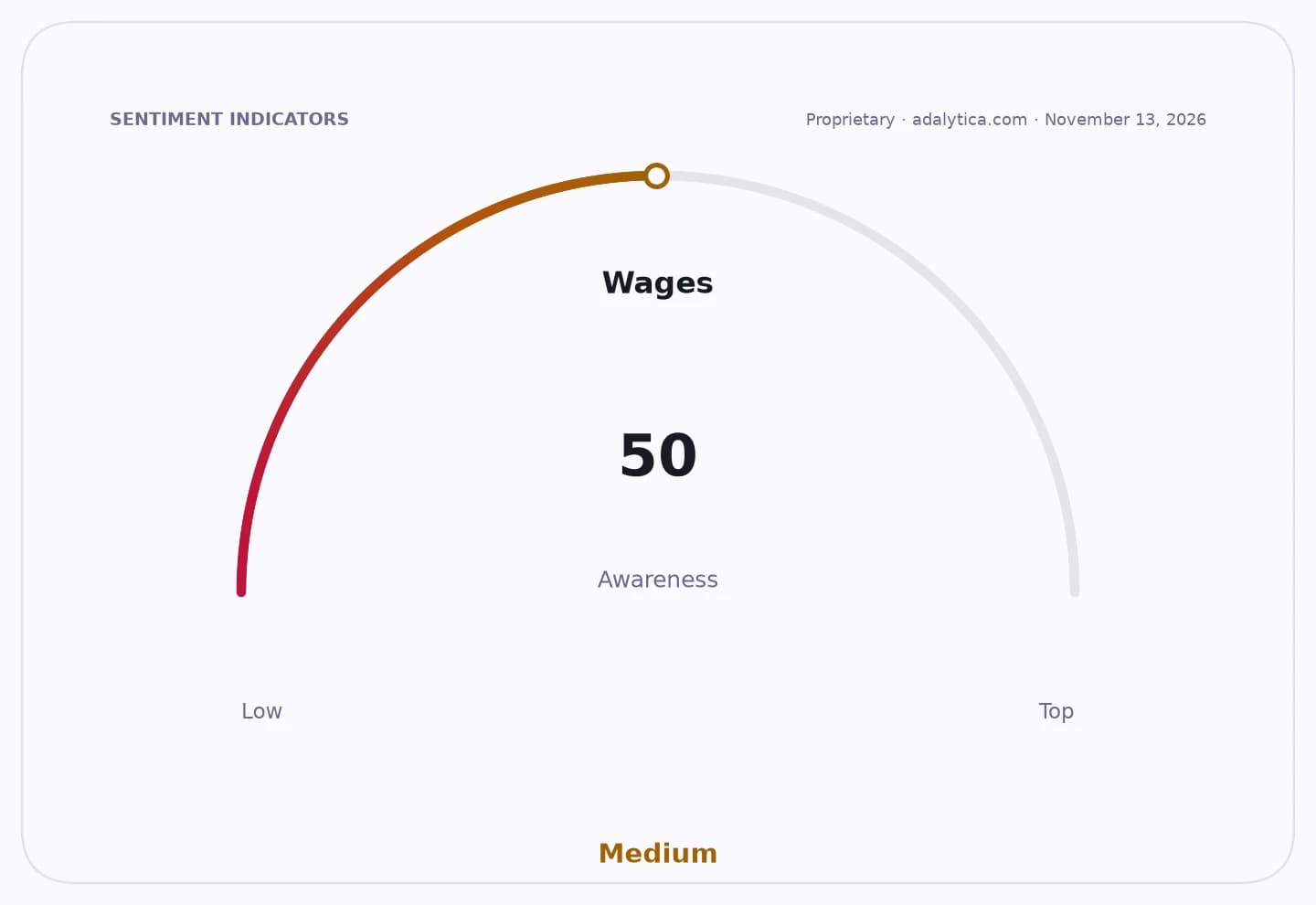
Wages
The labor-market significance is not just social. Minimum wage hikes shape the cost base for retailers, restaurants, food service groups and other labor-intensive companies, while also supporting household spending at the lower end of the income distribution. That is positive for demand, but it also risks adding to price stickiness if companies pass higher payroll costs on to consumers. The central bank’s inflation fight therefore remains in tension with wage policy, especially if the increase lands above the official inflation target.
The process itself remains unsettled. Bal said Turkish-İş has said it will not attend this year’s commission meetings, leaving the shape of the talks unclear even before a final number is set. That uncertainty matters for investors because a wage decision that is negotiated without broad labor participation could heighten social friction, while a larger-than-expected rise would intensify margin pressure for consumer-facing businesses and reinforce the case for cautious pricing power assumptions.
For markets, the key issue is whether the wage settlement signals a policy compromise that prioritizes social stability over disinflation discipline, or whether it is set close enough to inflation to avoid a fresh shock to expectations. A result in the low-30% range would be manageable for listed companies with stronger pricing power, but harder on employers with thin margins and heavy payroll exposure, particularly in retail, hospitality and food service.
| Entity | Gains | Losses |
|---|---|---|
| Minimum-wage workers | ▲Higher nominal pay | ▼Still below hunger line |
| Labor-intensive employers | ▲Predictability if raise stays near 30% | ▼Higher payroll costs |
| Consumers/households | ▲Near-term income support | ▼Risk of renewed price pressure |
| Central bank | ▲Easier if raise tracks inflation | ▼Harder if wage hike exceeds inflation |