Elly Schlein has renewed the Democratic Party’s push for a statutory minimum wage, arguing that such a floor has helped households in other countries cope with inflation and protect purchasing power as living costs rise.
Italy minimum wage debate returns under Schlein

Her comments, made at a CGIL programme assembly in Rome, put labour costs back at the centre of Italy’s political debate just as wage stagnation remains a drag on domestic demand and a source of social pressure. For investors, the issue matters because any move toward a national minimum wage would affect labour-intensive sectors first — from retail and hospitality to outsourced services — while also shaping the broader battle over margins, pricing power and consumption.
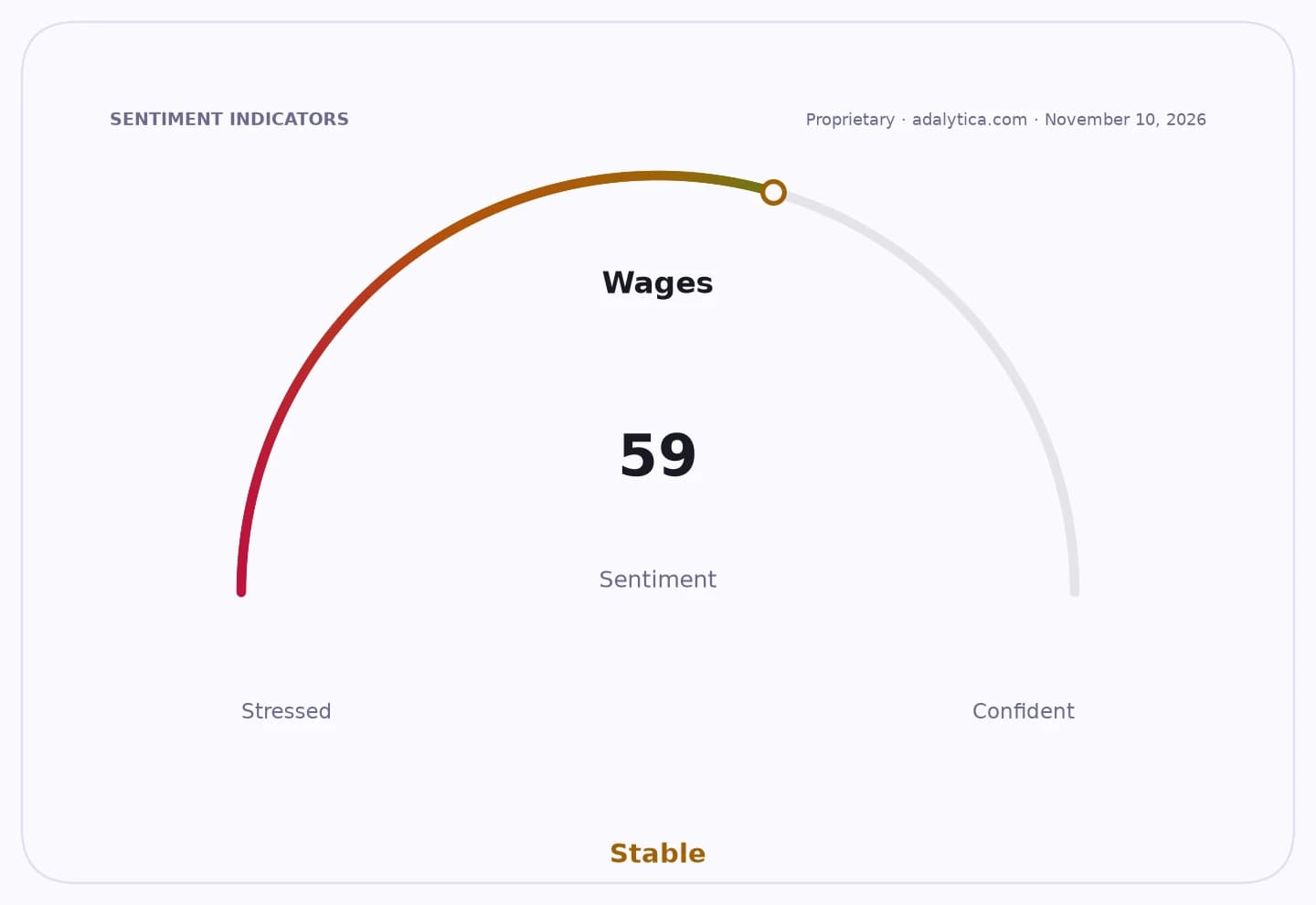
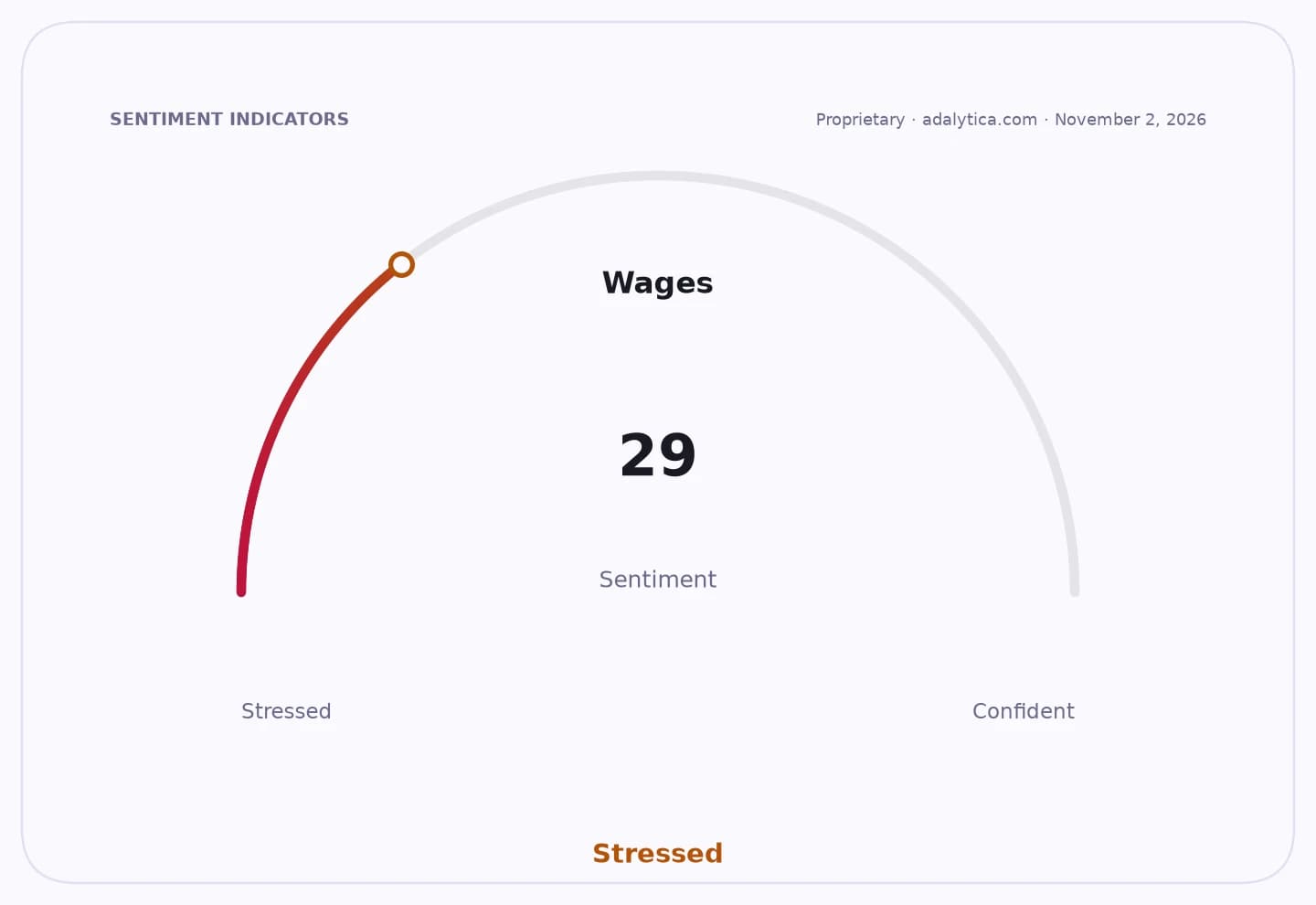
Sentiment Indicators
Schlein’s argument is political, but it rests on an economic problem that has become increasingly visible across Europe: real incomes have been squeezed for years, and inflation has amplified the gap between pay and living costs. In Italy, where wage growth has lagged peers and collective bargaining coverage is fragmented in parts of the labour market, the minimum wage debate has become shorthand for a wider question about how to support lower-income workers without worsening unemployment or adding to business costs.
The timing also matters. Italy’s inflation surge has eased from recent highs, but the damage to household budgets has not been fully repaired. With consumer sentiment fragile and the recovery uneven, any policy that lifts the pay of the lowest earners could support spending at the margin. The trade-off is that employers facing tighter labour conditions and slimmer margins may resist mandated pay increases, particularly if they cannot pass higher wage bills through to customers.
The economic logic behind minimum wage rises is not one-sided. Supporters say they cushion the poorest households most effectively because those workers are likeliest to spend extra income quickly, strengthening demand. Critics argue that if the floor is set too high, it can pressure hiring, accelerate automation or force smaller firms to absorb costs they can ill afford. The German debate has become a reference point because a large increase there was broadly absorbed, but Italy’s wage structure, productivity profile and firm size mix are different.
For markets, the near-term impact is less about a headline policy announcement than about how far the debate spreads and whether it becomes part of a broader labour reform package. Any serious legislative push could revive scrutiny of sectoral margins, wage settlements and the cost base of companies with large low-paid workforces. It would also test the government’s willingness to intervene in pay-setting at a time when European policymakers are still trying to balance inflation control with social protection.
The likely outcome is more political pressure before a definitive policy shift. But Schlein’s intervention keeps the issue alive, and that alone matters: in an economy where inflation has already weakened purchasing power, the minimum wage has become one of the clearest fault lines between labour protection and business competitiveness.
| Entity | Gains | Losses |
|---|---|---|
| Low-paid workers | ▲Higher take-home pay | ▼None if jobs preserved |
| Labour unions | ▲Stronger bargaining leverage | ▼Less room for compromise |
| Labour-intensive firms | ▲Predictable pay rules | ▼Higher wage costs |
| Consumers/households | ▲Better household income support | ▼Risk of higher prices |