UAE private-sector companies are passing higher costs on to customers at the fastest pace on record, a sign inflationary pressure is building even as the non-oil economy continues to expand solidly.
UAE Non-Oil Firms Raise Prices at Record Pace
CPI
The rise in selling prices came alongside a still-healthy reading in the UAE’s non-oil purchasing managers’ index, which eased to 54.8 in October from 55.3 in September but remained well above the 50-point threshold that separates growth from contraction. The survey showed that demand remained firm, with new orders accelerating and export sales growing at their quickest rate in two years.
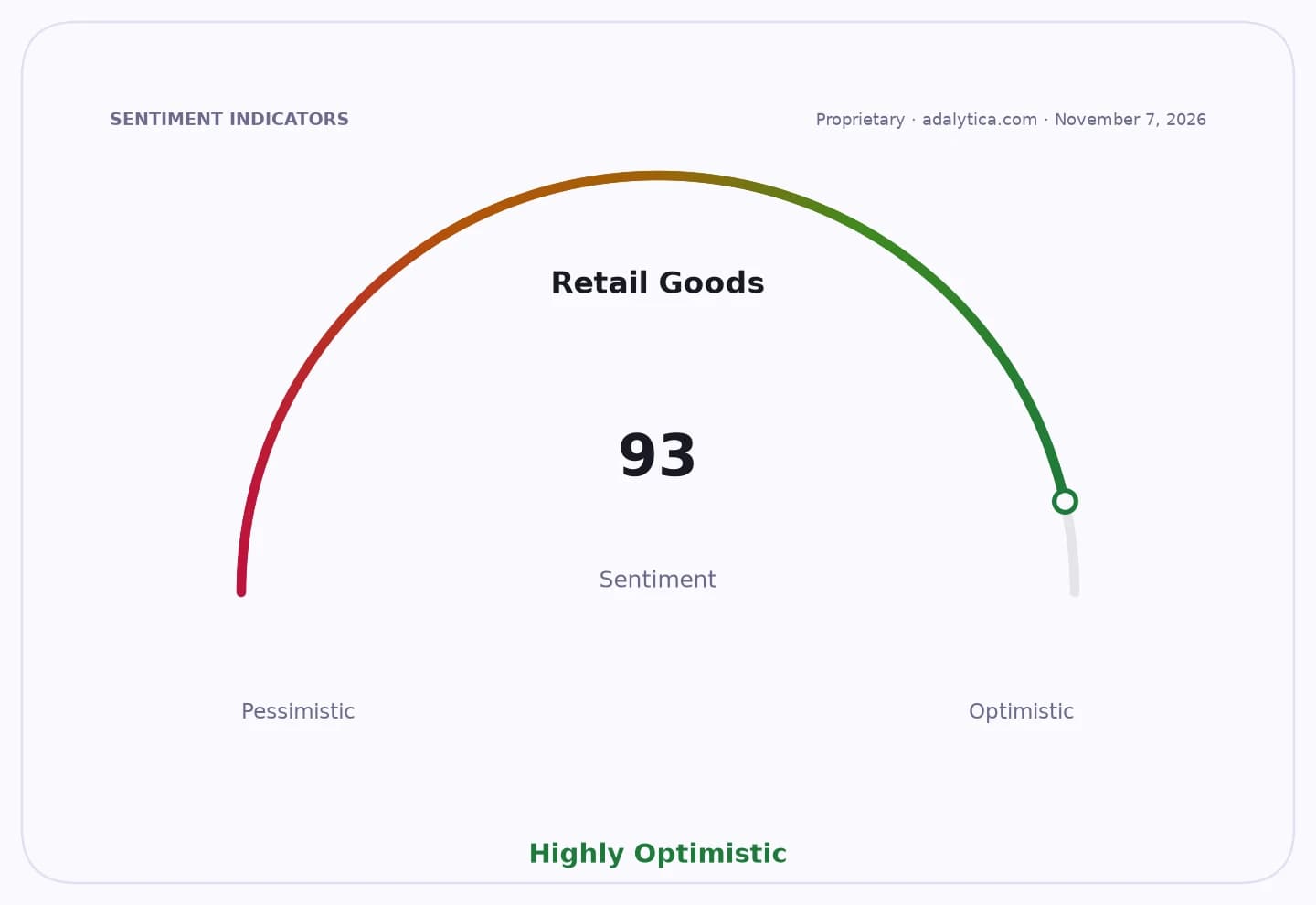
Sentiment Indicators
That combination matters for the wider economy because it suggests companies are still seeing enough demand to protect margins by raising prices, rather than absorbing higher costs. But it also points to a tougher inflation backdrop for consumers and businesses, with input costs rising at the fastest pace since June 2022 on the back of more expensive raw materials, fuel, energy and shipping.
David Owen, senior economist at S&P Global Market Intelligence, said output prices in the non-oil private sector increased at the strongest rate in the survey’s history, which began in August 2009. He added that input-cost inflation also climbed to its highest level since mid-2022.
The survey showed broad-based strength across construction, retail, tourism and manufacturing, even as some firms flagged concerns about regional conflict, competition and weaker discretionary spending. New orders were supported by both fresh customer wins and repeat business, while export demand accelerated as the UAE’s role as a trade hub continued to deepen.
Employment was the soft spot. Companies trimmed headcount slightly for a third month in the past five, a cost-control move that helped push backlogs higher, though at the slowest pace in three months. For investors, that mix argues for resilient revenue growth in the near term but also raises the risk that margin pressure and consumer price sensitivity will become more visible if cost inflation stays elevated.
The next test is whether demand can keep absorbing higher prices without slowing the pace of expansion, especially if geopolitical disruption or shipping costs intensify further into year-end.
| Entity | Gains | Losses |
|---|---|---|
| UAE non-oil firms | ▲Stronger pricing power | ▼Higher wage and input pressure |
| Consumers | ▲None | ▼Higher prices for goods and services |
| Export-oriented businesses | ▲Faster overseas demand | ▼Elevated shipping costs |
| Investors | ▲Revenue growth support | ▼Margin and inflation risk |