Saudi Arabia’s drive to build a larger manufacturing base is running into a stubborn inflation problem: imported supply shocks can keep pushing up wholesale costs months after global bottlenecks begin to ease.
Saudi Arabia Wholesale Inflation Lags Supply Shocks

That is the key message from new research on Saudi Arabia’s price formation, which finds that disruptions in international supply chains raise wholesale inflation across most sectors with the strongest effects arriving three to five months after the initial shock. Even when the monthly inflation impulse fades, the cumulative price impact can remain positive, leaving firms with permanently higher input costs.
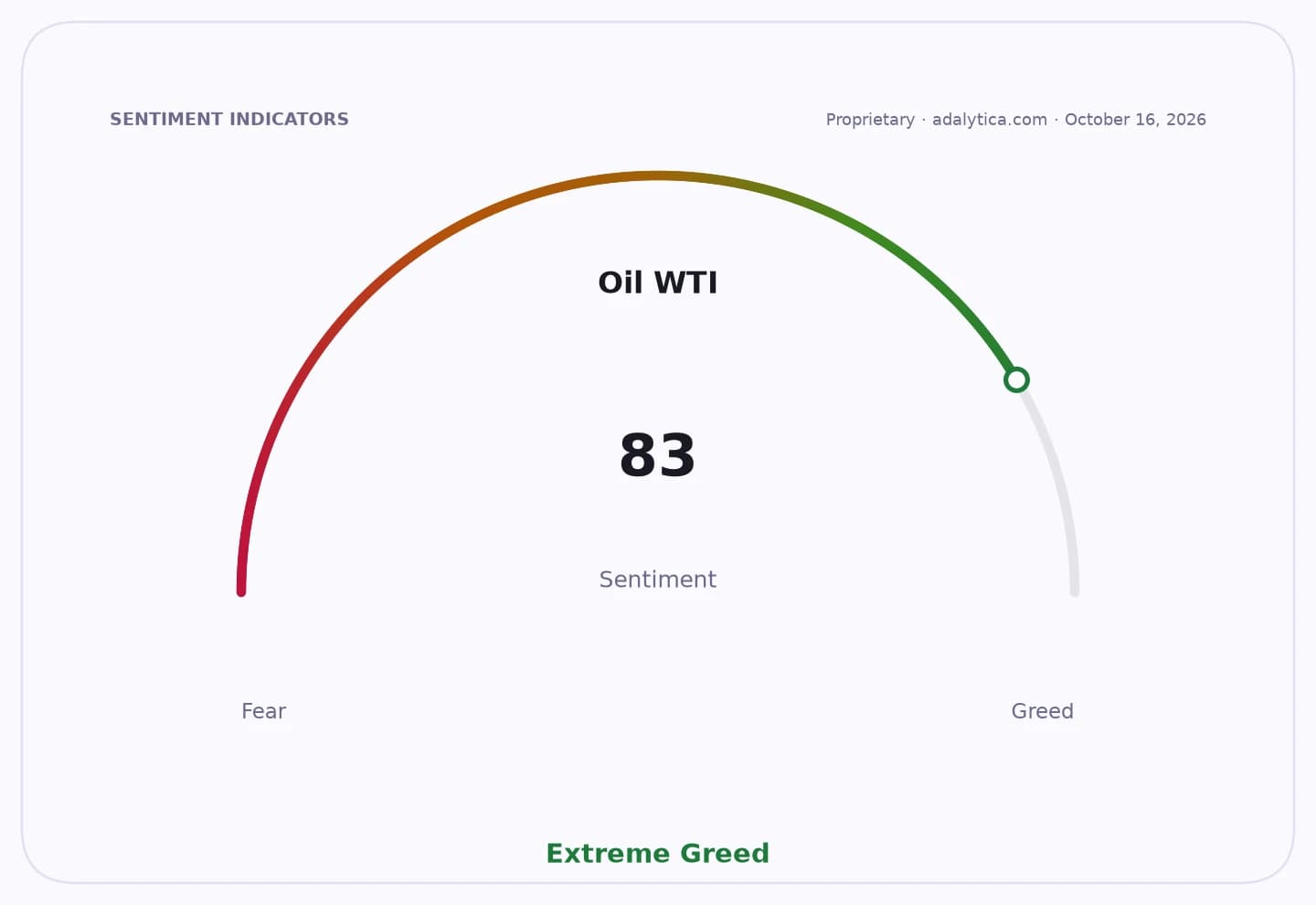
Sentiment IndicatorsⓘProprietary · adalytica.com · October 18, 2026
This is a snapshot — live sentiment, awareness and momentum for 130+ markets update continuously in the dashboard.Open AlphaPulse
The finding matters because Saudi Arabia’s diversification strategy under Vision 2030 depends heavily on imported machinery, raw materials and intermediate goods. International trade amounted to about 62% of gross domestic product in 2023, underscoring how deeply the economy remains tied to external supply networks even as policymakers seek to broaden the non-oil base.
That dependence is most visible in the sectors that matter most to industrial production. Capital and intermediate goods made up roughly 70.6% of Saudi imports in the first quarter of 2026, while metal products, machinery and equipment accounted for 39.7% of the wholesale price index. Food products, beverages, tobacco and textiles were another 17.3%. In other words, even modest price increases in these categories can feed through to aggregate wholesale inflation and squeeze margins for manufacturers and food producers.
The study, published in Sustainability by researchers from King Saud University and Princess Nourah bint Abdulrahman University, used monthly data from January 2014 through March 2026 and benchmarked Saudi wholesale prices against the New York Fed’s Global Supply Chain Pressure Index. It found a cumulative rise of about 0.5% in the overall wholesale price index after a one-standard-deviation supply shock, with the clearest response appearing between the fifth and seventh months.
The bigger message for policymakers is that industrial policy and supply-chain resilience can no longer be treated as separate issues. Building factories is not enough if the equipment, inputs and logistics needed to run them remain exposed to global disruptions. The researchers argue that Saudi authorities should fold supply-chain indicators into inflation forecasting because wholesale price pressure tends to peak with a lag, giving monetary and fiscal officials an early warning signal.
That warning matters more in Saudi Arabia than in countries with flexible exchange rates. The kingdom’s fixed exchange-rate regime limits the currency’s ability to absorb imported inflation automatically, making supply shocks more likely to pass through into domestic prices and corporate costs.
For investors, the implications cut both ways. On one side, persistent input inflation supports pricing power in firms tied to energy, logistics and basic materials, and it reinforces the case for companies with strong procurement networks or domestic sourcing. On the other, it raises the risk that industrial diversification becomes more expensive than planned, compressing margins for manufacturers, construction-linked businesses and food producers that depend on imported inputs.
The sector breakdown is especially relevant. Ores and minerals showed the largest proportional cumulative response, close to 1.4%, while agricultural and fishery products rose about 1.1% and food-related manufacturing gained roughly 0.91%. Metal products, machinery and equipment rose about 0.88%. Yet the most inflation-sensitive categories were not always the most important in the broader index, which is why the aggregate figure can look contained even as crucial industrial inputs become more expensive.
That distinction helps explain why Saudi inflation may appear stable at the consumer level even as underlying cost pressures persist in wholesale markets. The headline consumer inflation rate held at 1.9% year on year in September, but wholesale costs are the channel most relevant to investment decisions, inventory strategy and industrial margins.
The wider market backdrop reinforces the point. Oil prices remain volatile and geopolitical risk continues to move energy and freight markets, while the U.S. dollar has weakened in recent trading, adding another layer of imported-price uncertainty for economies pegged to the dollar. Saudi equities have been buoyed by energy strength, but the industrial story is less comfortable: higher commodity and logistics costs can eventually feed into capex decisions, working capital needs and earnings guidance.
| Entity | Gains | Losses |
|---|---|---|
| Domestic producers with local supply chains | ▲Better cost control | ▼Less exposure to imported shocks |
| Import-dependent manufacturers | ▲Ability to diversify sourcing | ▼Higher input costs |
| Saudi policymakers | ▲Better inflation forecasting tools | ▼Greater policy pressure from imported inflation |
| Energy/export-linked firms | ▲Support from higher oil-linked pricing power | ▼None from supply bottlenecks |