EU wheat prices are being supported by two forces that matter directly to the global grain balance: continued problems moving Black Sea exports and fresh demand from Saudi Arabia.
EU wheat prices rise on Black Sea shipping delays
That combination is tightening near-term supply expectations and giving European sellers a better chance to compete in an export market that has been pressured by ample Russian grain and volatile freight flows. For importers, it raises the odds of firmer replacement costs at a time when food inflation is still politically sensitive in many economies.
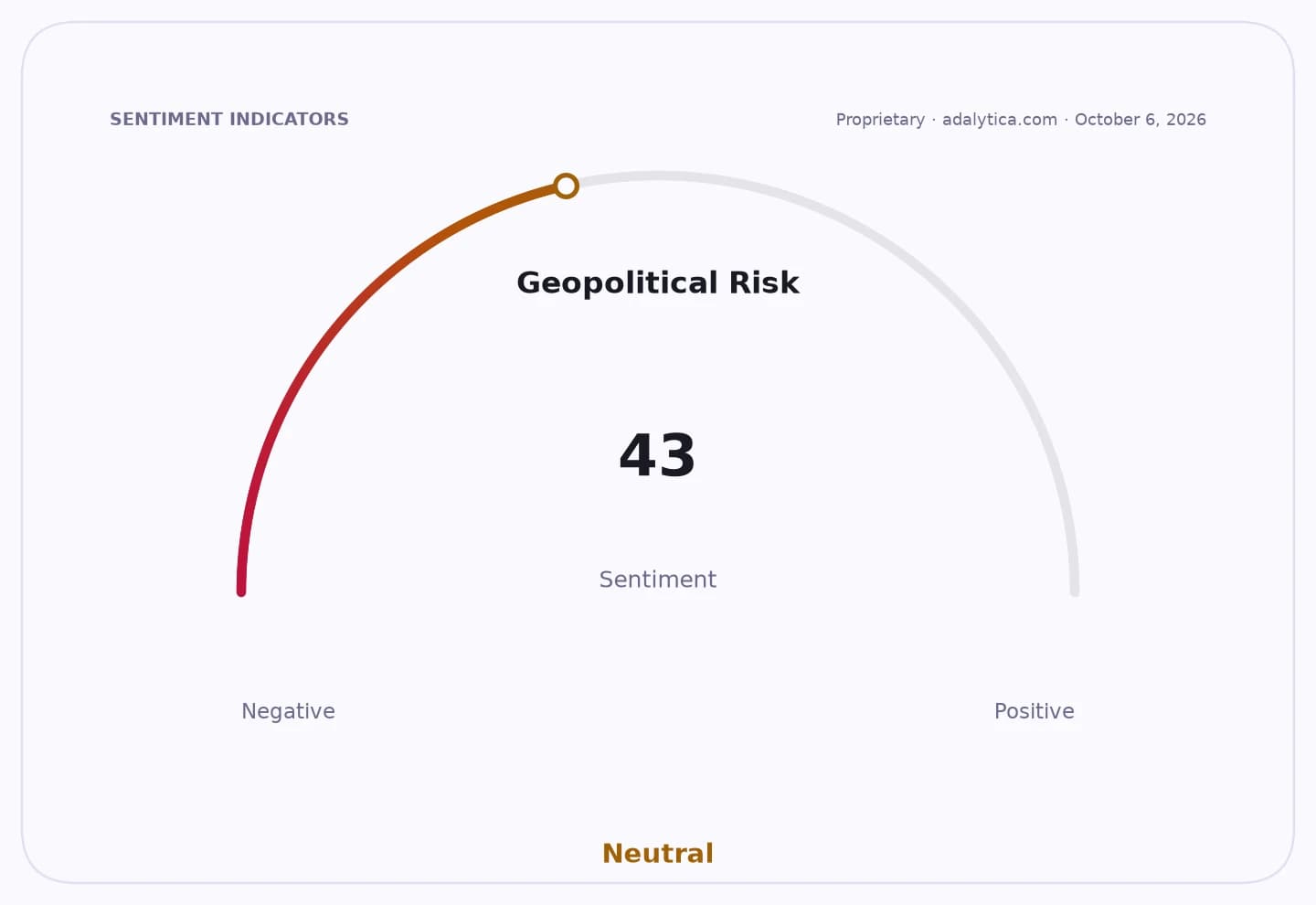
Sentiment IndicatorsⓘProprietary · adalytica.com · October 6, 2026
This is a snapshot — live sentiment, awareness and momentum for 130+ markets update continuously in the dashboard.Open AlphaPulse
Black Sea shipping interruptions have repeatedly rippled through wheat markets because the region remains one of the world’s most important export corridors. When cargoes are delayed or rerouted, buyers look elsewhere, lifting demand for alternatives from the EU, the U.S. and other origins. The Saudi tender adds a concrete source of buying into that picture, reinforcing the idea that importers are still active even as global grain flows remain uneven.
The move also fits with broader commodity trading patterns. Corn has been firmer on delayed U.S. harvest progress, while wheat has found support from export logistics rather than from a demand surge alone. On the technical side, the wheat ETF WEAT has been trading above its 50-day moving average, though recent price action has softened from earlier highs and its RSI has slipped back toward oversold territory, suggesting the market is sensitive to fresh news but not yet in a clear trend breakout.
The economic importance is straightforward: persistent export friction in the Black Sea can keep world wheat offers tighter than crop fundamentals alone would imply. For Europe, that can improve margins and support export volumes. For grain-importing countries, it raises the cost of managing food subsidies and strategic reserves, particularly if disruptions linger into the next shipping window.
Investors will be watching whether Saudi demand is followed by more tenders from the Middle East and North Africa, and whether the Black Sea situation becomes a short-lived bottleneck or a more durable constraint. If shipping problems persist, EU wheat may keep outperforming broader agricultural benchmarks; if they ease, the rally could fade quickly as supply from the Black Sea flows back into the market.
| Entity | Gains | Losses |
|---|---|---|
| EU wheat exporters | ▲Better export prospects | ▼Price upside fades if Black Sea routes normalize |
| Black Sea suppliers | ▲None near term | ▼Lost shipments and weaker market access |
| Saudi importers | ▲Secured supply options | ▼Higher procurement costs |
| Grain buyers globally | ▲More origin diversity | ▼Higher replacement prices |