Indonesia’s September inflation may still sit inside Bank Indonesia’s target band, but the bigger story is that wholesale prices are running much hotter than what consumers see at the checkout, a gap that can squeeze business margins and keep policy makers cautious.
Indonesia September Inflation and Wholesale Prices Rise
The consumer price index rose 3.28% year on year in September 2026, according to the statistics agency, leaving inflation just below the central bank’s 3.5% ceiling. That looks manageable on the surface. But the wholesale price index climbed 6.76% from a year earlier, with building and construction costs up 9.63%, suggesting firms are absorbing sharper input-cost pressure before it fully shows up in retail prices.
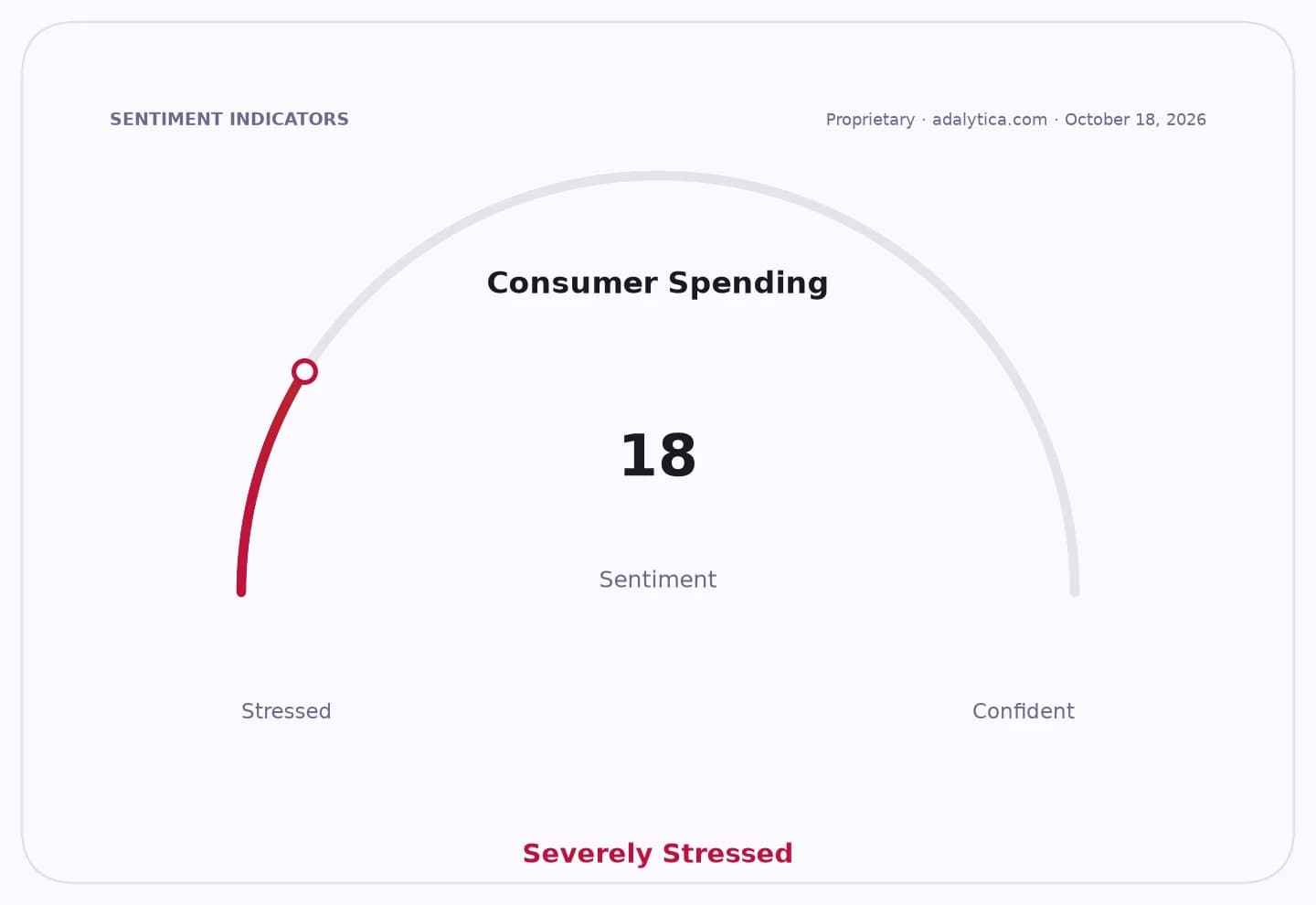
Sentiment IndicatorsⓘProprietary · adalytica.com · October 18, 2026
This is a snapshot — live sentiment, awareness and momentum for 130+ markets update continuously in the dashboard.Open AlphaPulse
That divergence matters because it often comes before broader pass-through into the consumer basket. If distributors and producers keep facing higher costs while retailers resist price increases to protect demand, margins tighten first. If firms eventually raise shelf prices, inflation can re-accelerate from here. Either path is uncomfortable for the economy: one crimps profitability, the other keeps households under pressure and limits the room for easier monetary policy.
For investors, the setup argues for caution on consumer-facing names with weak pricing power and some selective interest in businesses that benefit from inflation pass-through or infrastructure spending. The 9.63% jump in construction-related wholesale prices also puts a spotlight on contractors, materials suppliers and infrastructure-linked plays that may be able to reprice faster than general retailers.
The market is likely to read this as a warning that inflation has not been fully tamed just because consumer prices remain inside the official target range. In a macro environment where policy makers want to preserve stability, sticky wholesale inflation usually means higher-for-longer rates, tighter credit conditions and a narrower path for earnings recovery.
For now, the key is not the headline CPI alone. It is the widening gap beneath the surface. That is where the next margin squeeze — or the next inflation surprise — is likely to emerge.
| Entity | Gains | Losses |
|---|---|---|
| Producers with pricing power | ▲Can pass through higher costs | ▼None material |
| Retailers and small merchants | ▲Preserve sales volumes | ▼Margin compression |
| Construction and materials suppliers | ▲Benefit from higher input pricing | ▼Cost inflation risk |
| Rate-sensitive borrowers | ▲None material | ▼Higher-for-longer rate risk |