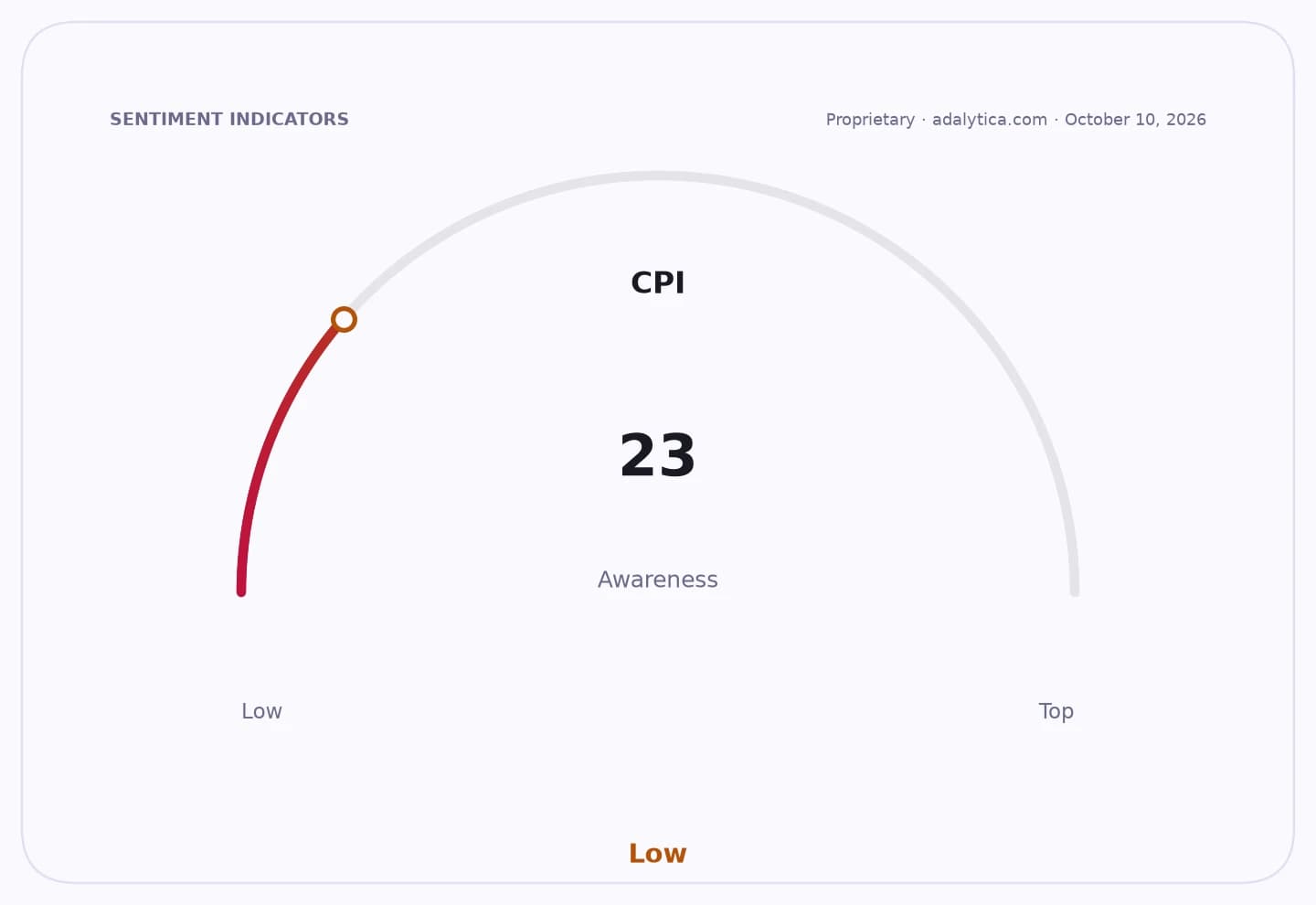
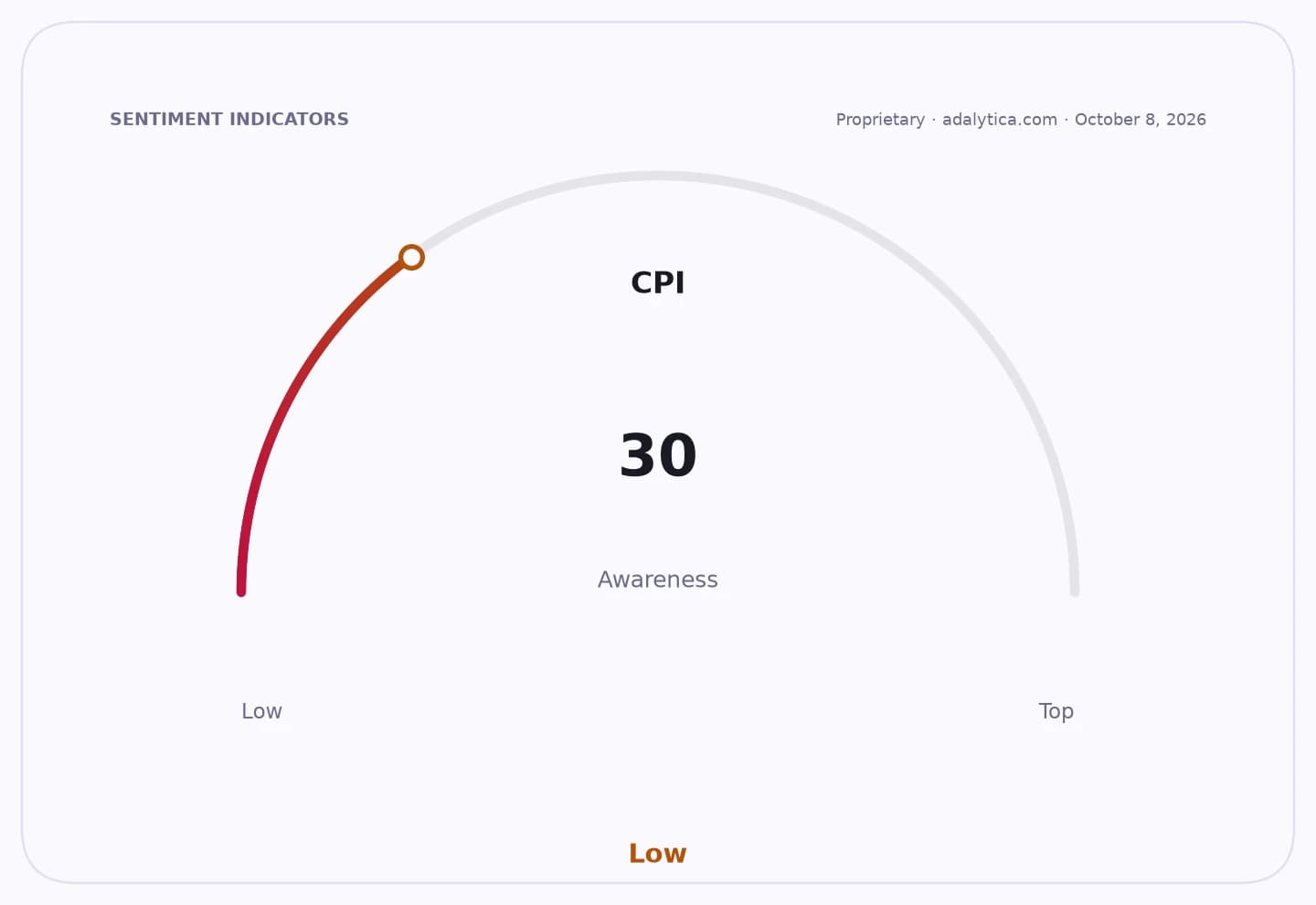
U.S. wholesale inflation accelerated far more than expected in September, with producer prices posting their biggest monthly gain since March 2022 as a surge in gasoline and transport costs rippled through the economy.
U.S. Producer Prices Rose 1.3% in September

The Producer Price Index rose 1.3% from August, the Bureau of Labor Statistics said, after a revised 0.5% increase the prior month. On a year-over-year basis, wholesale prices were up 6.3%, reinforcing concerns that inflation pressures are re-emerging after several softer readings earlier this year.
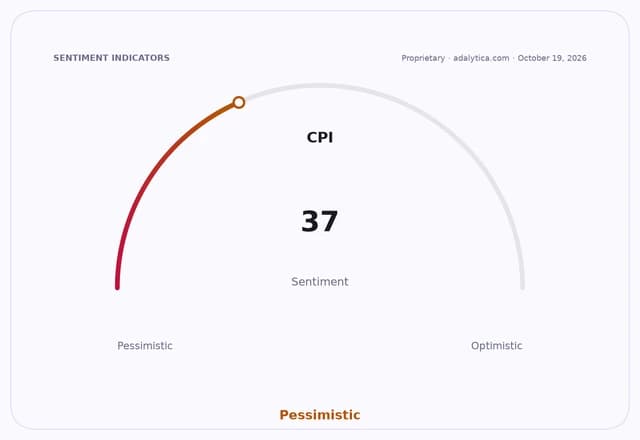
Sentiment IndicatorsⓘProprietary · adalytica.com · October 19, 2026
This is a snapshot — live sentiment, awareness and momentum for 130+ markets update continuously in the dashboard.Open AlphaPulse
Energy was the main driver. Final-demand goods prices climbed 2.6% in the month, with energy up 10.8% and gasoline jumping 20.3%, accounting for roughly half of the increase in final-demand goods, according to the BLS. Diesel, jet fuel, fresh and dried vegetables and some electrical supplies also moved higher.
Services inflation added to the pressure. Final-demand services rose 0.8%, while transportation and warehousing increased 3.4%, a sign that higher fuel costs are feeding into the broader supply chain.
PPIACO vs CPIAUCSL — macro contextadalytica.com
Explore this data interactively — full history, time series and cross-market comparisons.Open AlphaPulse
The report matters because producer prices often work their way downstream into consumer inflation if companies cannot absorb the higher input costs. That raises the risk that households will face pricier food, transport and services just as wages are already under strain from sticky living costs.
A core measure that strips out food, energy and trade services climbed 0.5% in September and was up 5.0% from a year earlier, suggesting the inflation pickup was not limited to volatile energy items. The BLS also reported a 39.7% drop in egg prices, underscoring how uneven the price picture remains.
For markets, the inflation surprise is a headwind for rate-cut bets and keeps the Federal Reserve in focus as it weighs whether price pressures are still too persistent to ease policy aggressively. The next producer price report, for October, is due on Nov. 13 and will be watched for signs that September was an outlier or the start of a broader reacceleration.
| Entity | Gains | Losses |
|---|---|---|
| Energy producers | ▲Higher realized prices | ▼Consumers, transport buyers |
| Fuel-intensive retailers | ▲Ability to pass through costs | ▼Gross margins if demand weakens |
| Fed hawks | ▲Case for tighter policy | ▼Rate-cut advocates |
| U.S. households | ▲— | ▼Higher living costs |