Guatemala’s inflation has accelerated enough to lift the cost of basic food baskets again, squeezing households that already spend a large share of income on food and transport.
Guatemala Inflation Rises as Food Basket Costs Climb
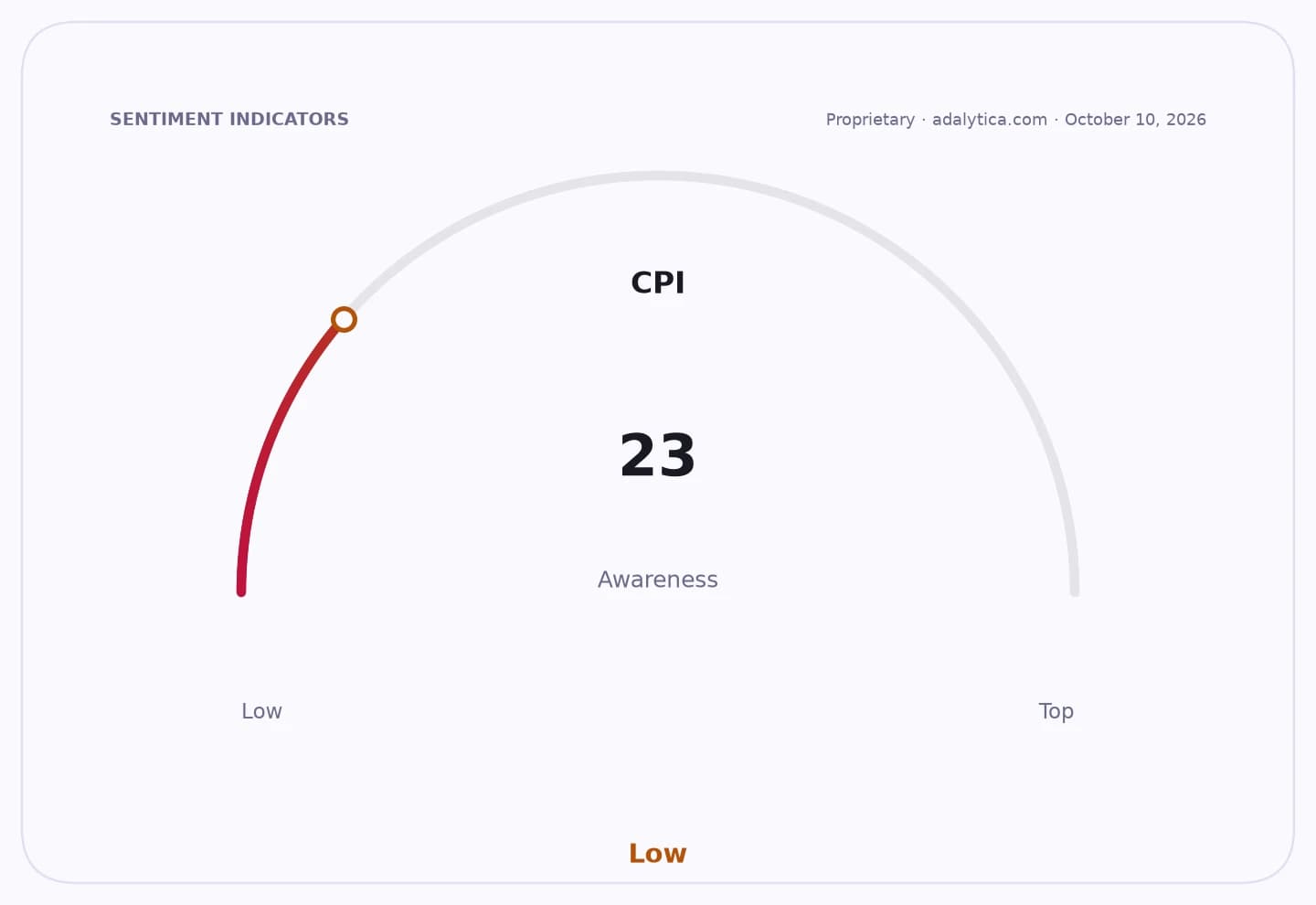
The country’s consumer prices rose 4.69% in September, up from 3.37% in August and above the Bank of Guatemala’s 4% midpoint target, while the monthly cost of the basic food basket climbed in both urban and rural areas, according to official data cited by the Institute for Economic Competitiveness and Central American Business Intelligence.
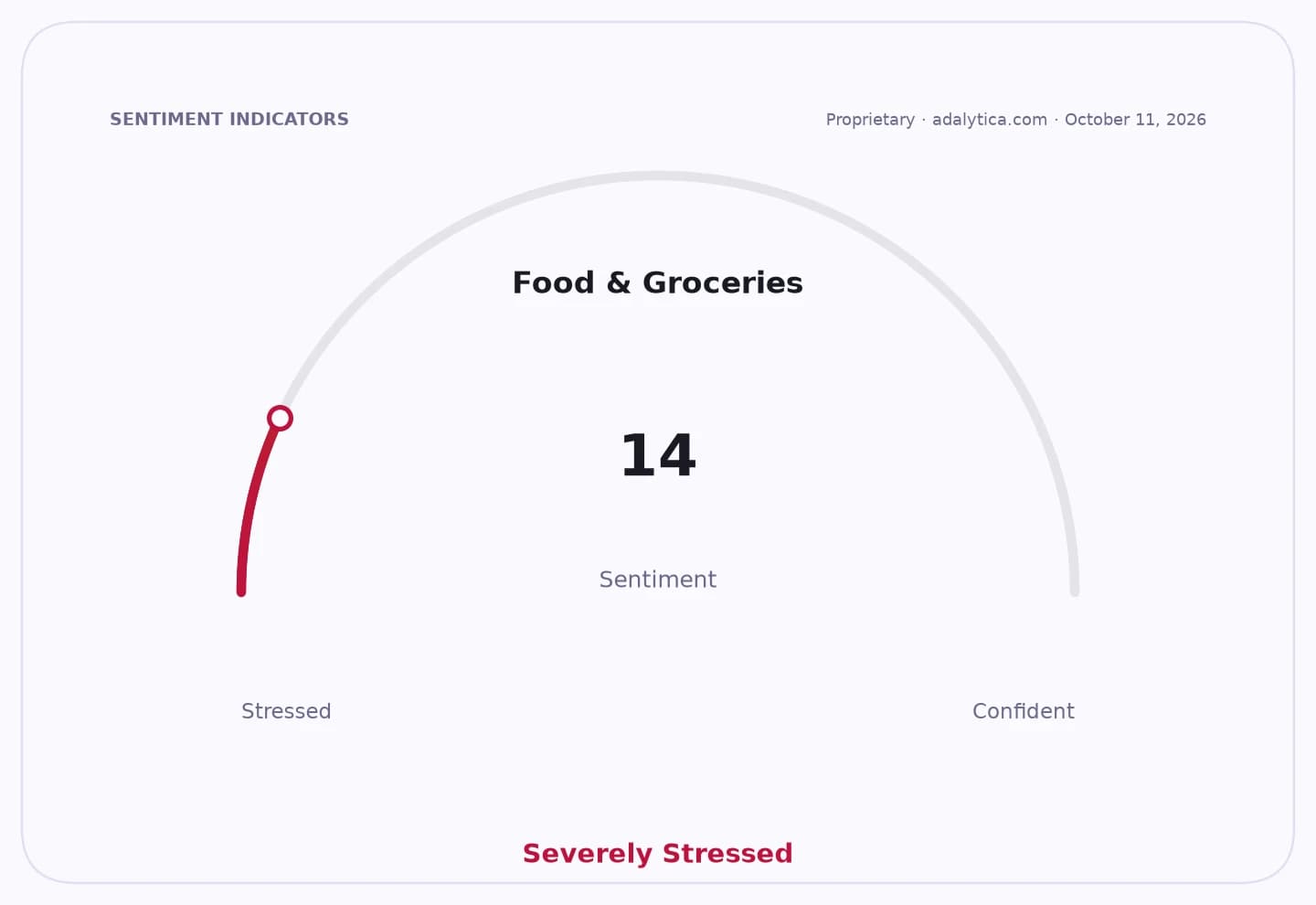
Sentiment IndicatorsⓘProprietary · adalytica.com · October 10, 2026
This is a snapshot — live sentiment, awareness and momentum for 130+ markets update continuously in the dashboard.Open AlphaPulse
That matters because food and fuel are the two most visible channels through which inflation erodes purchasing power. Even if the headline rate does not mean every item costs 4.69% more, the increase points to broader pressure on the household budget, especially for lower-income families whose spending is concentrated in essentials.
The urban basic food basket rose to Q966.74 per person in September from Q950 in August, a 1.76% monthly increase. The rural basket increased to Q751.58 from Q734.16, up 2.37%. Those figures are per person and represent the minimum food requirements used by the National Statistics Institute, not the full cost of feeding an entire family.
The move is economically significant because it suggests inflation is no longer just an abstract macro indicator but is landing directly in consumption patterns. When food prices rise faster than wages, real incomes fall, reducing room for discretionary spending and potentially slowing demand across the economy. For Guatemala, where a large portion of the population allocates a disproportionate share of income to necessities, even modest increases can have an outsized effect on living standards.
The pressure is also consistent with a broader cost structure that has been getting heavier. Economists cited in the report pointed to higher production and transport costs, pricier raw materials, shifts in supply and demand and external shocks to international prices. Fuel remains especially important because it affects logistics, distribution and ultimately the shelf price of food and other goods.
Oil has been a central variable globally, and the recent rebound in energy prices has reinforced that risk. West Texas Intermediate crude has traded near $119 a barrel this week after a sharp rally in early October, a level that can keep transport and freight costs elevated even when the pass-through is uneven. In other words, consumers do not feel every move in crude immediately, but persistent energy strength tends to work its way through the economy.
For investors, the implication is twofold. On the one hand, tighter household budgets can weigh on domestic consumption, which is a key growth engine for retailers, food producers and service businesses. On the other, companies with pricing power — including packaged-food groups and beverage makers — may be better positioned to preserve margins if they can pass through higher input and logistics costs.
That dynamic has already been visible in the earnings of multinational consumer staples groups in Latin America. Coca-Cola has said price/mix benefited from inflationary pricing in the region, while PepsiCo has pointed to effective net pricing partly offset by higher commodity costs. The Guatemala data show why that strategy remains necessary: food and fuel inflation are still working their way through consumer wallets.
The outlook now hinges on whether energy and transportation costs ease enough to slow the pass-through into staples prices. If they do not, Guatemala’s inflation rate could stay above target for longer and keep pressure on real incomes into the final quarter of the year.
| Entity | Gains | Losses |
|---|---|---|
| Food producers with pricing power | ▲Higher revenue per unit | ▼Household demand if budgets tighten |
| Fuel distributors and transport firms | ▲Higher pass-through on costs | ▼Consumers facing dearer logistics |
| Urban and rural households | ▲Little near-term gain | ▼Lower purchasing power |
| Export-oriented consumer staples companies | ▲Inflation-linked pricing support | ▼Volume risk from weaker demand |