India’s food inflation is squeezing household budgets again, with the cost of cooking at home rising as onions, edible oils, rice and LPG become more expensive.
India Food Inflation Rises as Onion Prices Surge
That matters because food is the largest spending item for most Indian families and a persistent rise in kitchen costs can quickly filter through to broader consumer inflation, denting discretionary demand and complicating the Reserve Bank of India’s rate path. It also hits lower-income households hardest, since they spend a bigger share of income on staples and have less room to absorb price shocks.
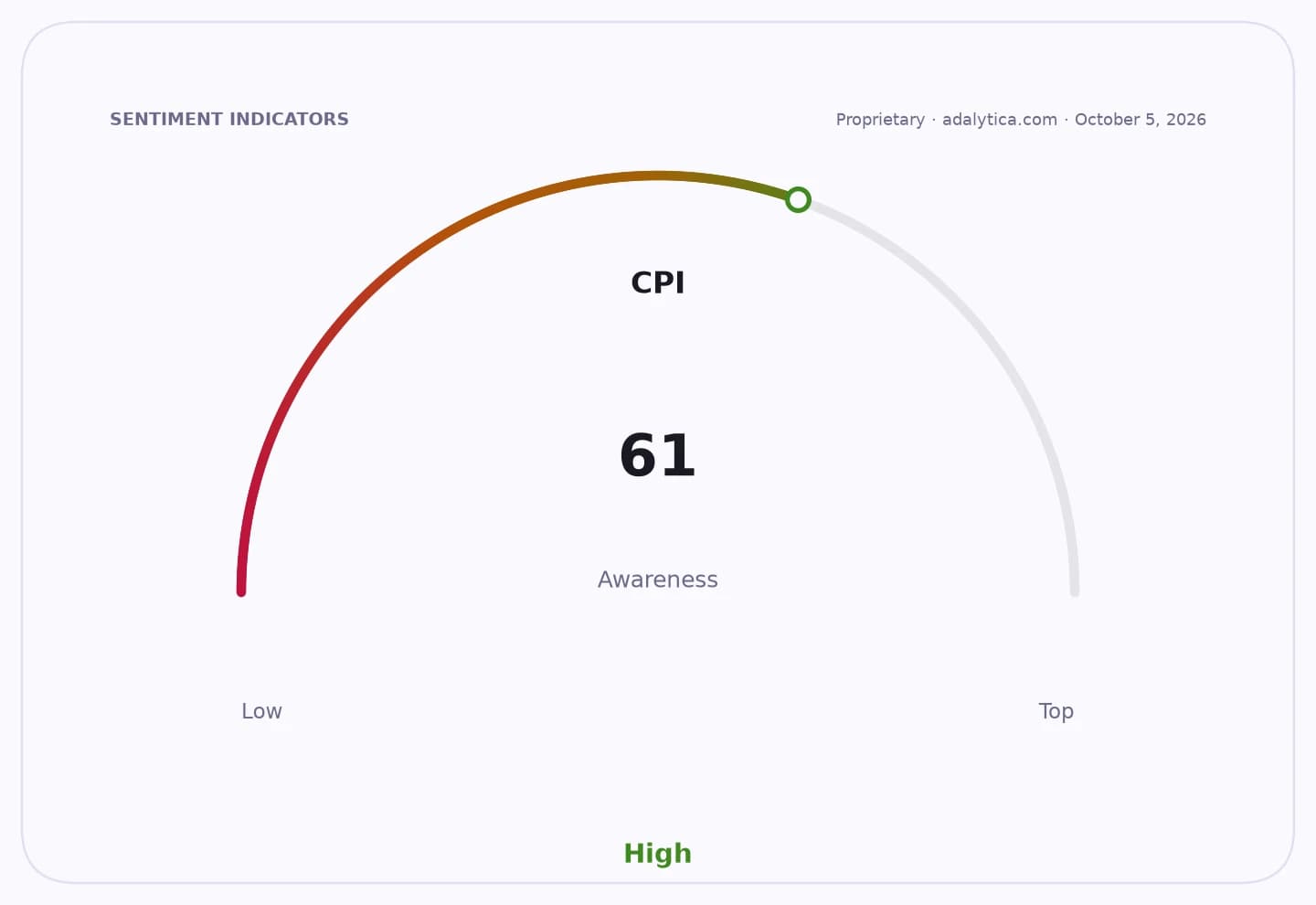
Sentiment IndicatorsⓘProprietary · adalytica.com · October 10, 2026
This is a snapshot — live sentiment, awareness and momentum for 130+ markets update continuously in the dashboard.Open AlphaPulse
CRISIL’s monthly meal plate tracker shows the average cost of a vegetarian thali rose about 10% year-on-year in September to 30.80 rupees, from 28.10 rupees a year earlier. The non-vegetarian thali increased 6% to 59.50 rupees from 56 rupees. On a monthly basis, the vegetarian plate was 4% more expensive and the non-vegetarian plate 3% higher than in August.
The biggest driver was onion prices, which jumped 89% from a year earlier to 53 rupees a kilogram. CRISIL said supplies were hit by limited rabi stock and a 5% to 6% drop in production, while rainfall in June came in about 40% below normal, delaying kharif sowing and the arrival of the new crop. In a country where onions are a kitchen staple and a politically sensitive commodity, that spike is enough to lift the cost of a basic meal even when other ingredients are stable.
Other ingredients added to the pressure. Edible oil prices were up 12% year-on-year, rice 8% and LPG 10%, according to the report. CRISIL linked higher edible oil costs to global uncertainty and the impact of El Nino on palm oil output, while rice prices were supported by expectations of lower acreage and output.
For investors, the immediate implication is that inflation may stay sticky in food-heavy baskets even if broader price pressures are more contained. That can weigh on rural consumption, keep margins under pressure for food retailers and quick-service chains that cannot fully pass through costs, and support demand for staples with pricing power. It also keeps the market attentive to government steps on buffer stocks, import policy and farm supply management.
CRISIL expects some relief only later in October, when fresh kharif arrivals reach markets and onion supplies improve. Until then, festive demand could keep prices elevated, leaving households with little room to breathe and policymakers with another reminder that India’s inflation battle often starts in the kitchen.
| Entity | Gains | Losses |
|---|---|---|
| Onion farmers with stock | ▲Higher realizations | ▼Consumers and food processors |
| Households | ▲Possible late-October relief | ▼Near-term grocery budgets |
| Food retailers/QSRs | ▲Pricing power on select items | ▼Volume growth if demand weakens |
| Policymakers | ▲Scope to use supplies and buffers | ▼Credibility if food inflation stays sticky |