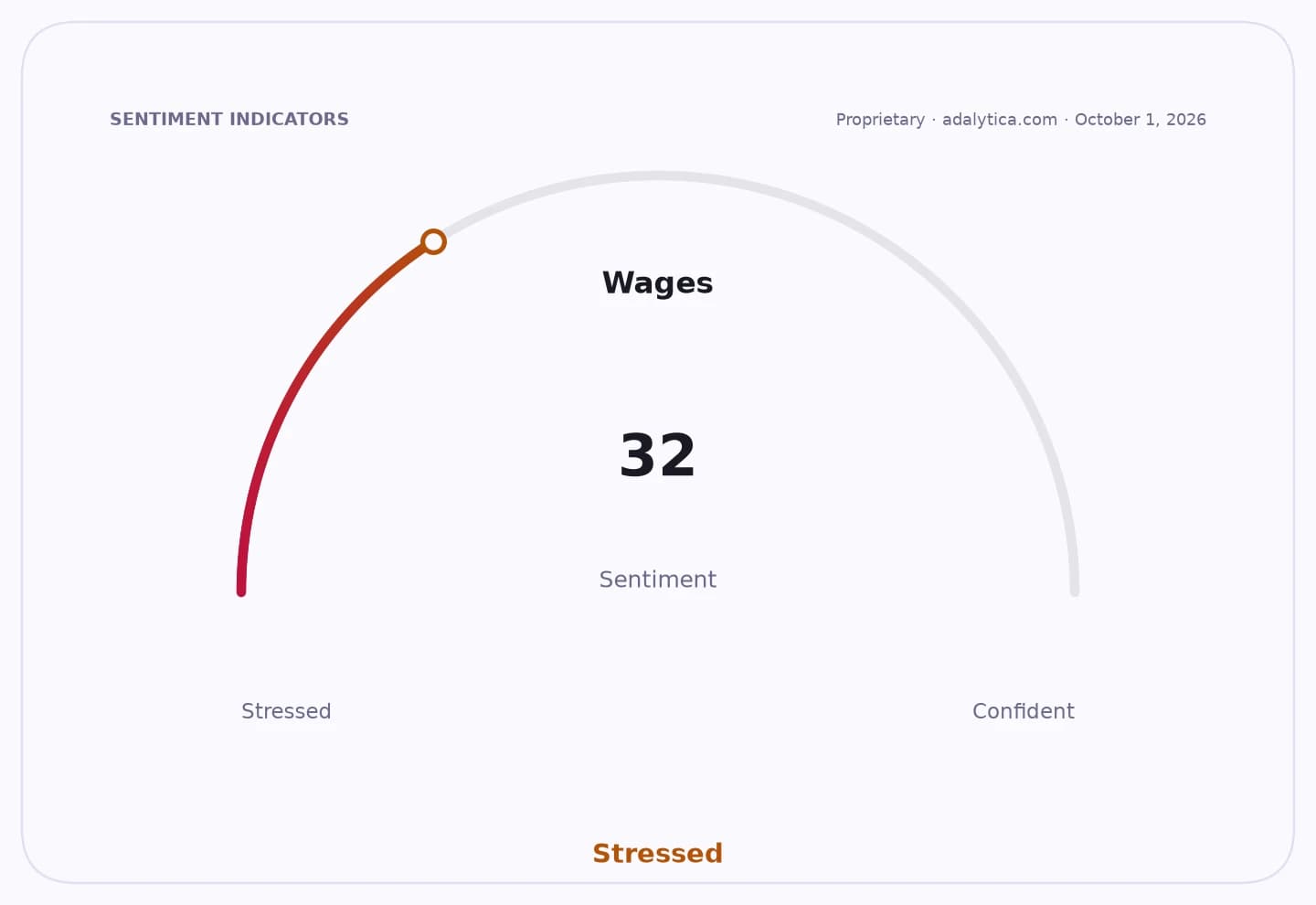
Repeated salary delays in the UAE can become a legal breach even if wages are eventually paid, putting employers under pressure from the country’s wage-monitoring system and giving employees a clear paper trail for complaints.
UAE salary delays can trigger labor penalties
For private-sector workers who depend on monthly pay for rent, school fees and loan repayments, the distinction matters: a late transfer may clear the immediate debt, but it does not erase a pattern of non-compliance. Under the UAE’s Wage Protection System, authorities can start tracking missed deadlines from the first day wages are due, with alerts from day two, suspension of new work permits from day five, penalties for repeat breaches within six months from day 11 and, in relevant cases, an automatic labour dispute by day 16.
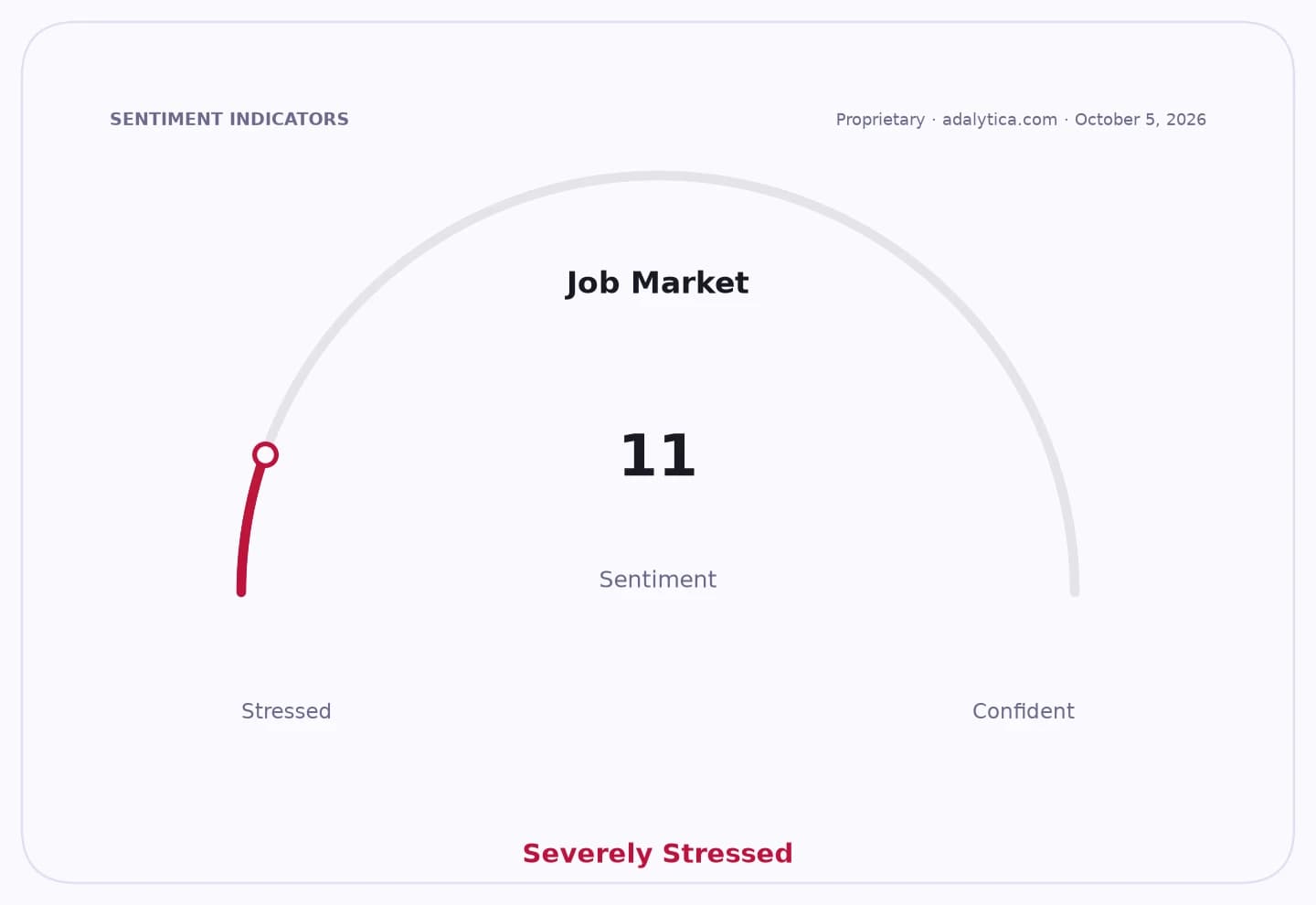
Sentiment IndicatorsⓘProprietary · adalytica.com · October 5, 2026
This is a snapshot — live sentiment, awareness and momentum for 130+ markets update continuously in the dashboard.Open AlphaPulse
That escalation framework shows why salary timing is not just a human-resources issue but a governance and liquidity issue for employers. Businesses that miss payroll can face fines, tighter scrutiny and restrictions on hiring, which can quickly spill into operating risk if delays become systemic rather than isolated. For workers, the cost can be immediate and tangible: bank charges, late fees and missed payments can create a cascading cash-flow problem even when the base salary eventually lands.
The practical advice is to document everything from the first missed deadline. Lawyers cited in the guidance say employees should email HR and payroll with the exact amount outstanding, request a specific payment date and keep all replies. If the problem continues, MOHRE-covered employees can call the labour ministry’s hotline, file a confidential “My Salary Complaint” or pursue a formal labour claim for unpaid amounts. Workers in free zones must use the relevant authority instead, including separate regimes in DIFC and ADGM.
For investors, the issue is a reminder that payroll discipline can be a useful proxy for broader balance-sheet stress, especially in labour-intensive industries where wage bills are large and recurring. Companies that repeatedly fall behind on pay risk not only regulatory action but also higher staff turnover, lower productivity and reputational damage that can make hiring and contract renewal harder.
The central message for employees is equally clear: being paid late does not mean the matter is closed. The debt may be settled, but a repeated pattern can still be reported, and any claim for additional compensation would need evidence of actual financial loss. That makes records, timestamps and written complaints the key assets in any dispute.
| Entity | Gains | Losses |
|---|---|---|
| Employees | ▲Stronger complaint rights | ▼Cash-flow disruption |
| Employers | ▲Possible early self-correction | ▼Fines and scrutiny |
| MOHRE / regulators | ▲Better enforcement leverage | ▼More dispute volume |
| Banks / landlords | ▲Clearer payment records | ▼Higher late-payment risk |