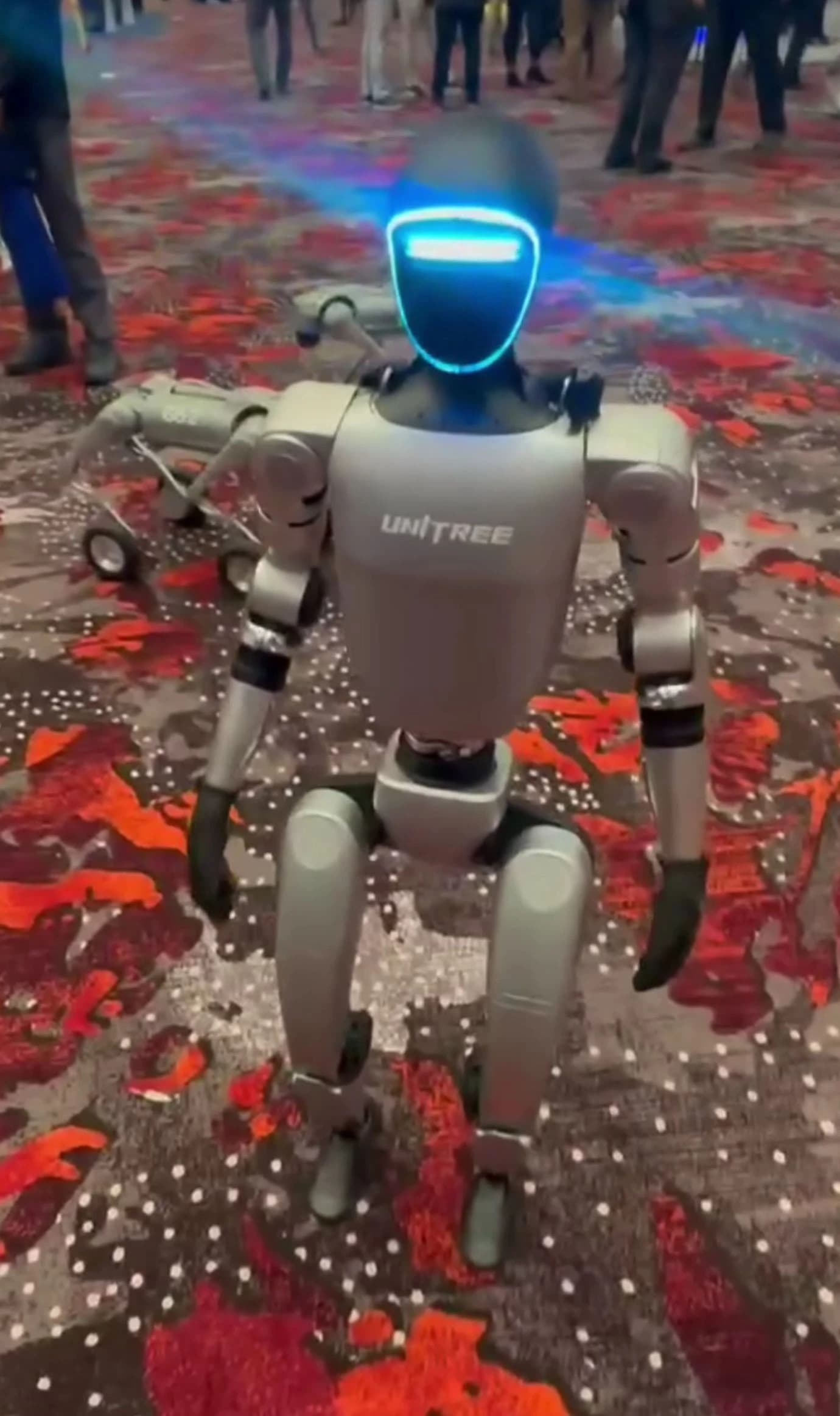
China’s push to industrialize humanoid robots has moved from pilot projects to mass-production footing, with UBTECH opening a factory in Liuzhou that is designed to make more than 10,000 units a year — a scale that could reshape a still-nascent global market.
UBTECH Opens Humanoid Robot Factory in Liuzhou
The new plant matters because it signals that China is treating humanoid robots less like a research curiosity and more like an industrial product that can be built on assembly lines, automated logistics and digital quality control. UBTECH says the 14,000-square-meter facility, developed with Siemens, can turn out a robot roughly every 10 minutes, with other robots handling material transport and factory logistics. That kind of throughput is the difference between a sector defined by prototypes and one that can begin to meet commercial orders at scale.
Sentiment IndicatorsⓘProprietary · adalytica.com · September 28, 2026
This is a snapshot — live sentiment, awareness and momentum for 130+ markets update continuously in the dashboard.Open AlphaPulse
The timing also underscores the gap between capacity and demand. Global humanoid robot sales were only about 7,000 units in 2025, according to the International Federation of Robotics, meaning UBTECH alone is preparing for annual output that exceeds the entire market’s recent global sales. That raises the stakes for pricing, utilization and customer adoption: if factory volumes run ahead of actual orders, margins could stay under pressure even as production costs fall over time.
UBTECH’s latest figures show both the opportunity and the constraint. It delivered 921 full-size humanoids in the first half of 2026, generating 1.27 billion yuan in revenue but still posting a 339 million yuan loss. For investors, that is the central tension in humanoid robotics: capital-intensive manufacturing can create scale, but profitability depends on moving beyond research buyers and data-gathering clients into repeat industrial use cases. At present, many humanoids are still being purchased for experimentation rather than production lines.
China’s broader industrial policy push gives the sector momentum. The country has been trying to extend its lead in advanced manufacturing, and humanoids fit a strategy that links robotics, artificial intelligence and factory automation. But the commercial test will be whether these machines can do more than demonstrate technological prowess. For now, the market remains small, and factory utilization will hinge on whether manufacturers, logistics groups and industrial customers decide humanoids are reliable enough to justify deployment.
For investors, the bullish case is that China’s scale, supply chain depth and state-backed manufacturing ecosystem can compress costs and accelerate adoption, benefiting robot makers, component suppliers and automation software vendors. The bearish case is that supply is arriving faster than end-demand, leaving firms exposed to weak margins, uneven order flow and a longer path to profitability.
The next catalyst will be order conversion: if UBTECH can turn its new capacity into sustained shipments, the factory could become a template for the sector. If not, it will stand as evidence that humanoid robotics is still building the market it hopes to serve.
| Entity | Gains | Losses |
|---|---|---|
| UBTECH | ▲Higher production scale | ▼Near-term margin pressure |
| Chinese robotics sector | ▲Industrial credibility | ▼Risk of overcapacity |
| Industrial customers | ▲Lower unit costs | ▼Trial-and-error adoption |
| Global humanoid rivals | ▲Sector validation | ▼China scale advantage |