The UK’s digital-asset industry is pressing the Treasury to lock in a one-year deadline for a national crypto strategy, arguing that any delay would hand momentum to rival financial centers and weaken Britain’s bid to become a hub for digital finance.
UK crypto strategy deadline under Treasury review
Bitcoin
That matters because the fight over “Clause 50” is no longer a niche lobbying dispute. It is a decision about whether the UK wants to set a clear rulebook for crypto and stablecoins at a time when capital, talent and infrastructure are moving fast toward jurisdictions that can offer regulatory certainty. For investors, the difference is material: a published strategy would help de-risk new product launches, deepen institutional participation and support the long-term earnings power of exchanges, brokers, payment firms and fintech platforms exposed to digital assets.
Sentiment Indicators
Nearly a dozen trade groups, including Innovate Finance, TheCityUK and Tech UK, have urged Chancellor Rachel Reeves to keep the obligation in the Financial Services and Markets Bill, warning that Britain should not assume its early lead in digital finance will hold without a formal blueprint. Their message is straightforward: other markets are moving quickly, and policy ambiguity is a competitive disadvantage. Coinbase’s policy team has echoed that view, while critics inside government argue the deadline could cut across work already under way by regulators.
The stakes are higher because crypto has moved beyond speculative trading and into the plumbing of the financial system. Stablecoins are increasingly tied to payments, settlement and treasury management, and the Bank of England is due to finalize its own stablecoin regime later this year. A coherent UK strategy would not just shape compliance; it would influence where firms choose to base operations, where venture funding flows and how quickly banks and payment companies can build digital-asset offerings.
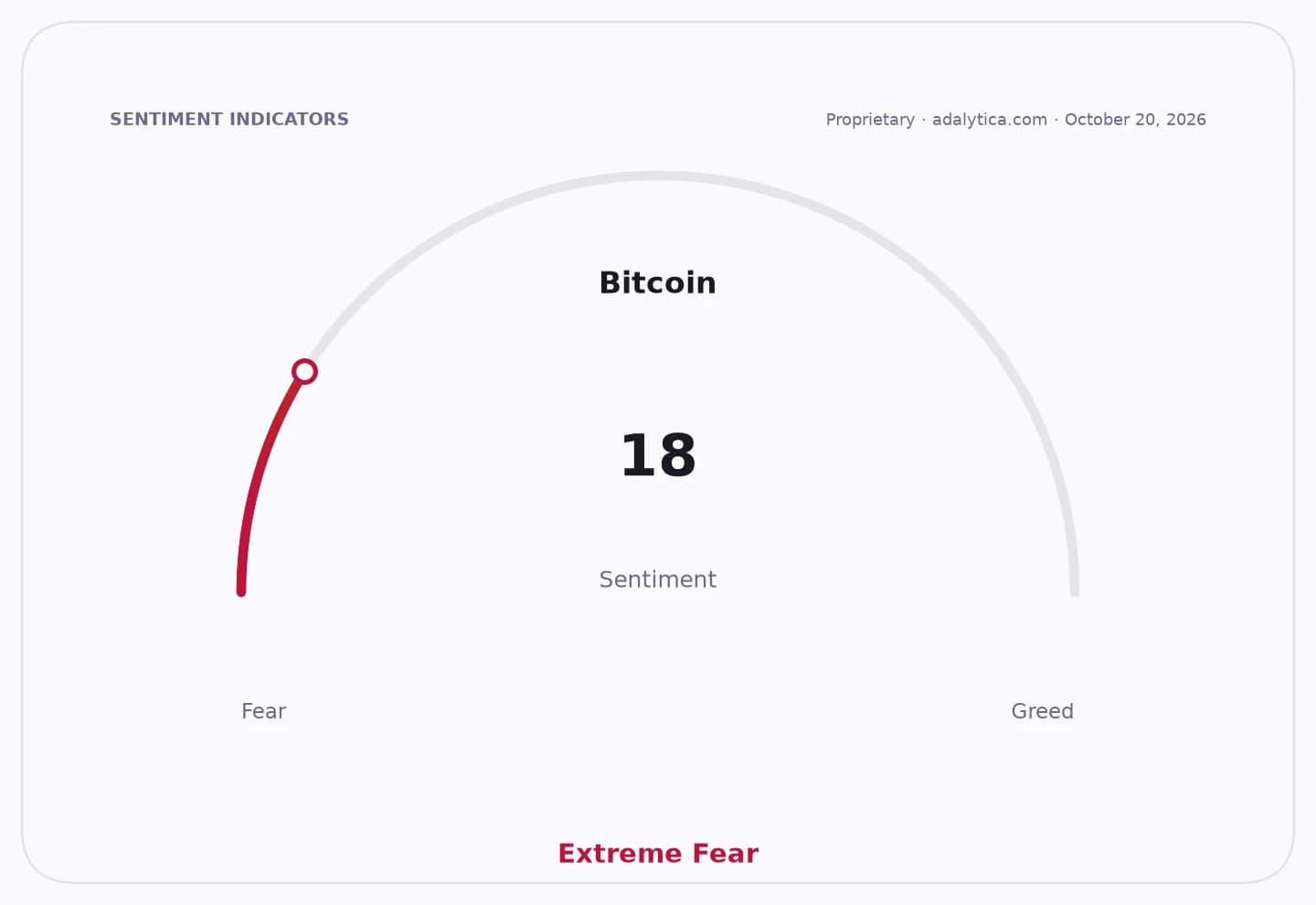
The market backdrop underscores why clarity matters. Coinbase shares have been under heavy pressure, with the stock recently trading at 137.83 after slipping below its 50-day average and remaining under its 200-day average, a sign that investors are still discounting regulatory and earnings uncertainty. MicroStrategy, now a leveraged proxy for bitcoin, has also weakened, with the stock around 130.76 and drifting below both its 50-day and 200-day moving averages. Bitcoin itself has been volatile, trading near $77,018 after a sharp pullback from above $81,000 in early September, while Adalytica’s Bitcoin Fear & Greed Index shows “Extreme Fear” even as awareness remains at extreme levels — a reminder that sentiment can turn fast when policy and liquidity questions collide.
That is exactly why the Treasury decision next week matters. If ministers preserve the deadline and publish a credible roadmap, the UK could attract more exchanges, custodians, stablecoin issuers and fintech builders looking for a predictable base in Europe. If they dilute or delay it, the market is likely to assume Britain is ceding ground just as the next phase of crypto adoption — institutional, regulated and payments-driven — begins to scale.
For investors, the asymmetry is clear: policy certainty is the catalyst that can widen the opportunity set, while delay keeps the sector trapped in a valuation discount. The winners are the firms that thrive when crypto becomes infrastructure, not just a trade.
| Entity | Gains | Losses |
|---|---|---|
| UK digital-asset firms | ▲regulatory clarity | ▼policy uncertainty |
| Coinbase and peers | ▲easier product rollout | ▼slower adoption |
| UK Treasury/UK market | ▲competitiveness boost | ▼leadership risk |
| Rival financial centers | ▲talent inflow | ▼UK advantage |