Governor Andrew Bailey’s warning that higher defense spending must be financed in a way that reassures bond investors lands at a fragile moment for sovereign debt markets, where even modest shifts in fiscal credibility can move yields and spill into currencies and equities.
UK defense spending funding questions weigh on bonds

The immediate economic significance is not the defense bill itself, but the financing question it raises. With global borrowing costs still elevated, investors are increasingly sensitive to governments adding supply without a clear funding plan. Bailey’s comments underscore a broader market concern: if the UK, Europe and other major economies expand military spending at the same time as deficits remain sticky, bond markets may demand a higher term premium, lifting long-dated yields and tightening financial conditions.
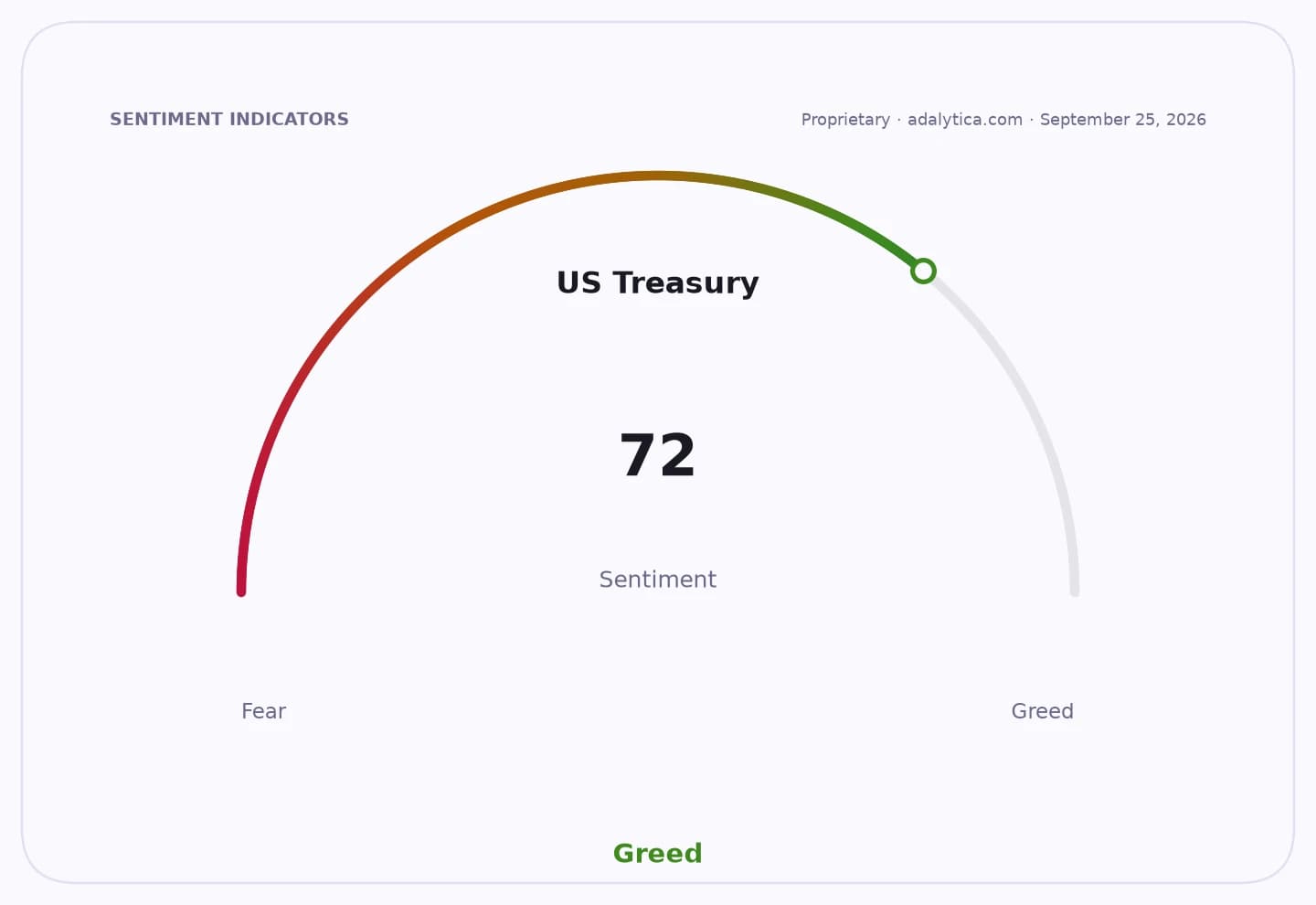
Sentiment IndicatorsⓘProprietary · adalytica.com · September 5, 2026
This is a snapshot — live sentiment, awareness and momentum for 130+ markets update continuously in the dashboard.Open AlphaPulse
US benchmark yields remain near multi-decade reference points for this cycle, with the 10-year Treasury around 4.8% in the latest readings and the yield curve still only modestly positive at about 0.4 percentage point between the 10- and 2-year notes. That combination suggests markets are not in crisis, but they are far from relaxed. The 10-year yield has held close to its recent highs, while Treasury sentiment tracked by Adalytica sits in “fear,” reflecting how quickly bond investors have become skittish about inflation, fiscal deficits and supply.
The spillover matters because sovereign bond moves are now dictating cross-asset performance. Longer-dated Treasuries have been volatile, with the TLT ETF only recently rebounding to about 82 after spending much of the year under pressure. In Europe, the VGK Europe equity fund has climbed to about 91.7, but its move is running alongside a market that remains highly rate-sensitive, not one that has escaped bond-market gravity. In the UK, the EWU ETF has also recovered, suggesting investors are looking through some of the immediate rate angst, but higher yields would still threaten valuation multiples for rate-sensitive sectors and mortgage borrowers.
For investors, the key issue is that defense spending is increasingly competing with other budget priorities in an environment of expensive capital. If governments fund rearmament through more borrowing rather than taxes or cuts elsewhere, bondholders may worry that supply will outpace demand just as central banks keep policy restrictive. That is the narrative behind the recent market turbulence: not simply inflation, but the possibility that fiscal expansion extends the period of elevated yields.
There is a bullish counterargument. Defense spending can support industrial activity, procurement orders and select European manufacturers, while stronger security commitments may also reinforce political stability. But the bear case is more immediate for bondholders: more issuance, larger deficits and the risk that governments test investor patience at a time when real rates are still positive.
The next catalyst is whether finance ministries pair higher defense outlays with credible funding measures. If they do not, bond markets are likely to keep pushing back through higher yields, steeper volatility and more pressure on currencies and equity valuations.
| Entity | Gains | Losses |
|---|---|---|
| Defense contractors | ▲Higher procurement demand | ▼Budget uncertainty |
| Governments funding rearmament | ▲Security capacity | ▼Borrowing costs |
| Bond investors | ▲Higher yields, if priced well | ▼Price losses from supply pressure |
| Rate-sensitive equities | ▲Easier conditions if yields fall | ▼Valuation compression if yields rise |