Britain’s move to sharpen pressure on Israeli settlements comes as Europe’s political center is being squeezed by a stronger far right in Germany, underscoring how the Gaza war and broader Middle East tensions are widening the fault lines in European politics even as investors keep one eye on market spillovers.
UK Pressure on Israeli Settlements Meets German Far-Right Gains
The UK’s position matters economically because it adds to the diplomatic isolation of Israel’s settlement project at a time when the conflict is already raising security, trade and policy risk across Europe. A tougher European stance can influence sanctions debates, procurement decisions and corporate exposure in sectors with links to the region, while also keeping geopolitical risk premia elevated in energy, defense and broader European assets.
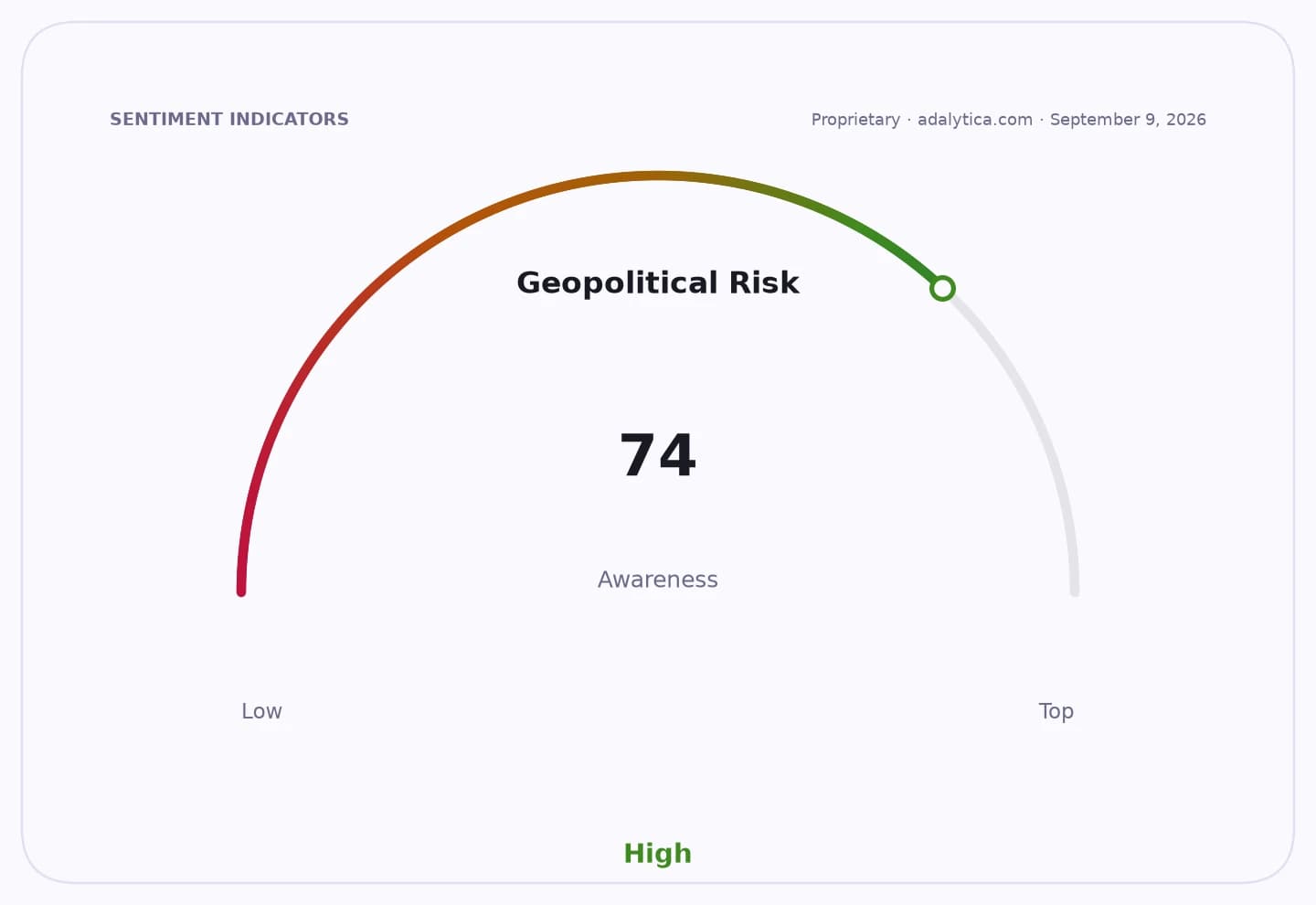
Sentiment IndicatorsⓘProprietary · adalytica.com · September 9, 2026
This is a snapshot — live sentiment, awareness and momentum for 130+ markets update continuously in the dashboard.Open AlphaPulse
Germany’s far-right gains matter for a different reason: they raise the odds of a more fragmented policy environment in Europe’s largest economy. That can complicate coalition-building, immigration policy and fiscal decision-making just as the region is already dealing with weak growth, elevated financing costs and a more uncertain trade outlook. For investors, the combination points to less policy predictability, more volatility around European risk assets and a higher premium on defensive positioning.
The market backdrop is already sensitive. Adalytica’s Global Stability Sentiment gauge is neutral at 52, though awareness remains elevated at 74, suggesting investors are attentive even if not fully risk-off. The euro trade signal has deteriorated sharply, with sentiment in fear territory at 19, reflecting a jump in concern over Europe’s political and external backdrop. That lines up with recent trading in European vehicles: the iShares MSCI Germany ETF has retreated to $43.04 from a recent $43.89, while the iShares MSCI Spain ETF has slipped to $61.59 from $62.75, even as both remain above their longer-term moving averages.
The deeper narrative is that European politics is becoming more polarized just as foreign policy shocks are feeding back into markets. Britain’s pressure on settlements highlights how the Middle East conflict remains a live diplomatic issue for European governments, while Germany’s far-right advance shows how domestic backlash against migration, security fears and elite policy consensus is reshaping the continent’s center of gravity. The risk for markets is not a single selloff but a slower erosion of policy cohesion, which can weigh on the euro, complicate defense and industrial policy, and keep investors cautious on Europe until the political picture stabilizes.
| Entity | Gains | Losses |
|---|---|---|
| UK government | ▲Diplomatic leverage | ▼Trade and policy friction |
| Israeli settlement advocates | ▲Short-term political backing | ▼European pressure |
| German far-right parties | ▲Electoral momentum | ▼Centrist coalition stability |
| European investors | ▲Defense of hedges | ▼Policy predictability |