Russia's latest escalation in Ukraine is keeping Europe’s war premium alive, and investors are moving back into defensive assets as missile and drone strikes hit Kyiv, Novorossiysk and the Moldova border while Moscow warns that any European attack on Russia would bring a “very short” war.
Russia Ukraine escalation lifts Europe war premium

That matters because the conflict is no longer just a battlefield story; it is a macro shock that can still ripple through energy, shipping, defense and risk appetite. When hostilities intensify around Black Sea infrastructure and border crossings, the market has to reprice the chance of broader disruption to trade routes, energy flows and diplomatic efforts heading into winter.
The immediate investor takeaway is a split in relative performance across regions and sectors. Chinese equities, as tracked by the FXI ETF, have been under pressure, with the fund closing at $34.35 on Sept. 10, below its 50-day moving average of $34.94 and its 200-day moving average of $36.41, while its RSI reading of 32.4 shows the fund edging toward technically oversold territory. The UK’s EWU ETF also softened to $47.53 from $48.35 two days earlier, while EWI, the Italy ETF, held firmer at $61.01 but still slipped below its 50-day average of $61.65. The broader message is that geopolitical fear is not yet producing a clean risk-off panic, but it is enough to keep a lid on cyclical positioning.
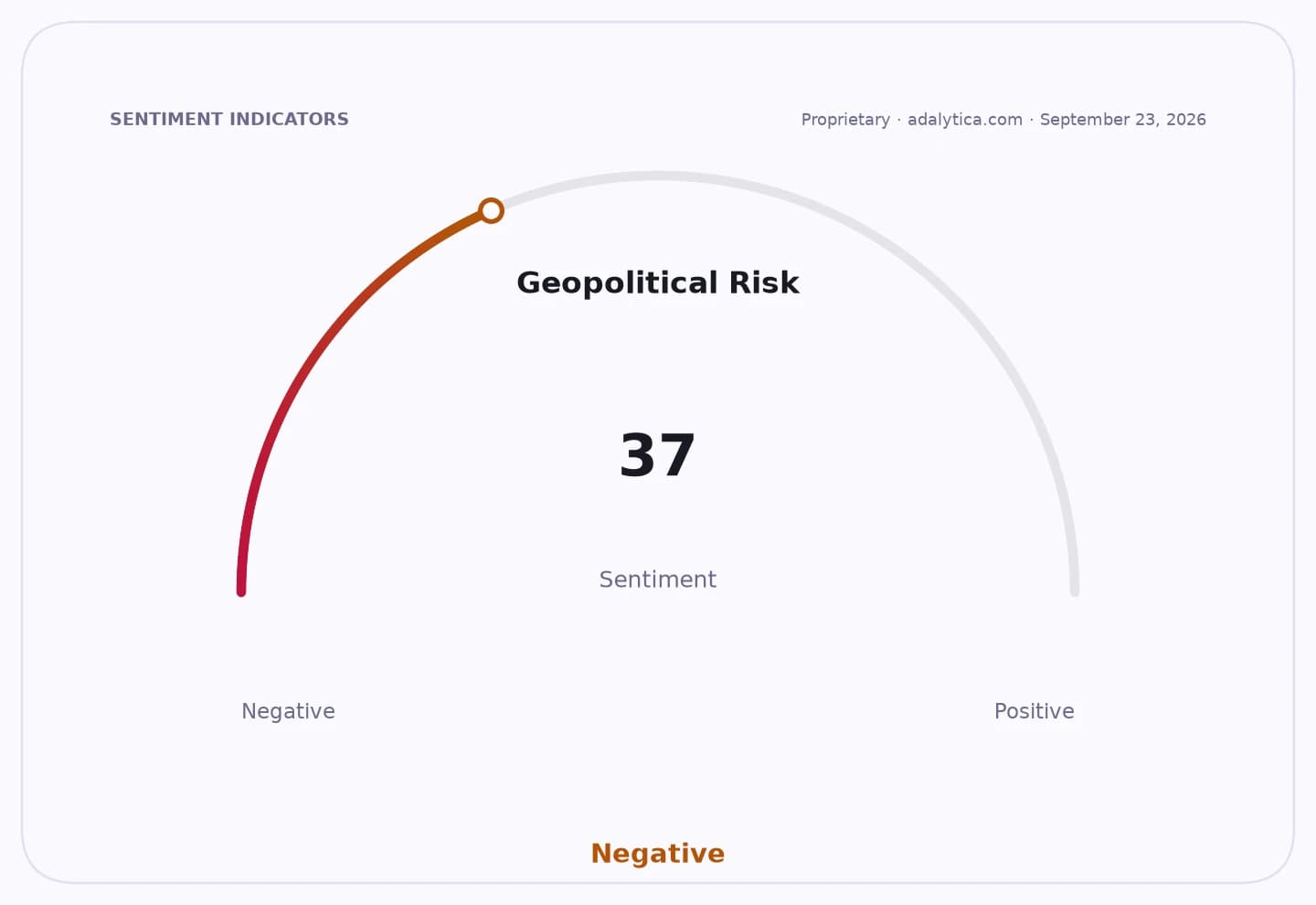
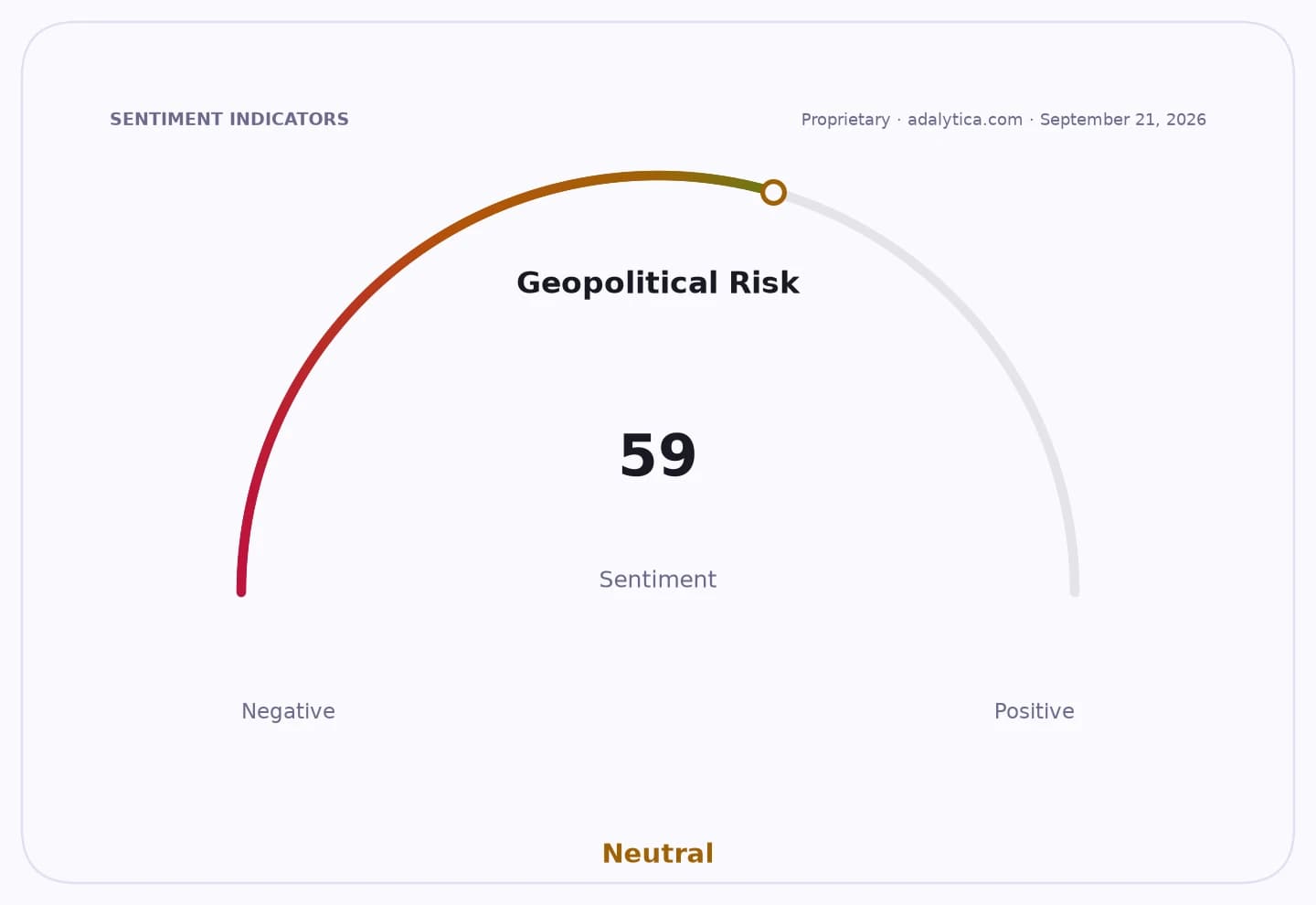
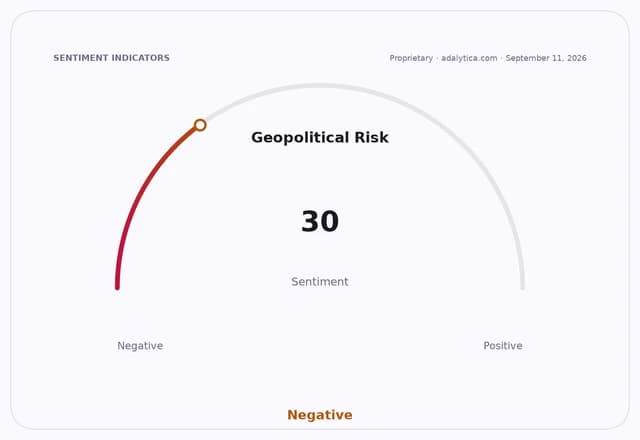
Adalytica’s Global Stability Sentiment gauge captures that mood shift, showing sentiment at 30, classified as Fear, after a 19-point drop in a day. That kind of deterioration tends to support havens, defense contractors, energy infrastructure names and companies tied to security, logistics and rebuilding, while pressuring exporters, transport-sensitive shares and markets most exposed to global trade confidence.
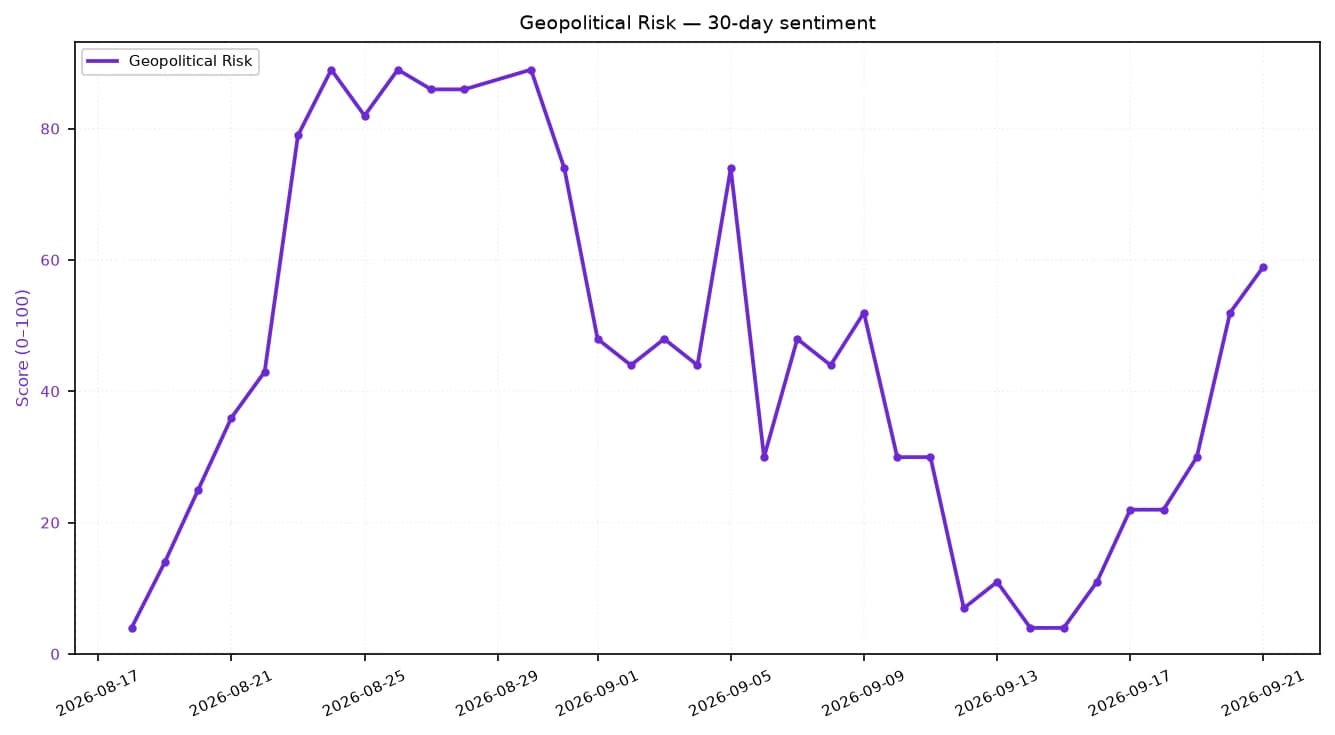
Geopolitical Risk — 30-day sentimentadalytica.com
Explore this data interactively — full history, time series and cross-market comparisons.Open AlphaPulse

For investors, the deeper opportunity is to look past the headline risk and identify where the spending follows the conflict. Europe is unlikely to absorb an open-ended security shock without raising military readiness, hardening critical infrastructure and sustaining procurement. That favors defense, cyber and energy-security beneficiaries over broad-market cyclicals. It also argues for treating every escalation in Ukraine as more than a humanitarian crisis: it is a catalyst for capital spending, procurement cycles and regional rearmament that can outlast the news flow.
The next move will likely come from diplomacy or another round of strikes on strategic infrastructure. Until then, the market is likely to keep rewarding resilience over beta, with the best positioning in assets and equities that benefit from higher European security budgets and a longer-lasting geopolitical risk premium.
| Entity | Gains | Losses |
|---|---|---|
| Defense contractors | ▲Higher procurement demand | ▼Peace-dividend expectations |
| Energy-security plays | ▲Infrastructure hardening spending | ▼Stable-risk premium trades |
| European havens | ▲Safe-haven inflows | ▼Cyclical risk appetite |
| Broad exporters | ▲Limited upside from slowdown fears | ▼Trade-disruption exposure |