The UK’s move to sanction three cryptocurrency exchanges and two payment platforms is another escalation in the West’s campaign to choke off Russia’s sanctions evasion network, and it matters because the flow of illicit capital has become a strategic financing channel for Moscow’s war economy.
UK sanctions crypto exchanges tied to Russia
London said the platforms were linked to thousands of Russian entities and, in some cases, to the Kremlin-backed A7 network, which the Foreign Office said has claimed to move more than $90 billion last year. That scale is the key point: this is no boutique compliance breach. It is a shadow payments architecture that has grown large enough to support trade, procurement and financing activity despite Western restrictions.
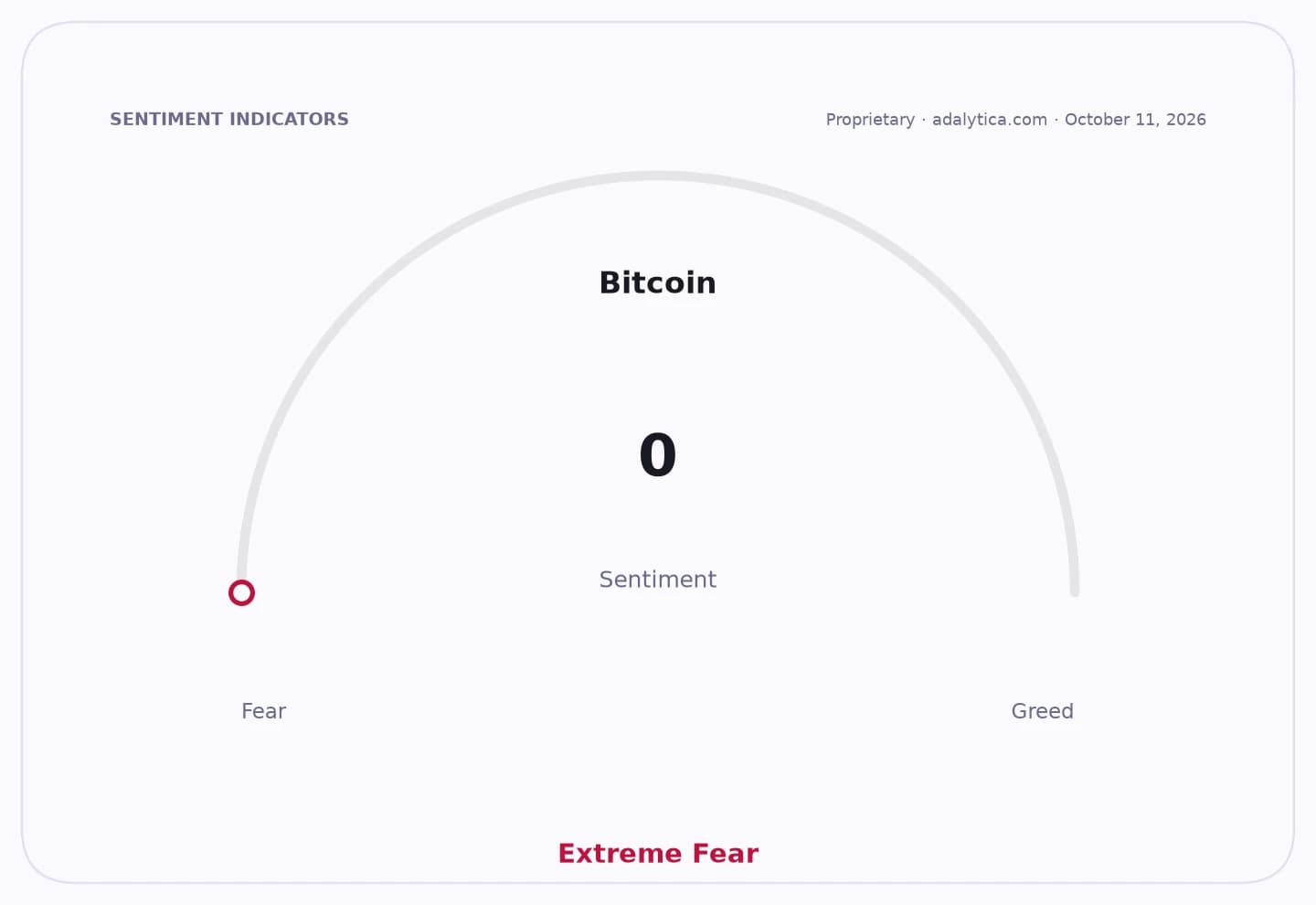
Sentiment IndicatorsⓘProprietary · adalytica.com · October 11, 2026
This is a snapshot — live sentiment, awareness and momentum for 130+ markets update continuously in the dashboard.Open AlphaPulse
Chainalysis said two of the sanctioned processors, Cryptomus and Heleket, received funds from thousands of illicit counterparties, peaking at 900 entities in a single month late last year. TokenSpot, meanwhile, was tied to the A7 network and received more than $308 million from the same HTX deposit address as Grinex and Meer. The UK had already sanctioned Huobi Global, the operator of HTX, in May. This latest action suggests regulators are moving from targeting headline exchanges to going after the plumbing that keeps sanctioned money moving.
That is economically important far beyond crypto. Sanctions only work if the rails are cut off, and the rise of stablecoins and offshore payment processors has made enforcement a moving target. CertiK said the ruble-backed A7A5 stablecoin processed $110 billion in cumulative onchain transactions through June, showing how quickly sanctioned actors can adapt once one corridor is closed. The result is a faster cat-and-mouse game between enforcement agencies and the operators building alternative settlement layers.
For investors, the message is straightforward: regulatory risk in crypto is no longer confined to exchange licensing and retail disclosure. It now extends to sanctions screening, payment routing and cross-border transaction surveillance. That should support demand for compliant venues, blockchain forensics providers and listed crypto firms that can prove institutional-grade controls, while raising the cost of capital for platforms with exposure to opaque flows.
It also helps explain why the market keeps rewarding the infrastructure layer. As governments widen sanctions enforcement, the winners are not necessarily the most speculative tokens, but the firms selling custody, monitoring and settlement tools into a more heavily policed market. The losers are the venues that depend on volume from lightly screened flows and jurisdictions that have become transit points for sanctioned capital.
The bigger thesis is that geopolitical fragmentation is pushing digital assets toward a more regulated, bifurcated market. That creates volatility, but it also creates opportunity. The tighter the enforcement net, the more valuable compliant infrastructure becomes — and the more fragile the business models built on regulatory arbitrage.
| Entity | Gains | Losses |
|---|---|---|
| UK regulators | ▲Stronger enforcement reach | ▼Crypto-evasion networks |
| Compliant crypto venues | ▲More trust and volume | ▼Opaque exchanges |
| Blockchain forensics firms | ▲Higher demand for screening | ▼Sanctioned processors |
| Russian illicit finance channels | ▲None | ▼Access to payment rails |