Russia is widening its war against Ukraine from the battlefield to the economy, turning strikes on warehouses, ports, rail links and internet infrastructure into a campaign that is now costing billions of dollars and threatens to push the country’s growth close to zero.
Ukraine Economy Hit by Russian Infrastructure Strikes
The shift matters because Kyiv’s ability to finance the war depends on keeping tax revenues, consumer spending and exports alive while absorbing repeated attacks on the country’s logistics network and power of the state to function. With battlefield momentum largely stalled, Moscow is trying to raise Ukraine’s economic cost of resistance and fracture European support by making aid look more expensive and politically contentious.
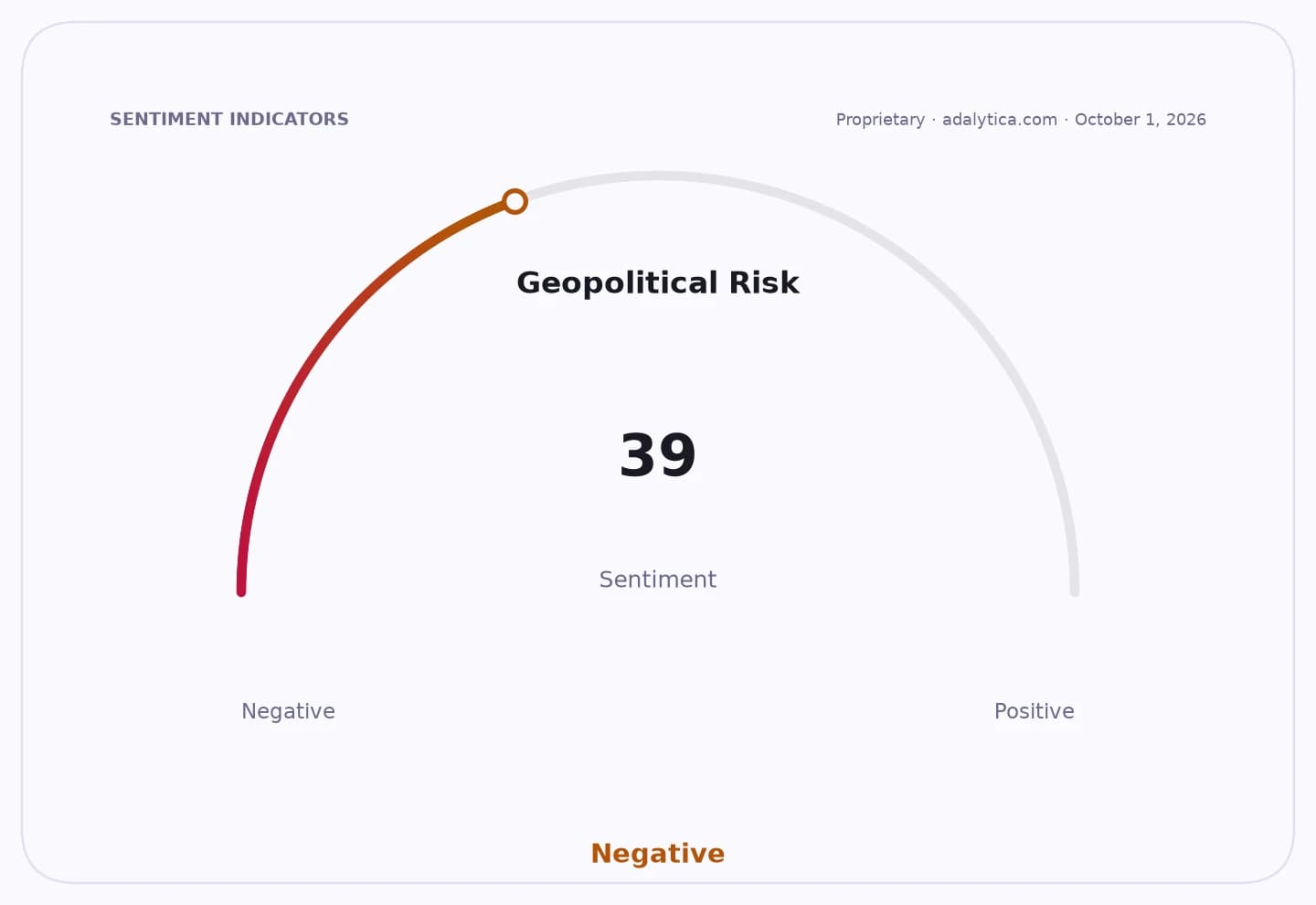
Sentiment IndicatorsⓘProprietary · adalytica.com · October 1, 2026
This is a snapshot — live sentiment, awareness and momentum for 130+ markets update continuously in the dashboard.Open AlphaPulse
Ukrainian officials now describe the assault as “total war” because it targets commercial infrastructure as much as military assets. The country’s economy ministry estimates damage from Russian actions at about $10 billion by year-end, much of it indirect through lost sales, missed workdays and supply-chain disruption.
The European Bank for Reconstruction and Development cut its 2026 growth forecast for Ukraine on Sept. 24 to 1.5% from 2.2%, and some economists say the country could finish the year with no growth at all. EBRD chief economist Dimitar Bogov said Ukraine is entering the “most difficult period of the war” as labor shortages worsen and the bombardment intensifies.
That strain is showing up in everyday commerce. Attacks on warehouses have emptied some store shelves, while strikes on ports, rail rolling stock, border posts and vessels are limiting exports just as the harvest season approaches. Russian attacks on internet infrastructure have also disrupted services for about 100,000 households, adding another layer of friction to a country already forced to operate under repeated air alerts.
The timing is deliberate. Russia has extended daytime air-raid alerts in major cities, effectively shutting down parts of the economy for hours at a time as shops close and consumers shelter. Ukraine says purchasing power remains relatively high, helped in part by military wages, but people increasingly cannot spend because they are stuck in shelters or because goods are not getting through.
The pressure comes as Kyiv leans more heavily on Europe for budget support. President Volodymyr Zelenskiy told allies last month Ukraine needs $27 billion to cover its budget deficit, after the European Union already approved more than $100 billion in loans earlier this year. The drag on farm income is also raising risks for banks, as growers struggle to repay loans after storage facilities were hit and grain capacity was damaged.
For investors, the story extends beyond Ukraine’s fiscal needs. A deeper economic slowdown would erode the tax base financing the war effort, while persistent disruption could keep global risk sentiment elevated and support energy and safe-haven assets. Brent-linked prices remain sensitive to the conflict, even as oil markets have lately been less reactive than earlier in the war.
Ukraine’s defense-tech sector remains a rare bright spot, more than doubling in 2024, but it is unlikely to offset damage from infrastructure strikes, labor shortages and export bottlenecks in the near term. The key risk now is that Russia’s campaign succeeds in turning a military stalemate into an economic squeeze that lasts through winter.
| Entity | Gains | Losses |
|---|---|---|
| Russia | ▲Higher economic pressure on Ukraine | ▼Own wartime spending and global isolation |
| Ukraine | ▲Defense-tech growth and EU support | ▼Growth, exports, tax revenue |
| European allies | ▲Leverage to shape aid policy | ▼Higher fiscal and political strain |
| Oil and safe-haven assets | ▲Geopolitical bid | ▼Risk of faster de-escalation |