Ukraine’s currency is not expected to suffer a sharp move in the coming week, but the forces weighing on the hryvnia are becoming more structural as war-related costs, higher fuel imports and a widening trade gap keep demand for foreign currency elevated.
Ukraine hryvnia seen stable as import demand stays high

Taras Lesovyi, head of financial markets and investment activity at Globus Bank, said the dollar should trade mostly between 44.85 and 45.25 hryvnias from Oct. 19-25, while the euro is likely to remain in a 50-51 range. On the cash market, he sees the dollar at 44.8-45.5 and the euro at 50-52. That points to short-term stability rather than a break in the currency pattern, with the National Bank of Ukraine still forced to smooth the market through intervention.
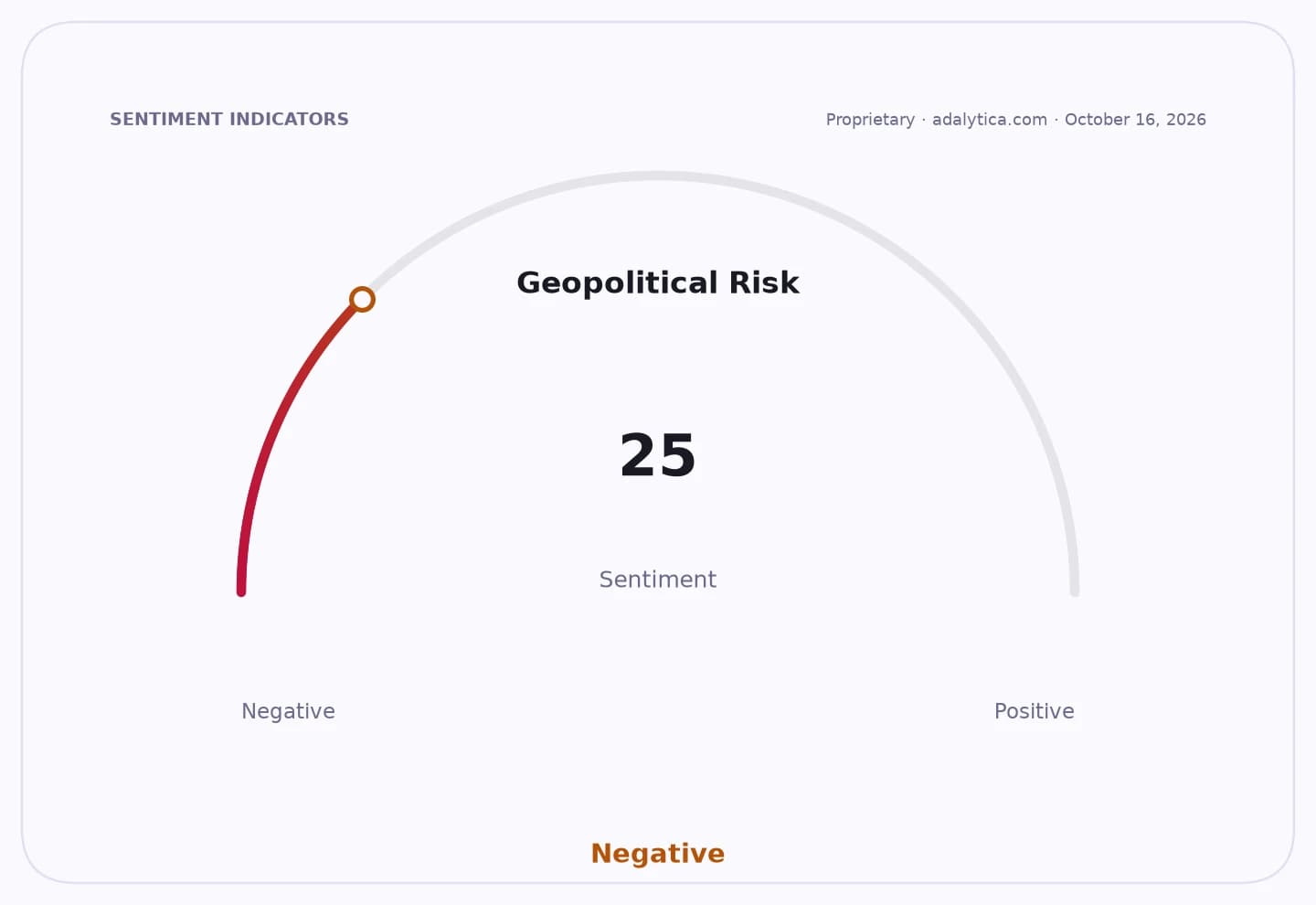
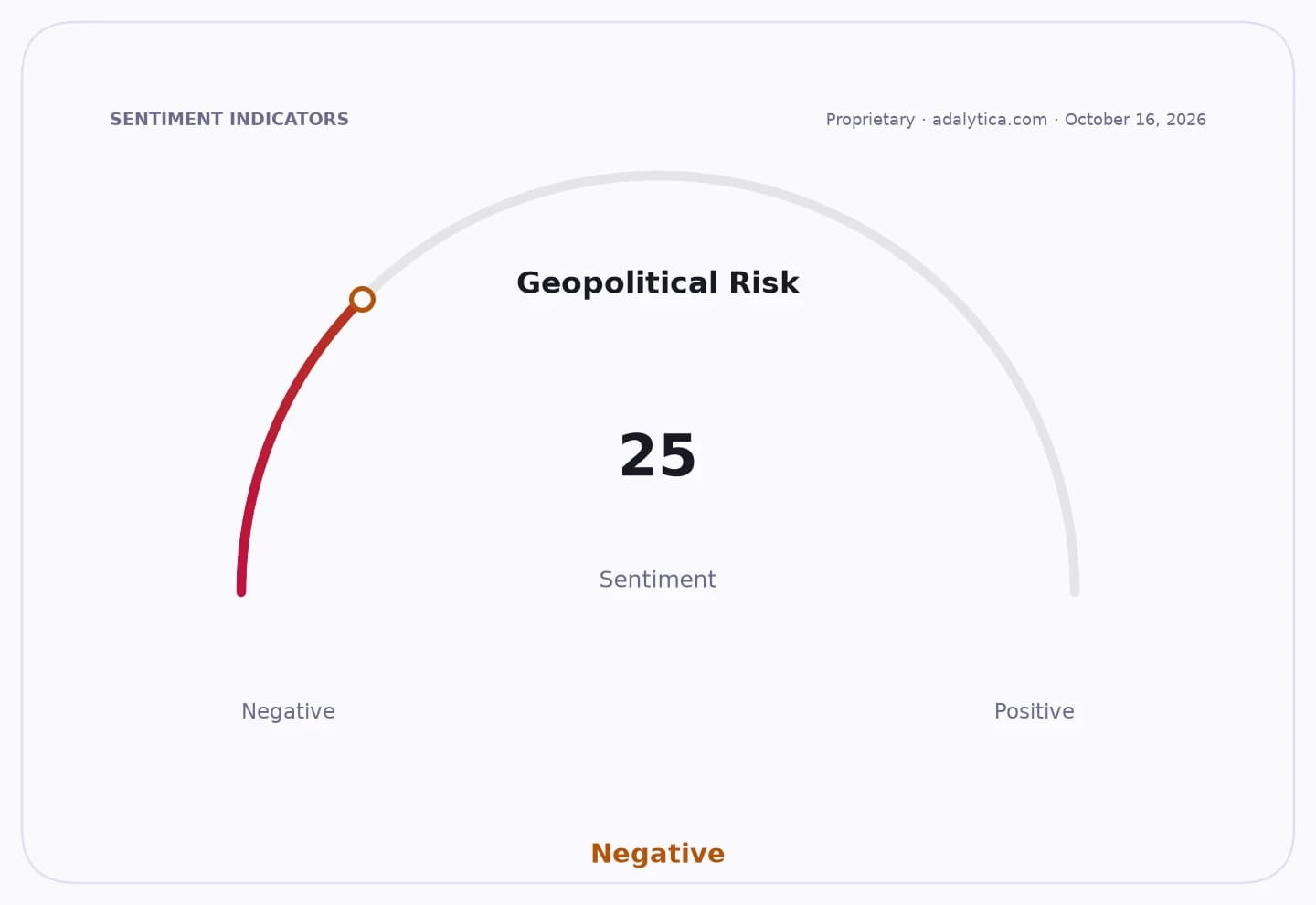
Sentiment IndicatorsⓘProprietary · adalytica.com · October 17, 2026
This is a snapshot — live sentiment, awareness and momentum for 130+ markets update continuously in the dashboard.Open AlphaPulse
The bigger issue for investors is not the week-ahead range but the persistence of underlying pressure. Lesovyi said the war is creating a fresh round of business costs as firms spend more on backup power, rerouted logistics, equipment repairs and downtime protection. Those expenses feed into consumer prices with a lag, sustaining inflation and, in turn, the demand for foreign exchange as households and companies seek to preserve purchasing power.
Fuel imports remain another critical channel. Ukraine depends heavily on imported petroleum products, so higher prices and more complicated logistics translate directly into extra dollar demand from importers. That matters because fuel is a broad input into transport and production costs, meaning energy stress can widen into a wider inflation impulse.
The clearest macro constraint, however, is the external balance. Lesovyi said Ukraine imports 2.5 times more than it exports in monetary terms, leaving a goods trade gap of nearly $40 billion. In an economy with such a structural deficit, currency stability depends less on market self-correction than on official support and FX inflows from partners. Without that backstop, pressure on the hryvnia would be materially stronger.
For markets, the message is that the dollar’s near-term calm should not be mistaken for improved fundamentals. A stable band around 45 per dollar suggests the National Bank is still containing disorderly moves, but the combination of war spending, higher import dependence and inflationary pass-through leaves the currency vulnerable if external financing weakens or energy disruptions intensify.
The near-term outlook therefore hinges on whether the current balance of intervention and inflows can keep pace with demand for hard currency. If it can, the hryvnia may remain range-bound. If it cannot, the market will eventually test the ceiling of that stability.
| Entity | Gains | Losses |
|---|---|---|
| National Bank of Ukraine | ▲Buys time for stability | ▼Burns reserves to cap volatility |
| Ukrainian importers | ▲Predictable near-term pricing | ▼Higher FX demand costs |
| Exporters | ▲Competitive currency support | ▼Weaker domestic purchasing power |
| Ukrainian households | ▲Fewer abrupt exchange-rate shocks | ▼Inflation from war-linked costs |