Kyiv is heading into its fifth winter of full-scale war with no sign that the fighting, the blackouts or the strain on households will ease soon, underscoring how a conflict that has become routine in daily life is now testing Ukraine’s economic endurance as much as its defences.
Ukraine Winter War Strains Economy and Financing
The most important shift is not a battlefield breakthrough but the persistence of a war of attrition that is steadily degrading economic capacity. In Kyiv, sirens and explosions have become part of the soundscape, and exhaustion is replacing shock. That matters because winter has always been the hardest season for Ukraine’s economy: energy demand peaks, infrastructure is most vulnerable, and the cost of keeping cities functioning rises just as households, firms and the state are already stretched.
The broader geopolitical backdrop is little more reassuring. Donald Trump’s recent criticism of Volodymyr Zelensky, coupled with an unexpected call for an energy ceasefire, has not translated into any meaningful de-escalation. Moscow has rejected ceasefire ideas and continued striking Ukrainian cities and energy assets, keeping pressure on the grid and signalling that it sees no reason to slow the campaign. The result is a war that is not only unresolved but increasingly normalized, with the Kremlin betting it can outlast Ukrainian resilience and Western attention.
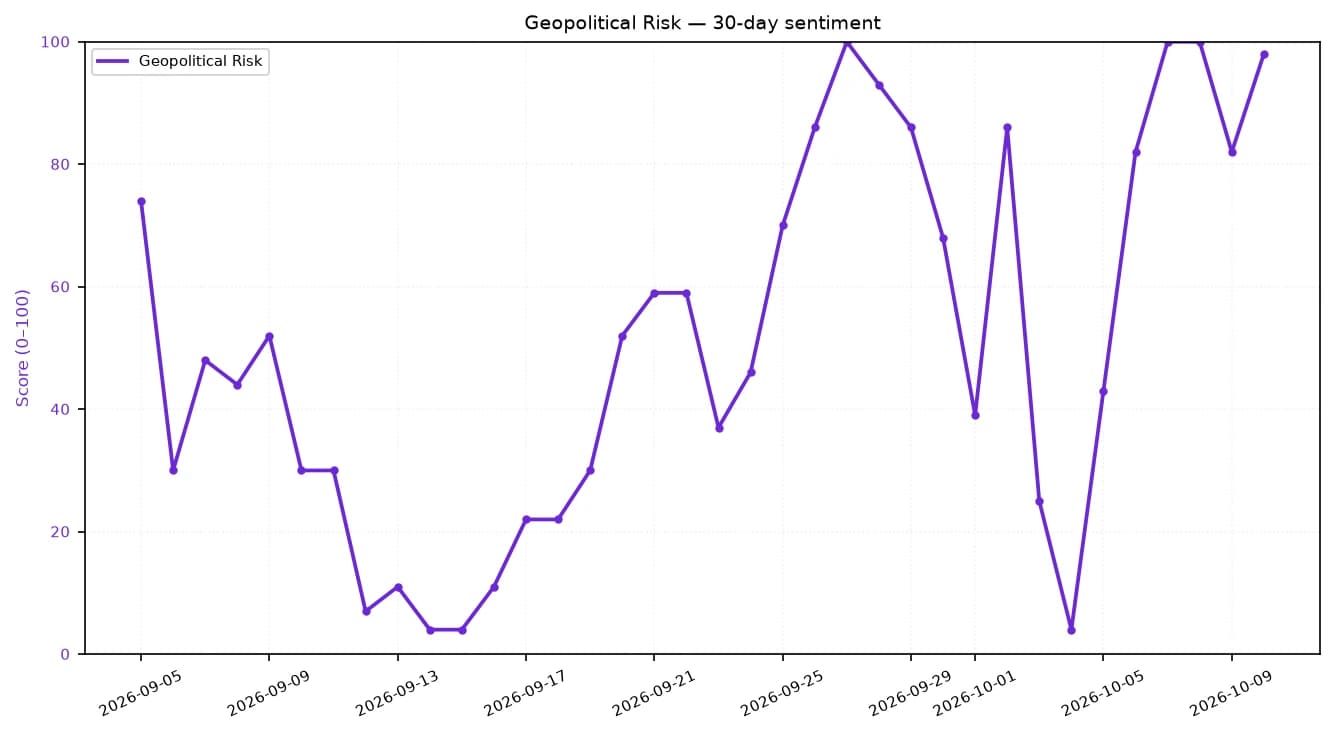
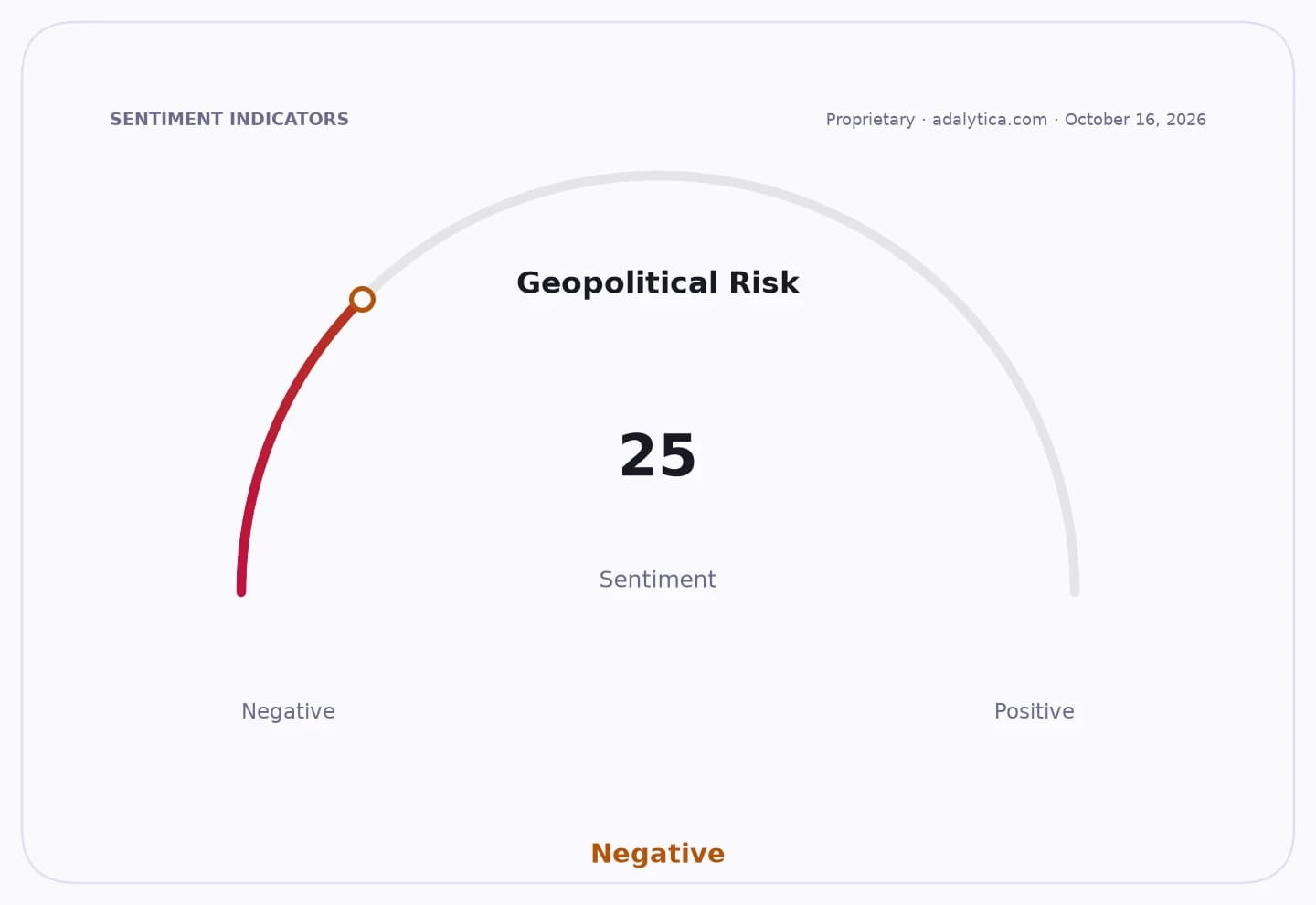
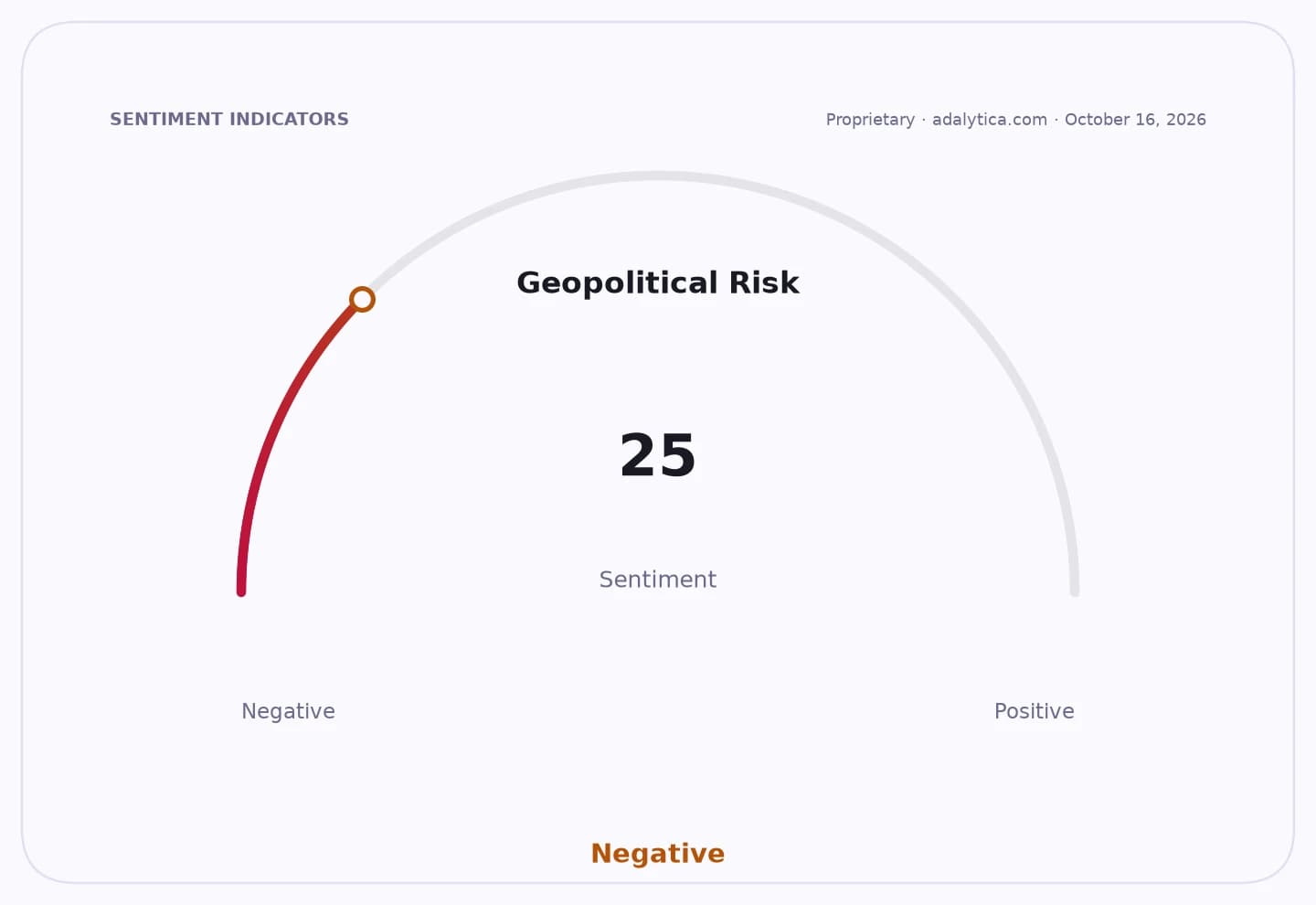
For markets, the immediate implication is that war risk in Eastern Europe remains elevated even if headline volatility comes in waves. Adalytica’s Global Stability Sentiment gauge has dropped to 25, labelled Fear, from 79 a day earlier, with awareness at an Extreme Fear reading of 4. The rapid deterioration reflects how quickly investors can move from tentative hope to renewed caution when ceasefire talk runs into battlefield reality. In practical terms, that keeps a floor under demand for safe-haven assets, supports defence-related spending expectations in Europe, and leaves pressure on regional risk premia, energy security planning and humanitarian financing.
Geopolitical Risk — 30-day sentimentadalytica.com
Explore this data interactively — full history, time series and cross-market comparisons.Open AlphaPulse
Ukraine’s financing problem is now part of the same story. A prolonged war budget squeeze means the country remains dependent on Western support just to keep the state functioning, while aid is increasingly tied to reform conditions and political fatigue abroad. That creates a dual vulnerability: military pressure from Russia and fiscal pressure at home. For investors, the key question is not whether Ukraine can survive another winter in a literal sense, but how much more strain its economy, currency, banks and infrastructure can absorb before reconstruction costs and financing needs rise again.
The bull case is that every winter the state and society have adapted a little further, reducing the probability of collapse. The bear case is that adaptation is not the same as resilience, and each additional season of shelling, power disruption and uncertainty erodes productivity, drains labor supply and deepens the investment hole. Until there is a credible path to a ceasefire, a sustained aid package or a material change on the battlefield, Ukraine’s economy will remain trapped in a cycle of endurance rather than recovery.
| Entity | Gains | Losses |
|---|---|---|
| Ukraine households | ▲survival through adaptation | ▼sleep, safety, power reliability |
| Russia | ▲continued pressure campaign | ▼diplomatic credibility, sanctions risk |
| Western defence makers | ▲sustained rearmament demand | ▼hopes for lower wartime spending |
| Investors in Europe | ▲clearer safe-haven bias, defence exposure | ▼regional risk appetite, higher uncertainty |