Ukraine, the US and key European allies are meeting in Miami this week in the most concrete effort in months to restart negotiations over ending Russia’s war, a step that matters for energy markets, European growth and the broader geopolitical risk premium.
Ukraine, US, Europe Meet in Miami on Peace Talks
The talks, scheduled for Oct. 9 and 10, are part of Donald Trump’s administration’s push to relaunch a peace process that has been stalled for months. For investors, the significance is less about diplomatic optics than the possibility that even a partial de-escalation could reshape oil and gas pricing, defense spending expectations, sanctions risk and the cost of financing reconstruction in Ukraine.
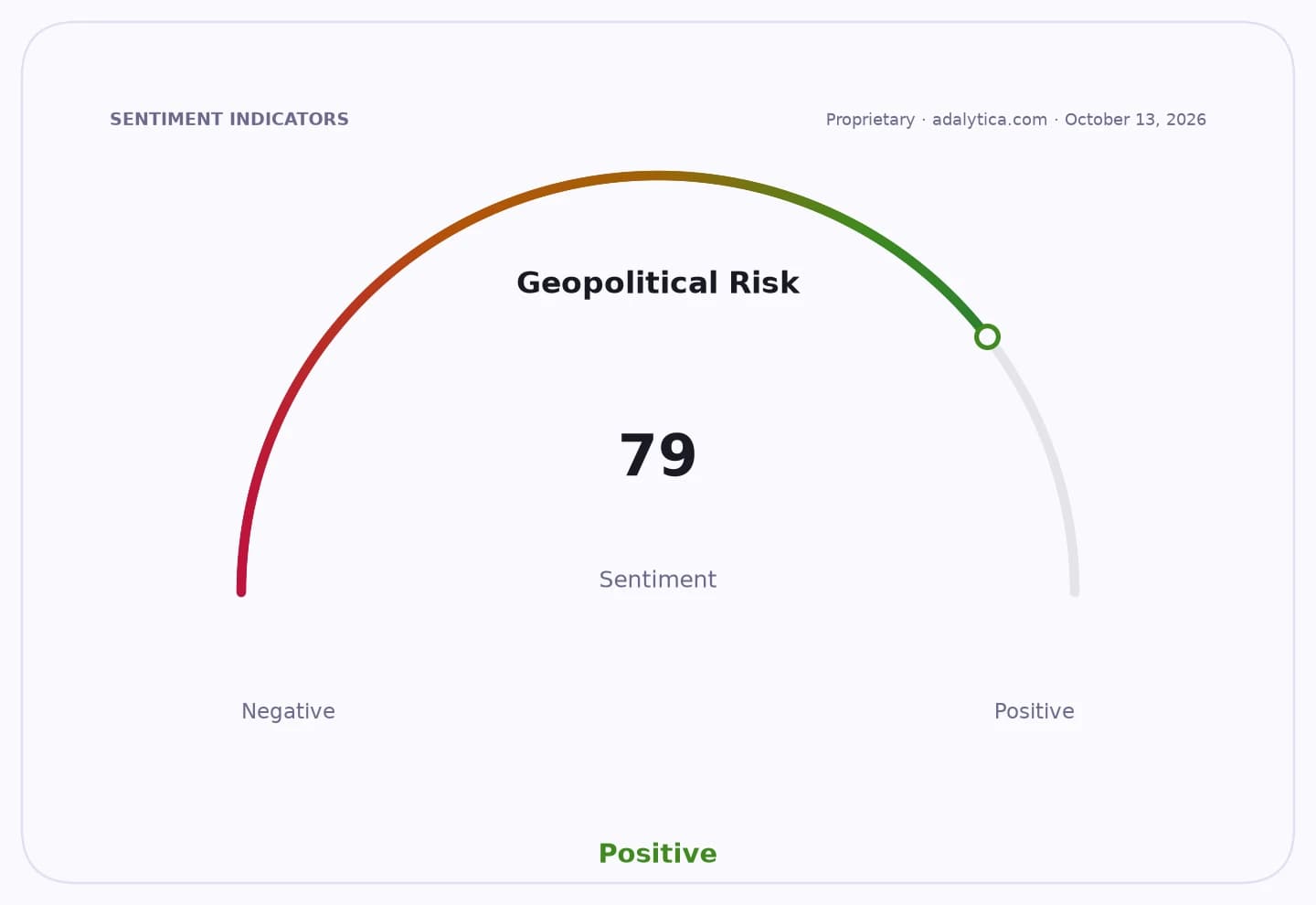
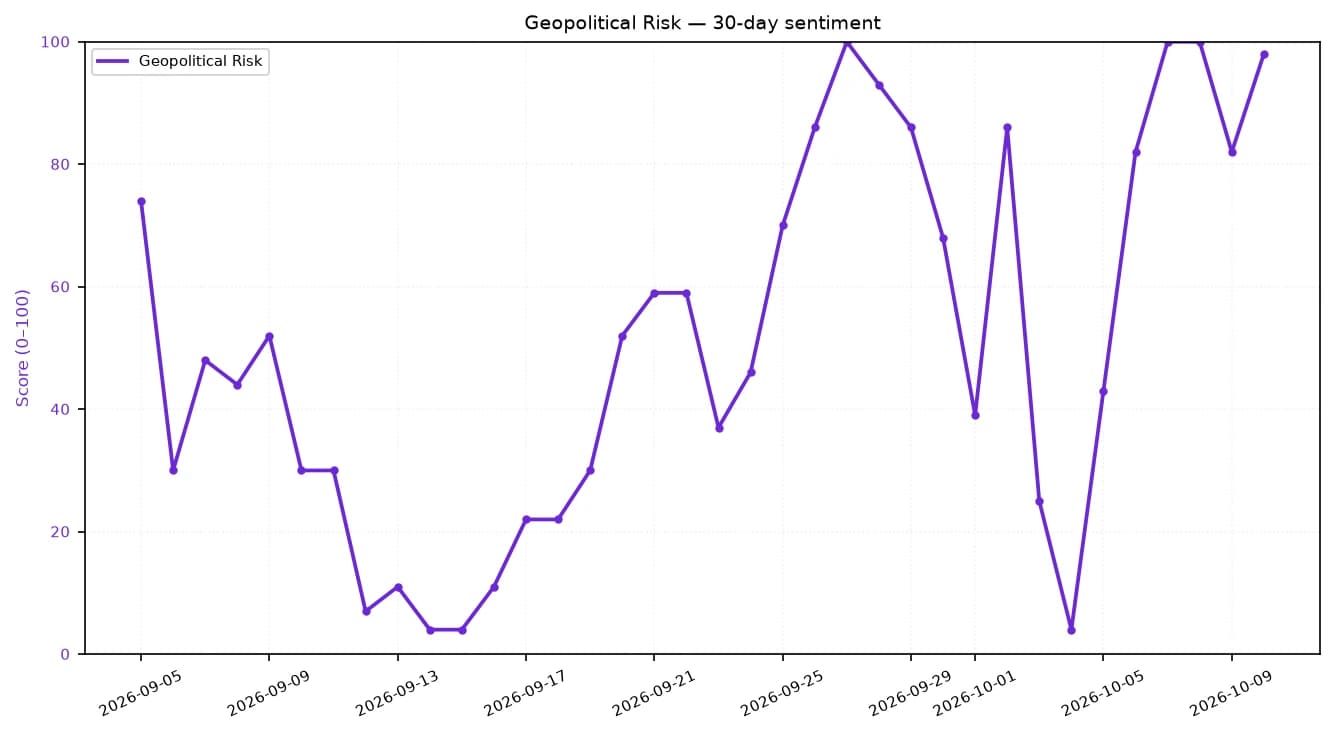
Sentiment IndicatorsⓘProprietary · adalytica.com · October 10, 2026
This is a snapshot — live sentiment, awareness and momentum for 130+ markets update continuously in the dashboard.Open AlphaPulse
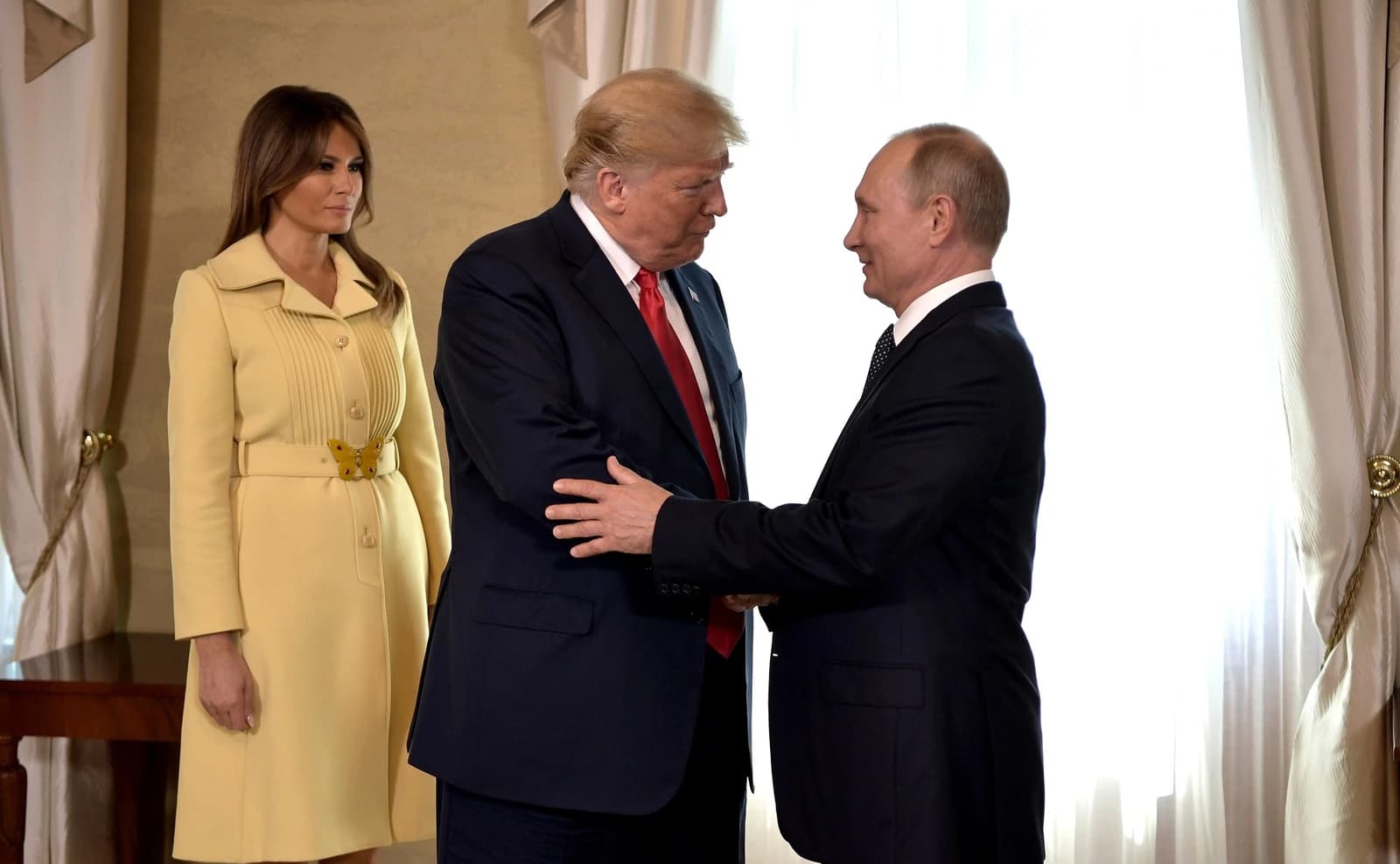
The US delegation is being led by special envoy Steve Witkoff and Jared Kushner, who have been working on fresh proposals after consultations with Russian and Ukrainian representatives. Officials familiar with the discussions said the goal is to identify common ground that could support a unified proposal to stop the war. That makes the Miami meeting more than a courtesy session: it is an effort to test whether Washington can assemble a framework that Kyiv, Moscow and Europe could all live with, even if only at the margins.
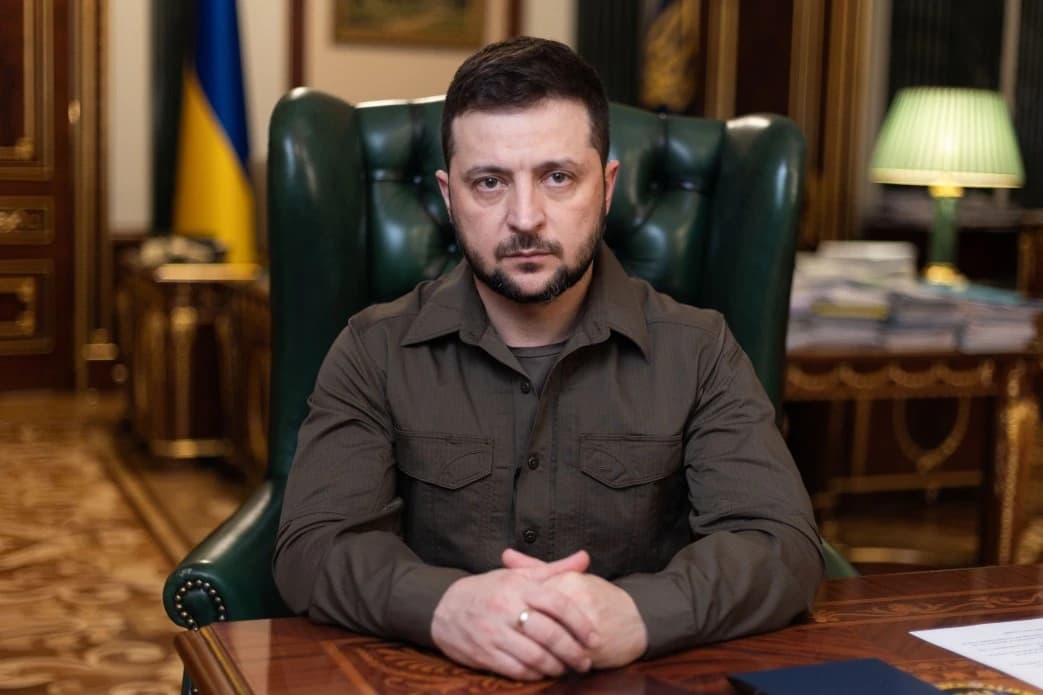
Ukraine is sending senior figures including presidential office chief Kyrylo Budanov, Rustem Umerov and negotiator David Arakhamia, underscoring that Kyiv wants to remain directly involved in any design for a settlement. President Volodymyr Zelenskiy has insisted that Ukraine cannot be cut out of decisions over its future and that any agreement must include concrete security guarantees.
That demand goes to the heart of the economic stakes. A ceasefire or durable peace would likely lower pressure on European energy markets, ease some defense-related fiscal stress and improve the outlook for reconstruction funding, but only if investors believed the deal had enough credibility to endure. A fragile arrangement without enforceable guarantees could do the opposite, producing a short-lived rally in risk assets followed by a renewed premium for instability.
European participation is therefore crucial. Officials from Britain, France and Germany, along with NATO and European Union representatives, have been invited, reflecting the reality that Europe is paying a growing share of the war’s economic bill through energy, aid and security spending. Their presence also signals that any settlement will have to satisfy not just Washington and Kyiv but Europe’s security architecture, which has been reshaped by the conflict.
Market signals have already responded to the possibility of diplomatic progress. Gold, a traditional refuge in periods of geopolitical stress, has retreated from earlier highs, while US oil proxy USO has eased from September peaks even as it remains elevated by historical standards. Those moves suggest investors are beginning to price a marginal reduction in war risk, though not a full resolution. Conventional technical indicators on both funds point to cooling momentum rather than a decisive shift, with gold still above its 50-day average and oil trading near its short-term trend line rather than breaking down.
For markets, the upside case is straightforward: a credible path to reduced hostilities could pressure crude prices, narrow European risk spreads and support sectors exposed to transport, industrial activity and reconstruction. The bear case for that optimism is equally clear. Talks could stall over territory, security guarantees or sanctions, leaving commodity markets, defense shares and European policymakers with little more than another round of diplomatic theater.
The coming days in Miami will not settle the war, but they could tell investors whether the Trump administration’s latest push has enough momentum to change the pricing of conflict risk. If the talks produce a common framework, the implications would extend well beyond Ukraine, touching energy, inflation and capital flows across Europe and global markets.
| Entity | Gains | Losses |
|---|---|---|
| Ukraine | ▲Security guarantees, reconstruction support | ▼Bargaining leverage if sidelined |
| US and European diplomats | ▲Diplomatic momentum | ▼Credibility if talks fail |
| Oil and gold bears | ▲Lower war-risk premium | ▼Geopolitical-safe-haven demand |
| Energy importers and European growth | ▲Easier pricing, lower costs | ▼Persistent supply and fiscal pressure |