Russia must take the first step toward any energy truce with Ukraine, Germany’s foreign minister said, underscoring the fragility of Donald Trump’s surprise ceasefire push even as traders wager on a lower-risk backdrop for European energy markets.
Russia Energy Truce Talk Lifts European Energy Markets
Johann Wadephul said on Tuesday in Warsaw that Ukraine is ready to join an energy ceasefire if Moscow stops attacking power infrastructure first, adding that Berlin fully backs Kyiv’s position. His comments came after Trump on Sunday announced a so-called energy truce on Truth Social and then defended his deal with Vladimir Putin to allow Russian diesel exports, a move that angered Kyiv and European capitals.
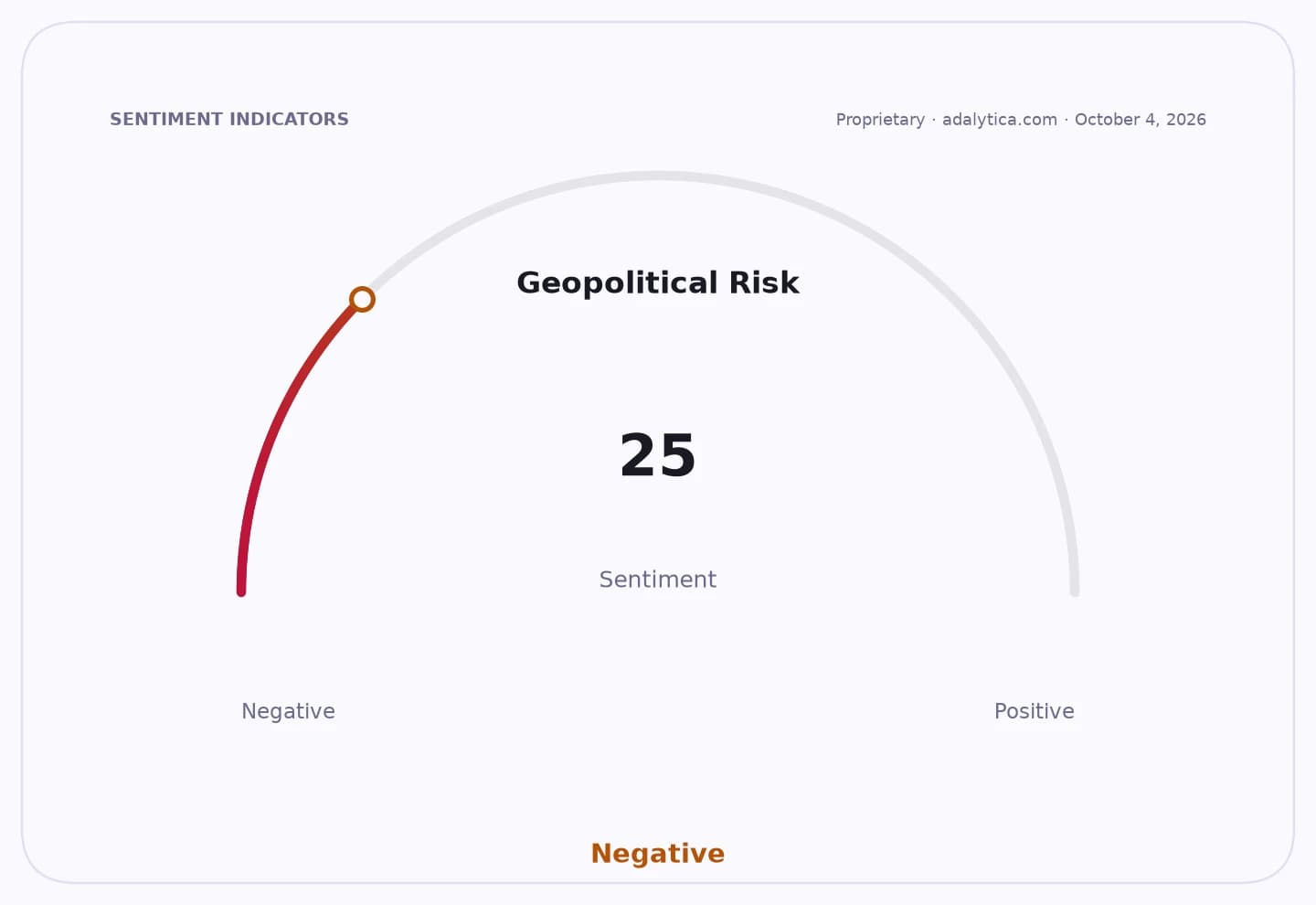
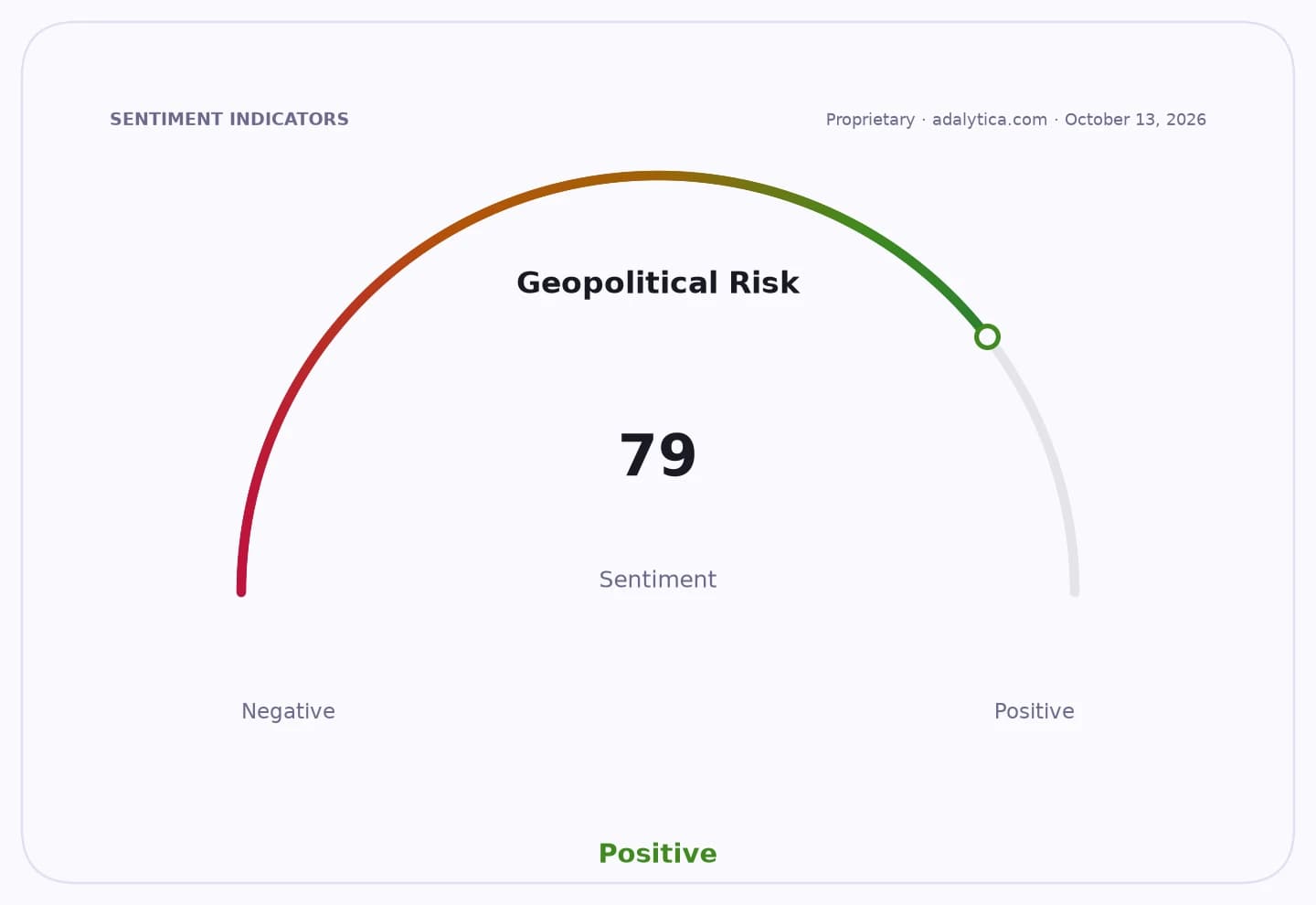
Sentiment IndicatorsⓘProprietary · adalytica.com · October 13, 2026
This is a snapshot — live sentiment, awareness and momentum for 130+ markets update continuously in the dashboard.Open AlphaPulse
The stakes go beyond diplomacy. Any genuine pause in attacks on energy infrastructure would reduce the immediate risk premium built into European gas, oil and refined-fuel markets after years of supply shocks tied to the war. For Europe, even a limited truce could ease pressure on power grids, lower the odds of winter shortages and reduce the threat of fresh price spikes in diesel and natural gas.
Markets are already leaning that way. Oil proxy USO shows Adalytica’s trade signals in “greed” territory at 83, while natural gas fund UNG has climbed to $11.21 from $10.92 two days earlier, recovering from a sharp slide that had pushed it below its 200-day moving average. The energy sector has also stayed strong, with XLE closing at $66.74, above both its 50-day and 200-day moving averages, while LNG finished at $285.50, extending a rally in liquefied natural gas names.
Geopolitical Risk — 30-day sentimentadalytica.com
Explore this data interactively — full history, time series and cross-market comparisons.Open AlphaPulse
Still, the trading gains sit alongside deep skepticism. Adalytica’s Global Stability Sentiment remains elevated at 79 but awareness is in “extreme fear” at 7, reflecting how markets are pricing headlines faster than they are trusting them. That split captures the central investor question: whether the truce becomes a real cut in infrastructure attacks, or just another temporary diplomatic signal while the war grinds on.
For investors, the immediate implications are uneven. A durable lull in strikes would help European utilities, industrials and fuel consumers, while pressuring oil and gas volatility. But if Moscow keeps hitting Ukraine’s energy system, the geopolitical premium in energy could reassert itself quickly, keeping LNG exporters and broader energy stocks bid.
The next catalyst is simple: whether Russia follows through with any verifiable halt to attacks, and whether Kyiv and European governments accept the terms of Trump’s announcement as more than a political gesture.
| Entity | Gains | Losses |
|---|---|---|
| European energy consumers | ▲Lower price pressure | ▼Less hedge value |
| LNG exporters and oil producers | ▲Volatility from headlines | ▼Geopolitical risk premium if truce sticks |
| Ukraine and EU allies | ▲Chance of lower winter damage | ▼Risk of bad-faith deal terms |
| Russian energy sellers | ▲Potential diesel export access | ▼Pressure to curb attacks first |