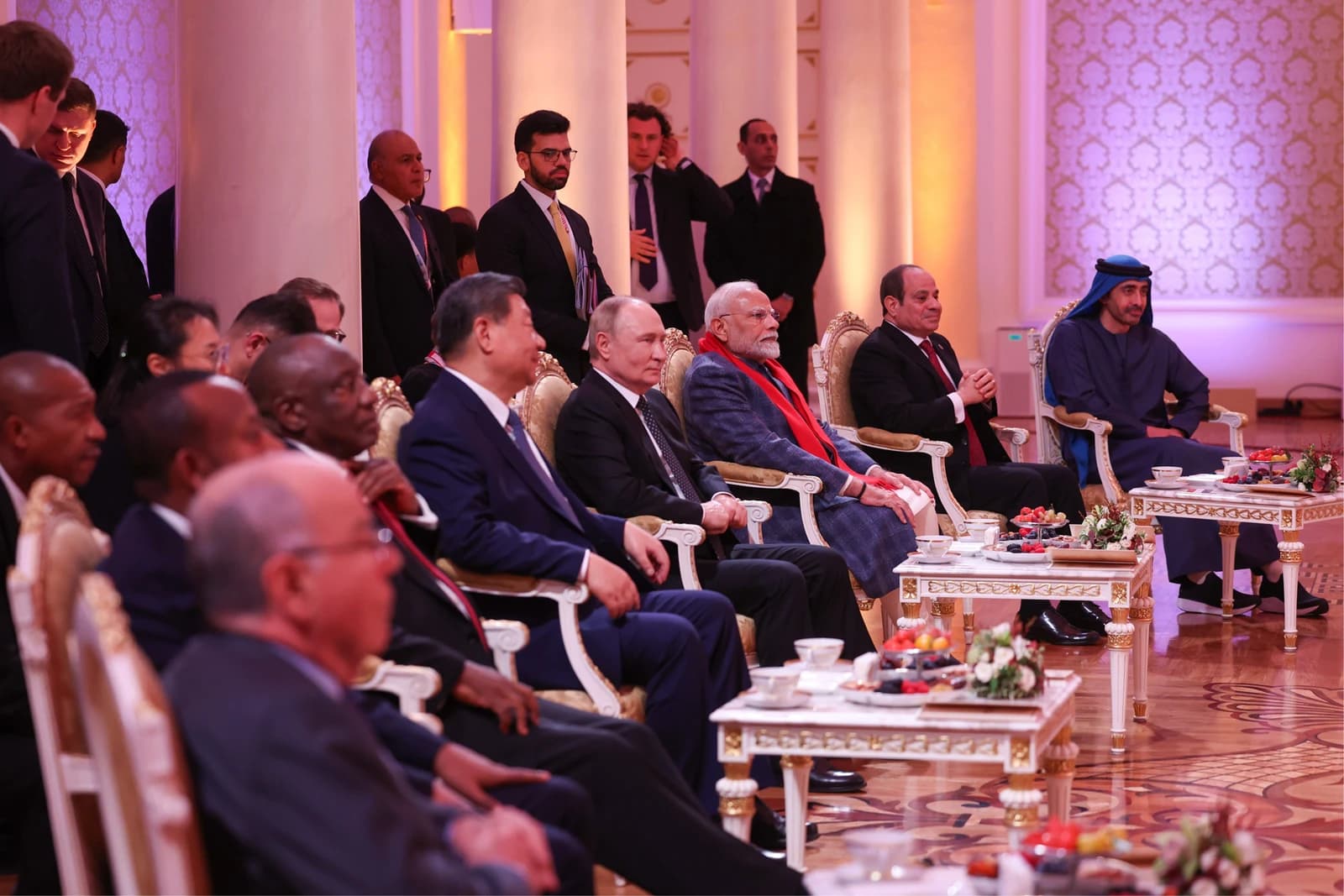
The White House and the Kremlin are discussing a multibillion-dollar deal that could transfer Lukoil assets into the hands of investors tied to President Donald Trump’s orbit, a potential energy and geopolitical rearrangement that would cut across sanctions, Ukraine diplomacy and global oil flows.
Lukoil assets in U.S.-Russia deal talks
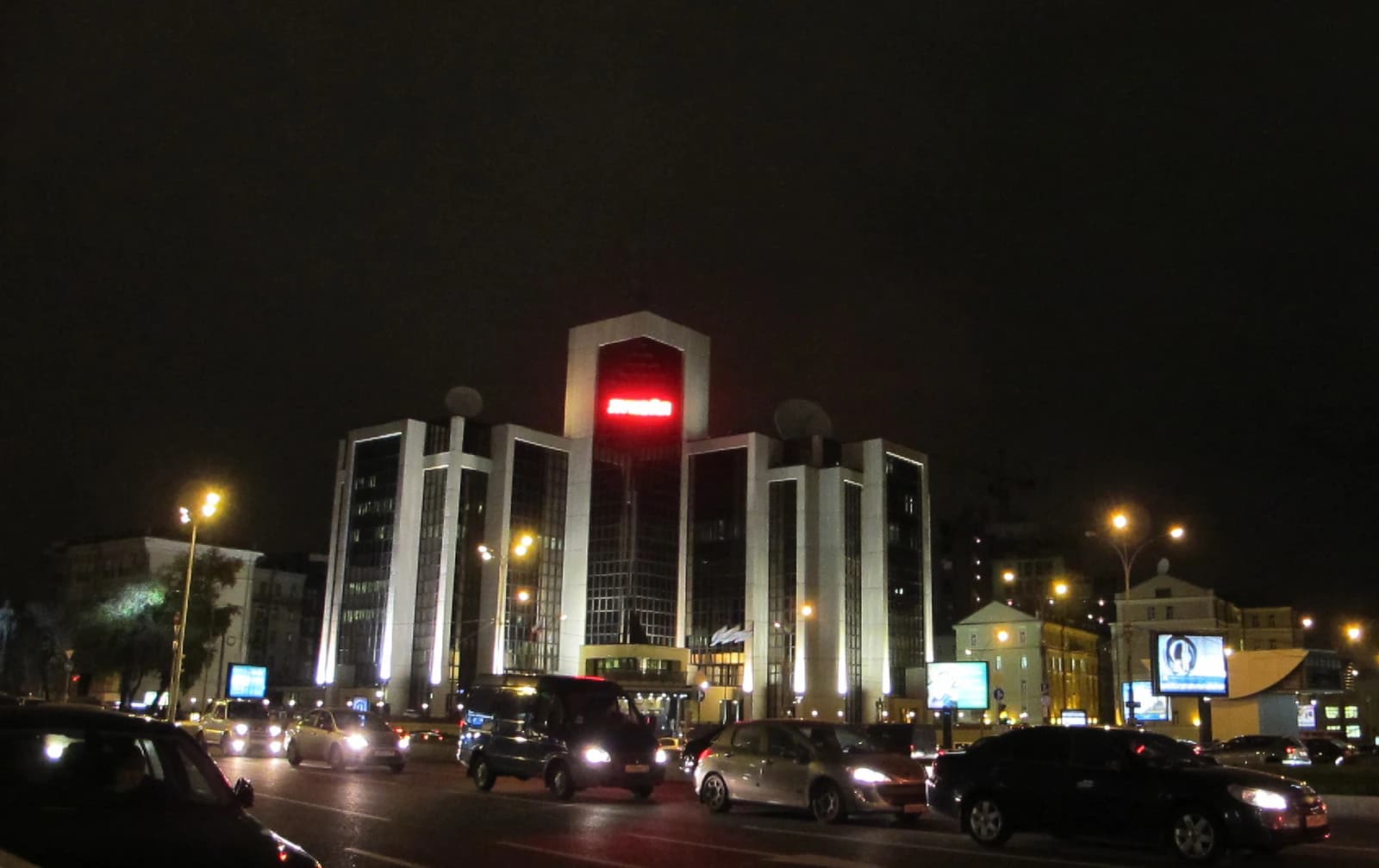
The talks matter because they could give Moscow a way to monetize prized oil and refining assets at a time when sanctions are squeezing one of Russia’s biggest privately held energy companies, while giving Washington a bargaining chip in broader negotiations over the war in Ukraine. Any agreement would need approval from both governments, underscoring how closely energy assets, diplomacy and sanctions policy are now intertwined.
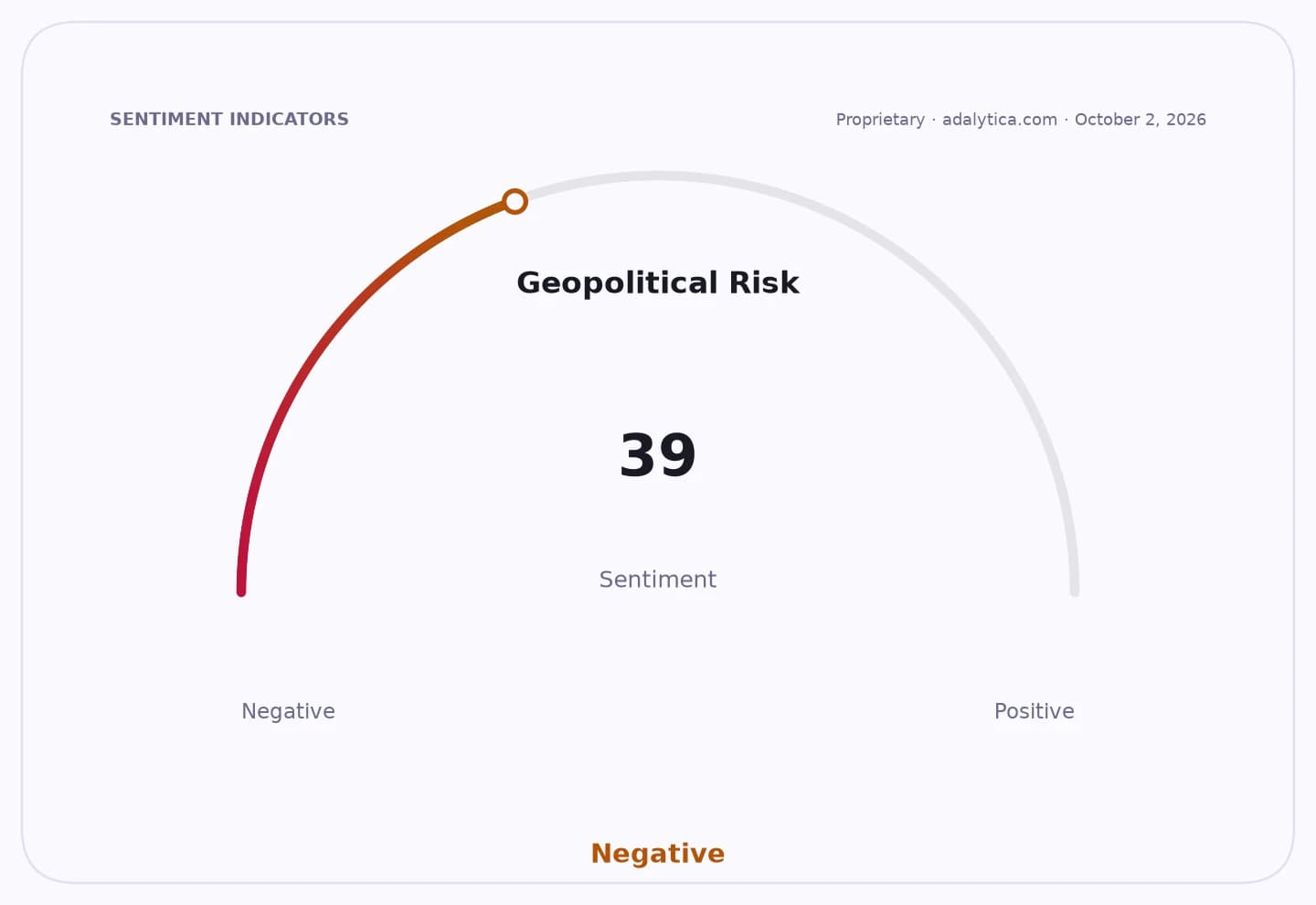
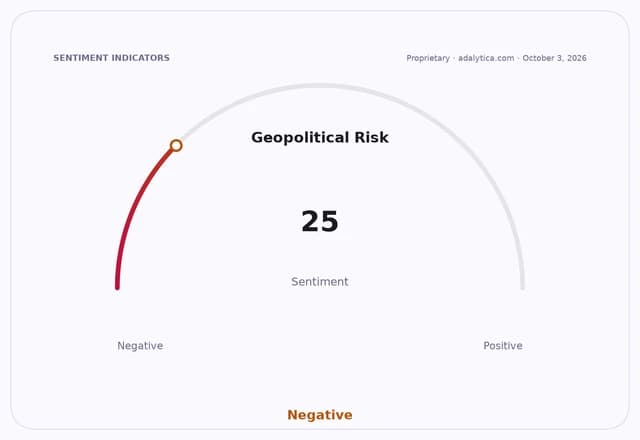
Sentiment IndicatorsⓘProprietary · adalytica.com · October 3, 2026
This is a snapshot — live sentiment, awareness and momentum for 130+ markets update continuously in the dashboard.Open AlphaPulse
The New York Times, citing eight people familiar with the talks, said the deal has been under discussion for months and centers on Lukoil’s large portfolio of oil fields, refineries and fuel stations across multiple countries. Among those involved, the paper said, are U.S. investor Todd Boehly, Middle East business groups with ties to Jared Kushner or Steve Witkoff’s family, and a unit of the U.S. government.
Lukoil has been under intense pressure from U.S. sanctions that have curtailed its international operations and forced it to consider asset sales abroad. The company’s refineries in Volgograd and Samara have also come under drone attacks, adding operational risk to the political and financial squeeze.
Geopolitical Risk — 30-day sentimentadalytica.com
Explore this data interactively — full history, time series and cross-market comparisons.Open AlphaPulse
For investors, the story cuts in several directions. It raises the possibility of a rerouting of sanctioned Russian energy assets into Western-linked ownership, which could affect valuation assumptions for distressed oil infrastructure and add a new layer of uncertainty for global crude and refined-product markets. Energy shares have been sensitive to geopolitical risk, while crude benchmarks have remained volatile as traders weigh supply disruption against sanctions enforcement.
The wider market backdrop is already tense. Brent and U.S. oil prices have been trading around elevated levels, and U.S. Treasury yields remain near 5.3% on the 10-year note, keeping financing conditions tight even as energy traders watch for any fresh supply shock from Russia or the Middle East.
The geopolitical significance is larger than the asset sale itself. If the talks advance, they would show how sanctions, private capital and high-level diplomacy are converging in the Ukraine conflict, with business figures close to Trump’s circle potentially profiting from a deal that can only close with political approval.
The Kremlin has not commented, and the outcome remains uncertain. The next market catalyst will be whether the negotiations produce a formal proposal, a sanctions waiver or a broader shift in U.S.-Russia talks over Ukraine.
| Entity | Gains | Losses |
|---|---|---|
| Lukoil | ▲Asset monetization | ▼International control |
| US-linked investors | ▲Discounted energy assets | ▼Sanctions and political risk |
| Kremlin | ▲Potential leverage in talks | ▼Forced value transfer |
| Oil market | ▲Potential clarity on supply | ▼More geopolitical uncertainty |