A Russian drone strike on a Naftogaz gas-production facility in Ukraine’s Poltava region has shut operations and burned through equipment, underscoring how the war is once again targeting the country’s energy backbone and threatening a tighter winter supply picture.
Ukraine Naftogaz gas site hit by drone strike
For investors, the significance goes well beyond a single damaged site. Ukraine’s gas system is not just a wartime utility story; it is a macro story about industrial output, import needs, electricity balance and the government’s ability to keep households and factories supplied as temperatures fall. Every successful attack on upstream infrastructure raises the odds that Ukraine will need more emergency gas purchases, more repairs and more reliance on foreign support. That is a costly equation in a country already fighting to preserve economic activity under constant bombardment.
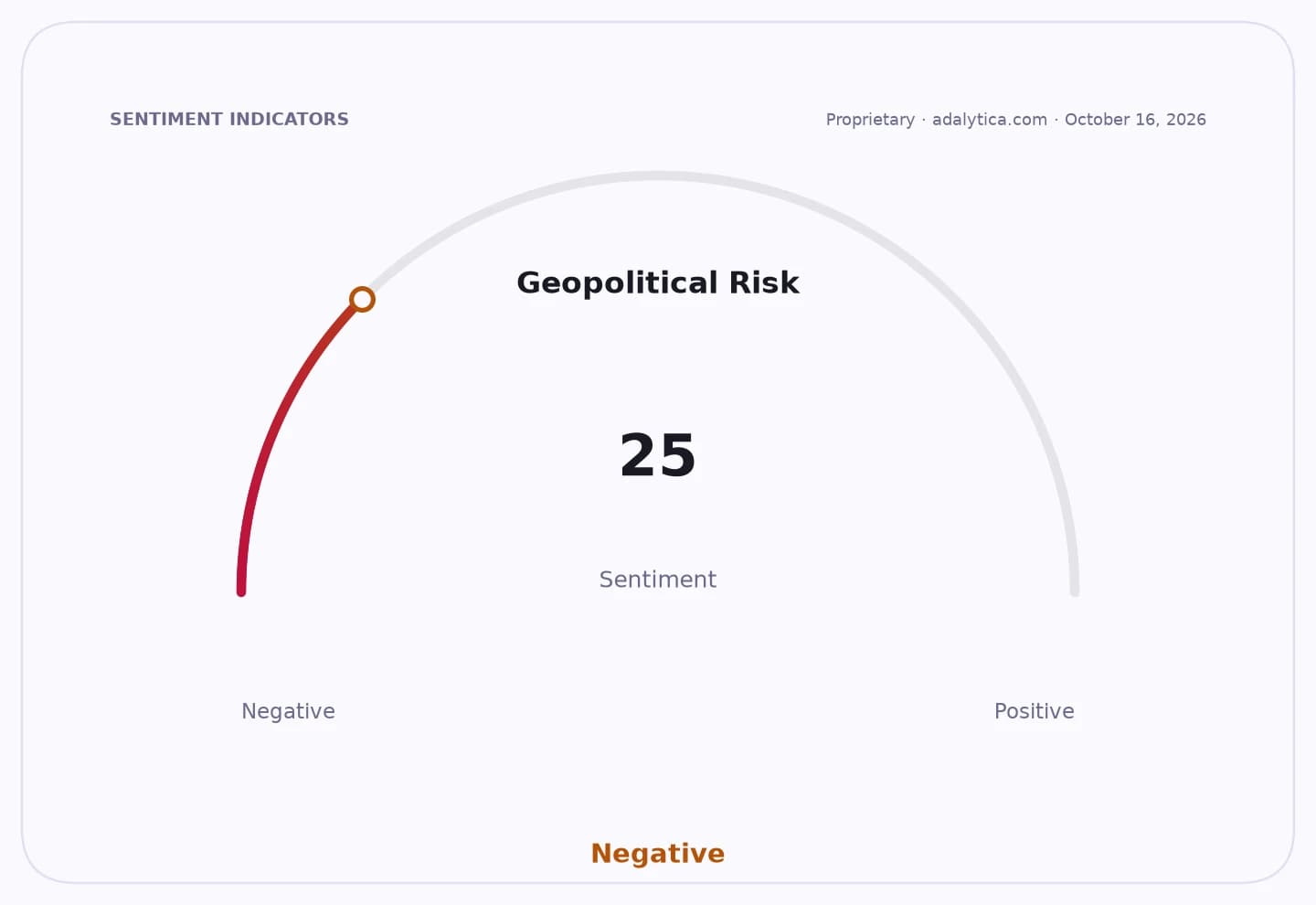
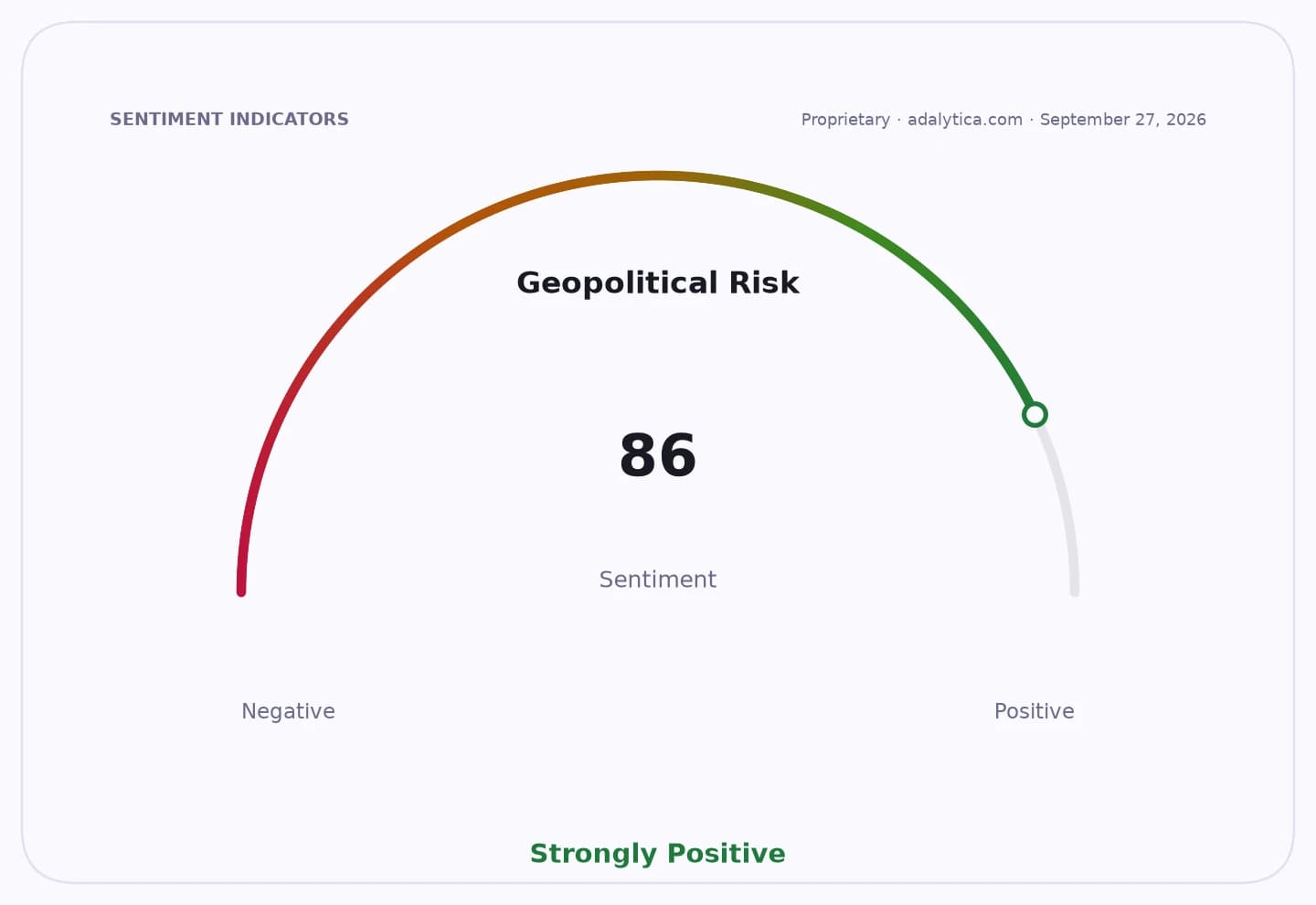
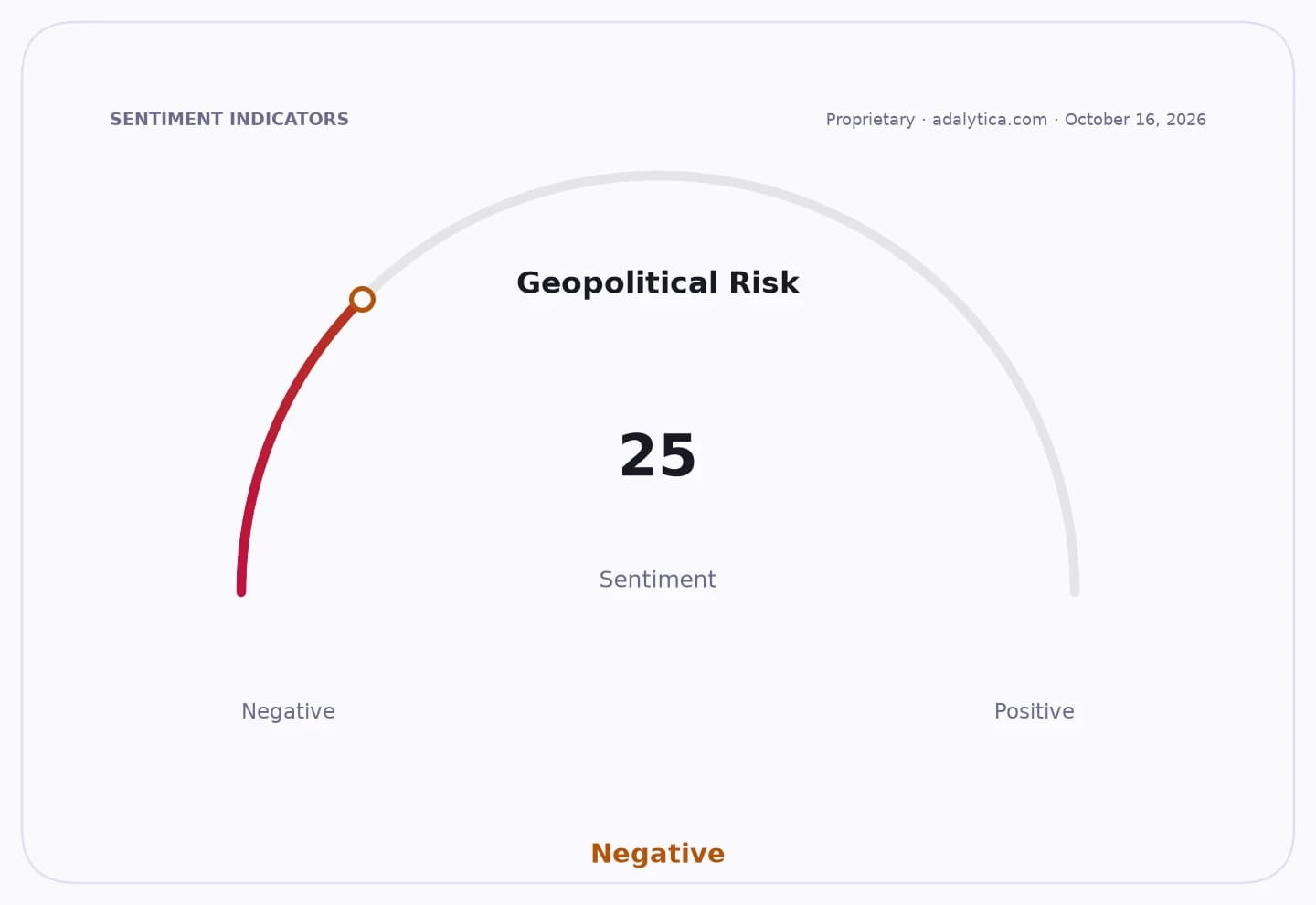
Sentiment IndicatorsⓘProprietary · adalytica.com · October 16, 2026
This is a snapshot — live sentiment, awareness and momentum for 130+ markets update continuously in the dashboard.Open AlphaPulse
Naftogaz said the overnight strike on Oct. 15 damaged technological equipment at the Poltava asset and caused a fire, forcing work to stop. No staff were hurt because workers were in shelter at the time, a reminder that Ukraine’s energy sector has had to build resilience around personnel safety even as physical assets remain exposed. Company officials are still assessing the scale of the damage.
The attack follows another Russian strike on Naftogaz gas infrastructure in Kharkiv just three days earlier. That pattern matters. This is not an isolated incident but a campaign against Ukraine’s domestic energy production, and the repetition suggests Moscow is trying to chip away at the country’s ability to produce fuel at home rather than just attack power stations or transport links. The economic cost compounds quickly: lost output today can mean higher import bills tomorrow, and repairs can take much longer than the headline damage implies.
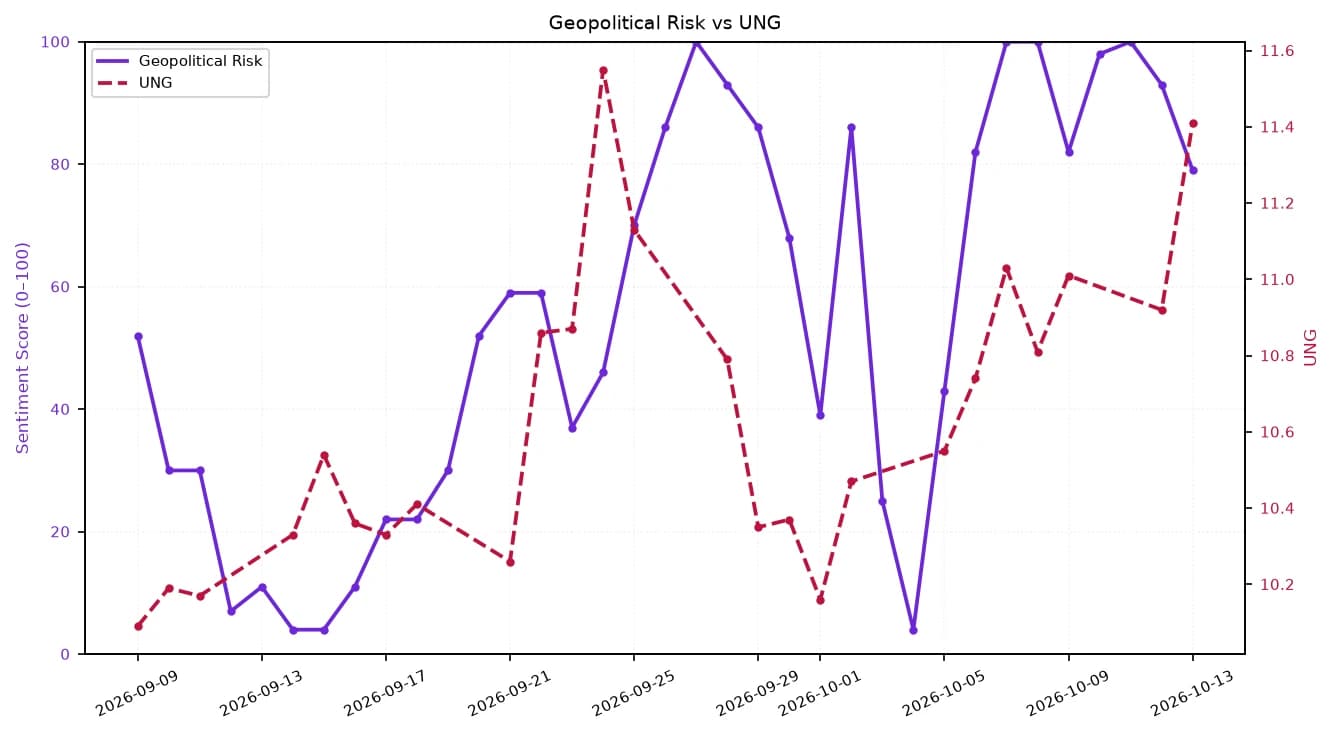
Geopolitical Risk vs UNGadalytica.com
Explore this data interactively — full history, time series and cross-market comparisons.Open AlphaPulse
The wider market read-through is broader energy risk. Oil prices have already been firming, with WTI trading around $102.53 a barrel in the latest forecast, while energy equities have stayed strong. The Energy Select Sector SPDR Fund, XLE, closed at $68.24 on Oct. 16, near the upper end of its recent range, and the Oil Services ETF, OIH, finished at $382.18. Those moves reflect a market that remains sensitive to geopolitical supply shocks, even if Ukraine’s gas facilities are not large enough on their own to move global benchmarks. What they do affect is regional supply security, repair demand and the risk premium investors assign to energy infrastructure in conflict zones.
The broader takeaway is that Ukraine’s energy war is entering another critical phase ahead of winter. Drone warfare is now doing damage not just to military targets but to the industrial systems that keep an economy functioning. For long-term investors, that reinforces two realities: Europe’s eastern energy infrastructure remains vulnerable, and companies with exposure to security, repair, LNG logistics and alternative supply chains may continue to benefit from a world where geopolitical risk is no longer episodic, but structural.
| Entity | Gains | Losses |
|---|---|---|
| Naftogaz / Ukraine | ▲resilience narrative | ▼lost gas output |
| Russia | ▲battlefield pressure | ▼higher condemnation |
| Energy suppliers | ▲repair and backup demand | ▼operational disruption |
| Consumers and industry | ▲shelter from some attacks | ▼tighter winter supply risk |