Ukraine’s wartime alliance with Washington looks shakier by the day, and that is the real market and geopolitical story behind Volodymyr Zelensky’s claim that Donald Trump has “betrayed” Kyiv.
Ukraine U.S. Policy Shift Lifts Oil, Defense, Gold
For investors, the significance is not the rhetoric itself but the policy drift it points to: a potentially softer U.S. line on Russia, a harder reliance on Europe to keep Ukraine funded, armed and connected, and a fresh premium on commodities and defense names that benefit when the war drags on. Zelensky said Trump’s decision to pursue a deal with Vladimir Putin on diesel and sanctions relief left him feeling abandoned, while also warning that any U.S. limit on Starlink operations in Ukraine would be a serious mistake because it would impede battlefield operations.
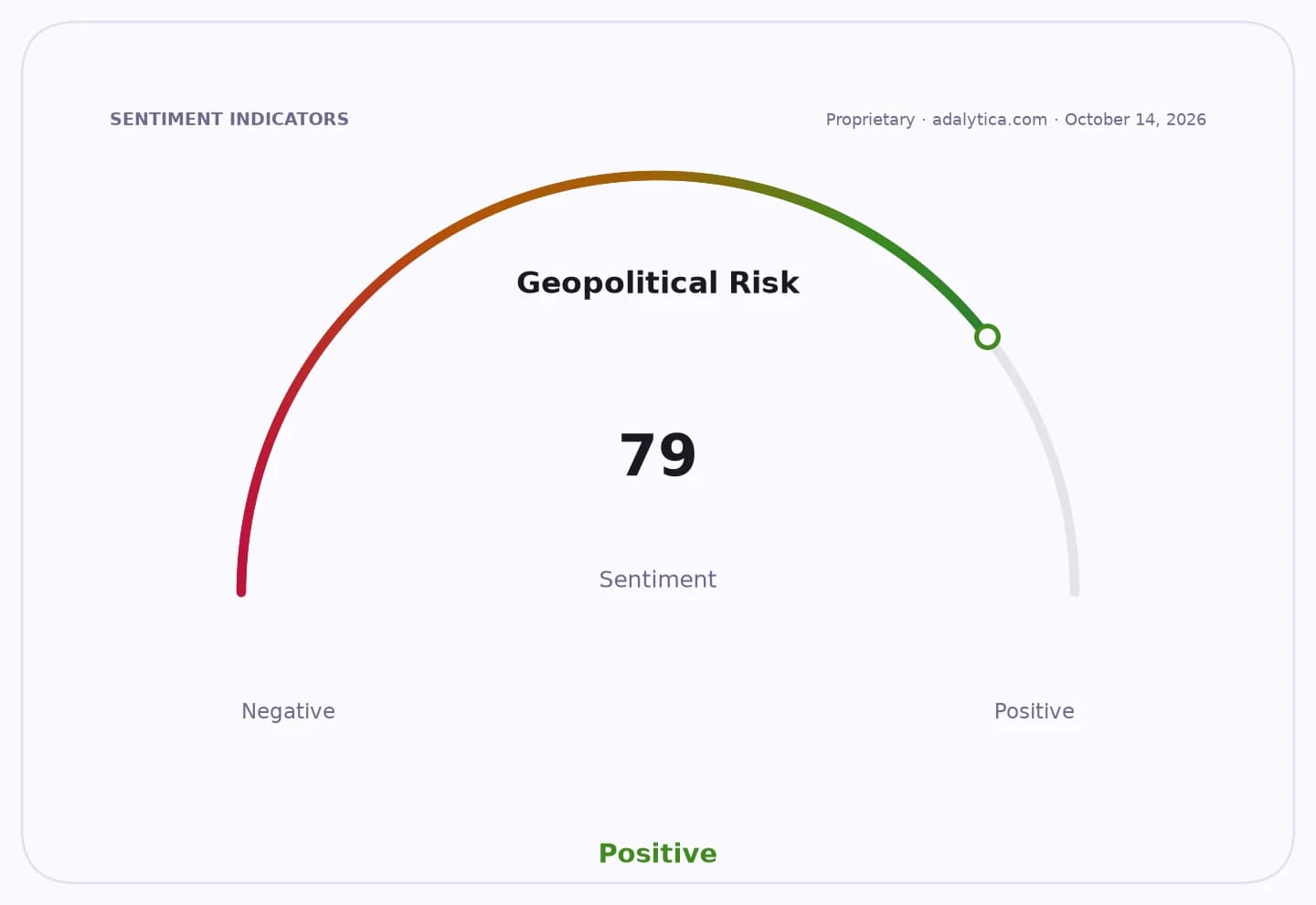
Sentiment IndicatorsⓘProprietary · adalytica.com · October 16, 2026
This is a snapshot — live sentiment, awareness and momentum for 130+ markets update continuously in the dashboard.Open AlphaPulse
That matters economically because the war’s cost structure is shifting rather than fading. The European Union has already committed about 228 billion euros in aid to Ukraine and recently approved another 3 billion euros in military assistance, while also sanctioning 1,600 Russian individuals tied to war-support activities. At the same time, the EU is being forced to do more as some member states lag in delivering promised support, a reminder that fiscal and industrial strain in Europe will intensify if Washington pulls back.
The market implication is straightforward: the longer the U.S. signal remains uncertain, the more capital flows toward the war’s toll collectors. Energy prices can stay bid when sanctions risk and geopolitical friction rise, and defense spending becomes even more durable as Europe re-arms. The latest move in U.S. crude ETF USO shows how quickly oil can reprice when geopolitics tighten, with prices surging well above the 50-day moving average and the 200-day trend, while technical readings remain elevated. That is exactly the kind of backdrop that can keep energy producers, tanker operators and select defense contractors in favor.
Gold also has a place in this trade. GLD has pulled back from its highs, but the broader setup remains supportive when investors are forced to hedge policy uncertainty, alliance risk and a potentially less predictable U.S. foreign policy posture. When the White House looks less reliable and Europe is left carrying more of the burden, gold is not just a safe haven — it becomes a portfolio insurance policy.
Adalytica’s global stability sentiment remains in “greed” territory even as awareness of geopolitical risk stays extremely low, which is often when investors underprice the next policy shock. That disconnect is the opportunity. If Washington really is moving toward a more transactional stance with Moscow, the winners are the same ones that benefit from a fragmented security order: energy, defense, cyber, satellite communications and gold-linked assets. The losers are Ukraine’s battlefield logistics, European taxpayers and any investor still assuming the alliance structure is unchanged.
The trade now is to stay positioned for a longer, more expensive conflict and a more multipolar Western response. I believe the market is still too complacent about the second-order effects of a softer U.S. Ukraine policy, and that complacency is what creates the asymmetric setup in commodities, defense and hard assets.
| Entity | Gains | Losses |
|---|---|---|
| Energy producers and USO | ▲Higher geopolitical risk premium | ▼ |
| Defense contractors | ▲More Europe rearmament spending | ▼ |
| Gold holders and GLD | ▲Safe-haven demand | ▼ |
| Ukraine and Starlink-dependent forces | ▲ | ▼Battlefield logistics and support |
| EU taxpayers | ▲ | ▼Higher fiscal burden |