Ukraine’s war effort is increasingly being fought not just on the battlefield but in the diplomatic arena, and President Volodymyr Zelensky’s visit to India highlights how much is at stake for investors tracking energy, trade and risk assets. The trip to a country that has kept close economic ties with Moscow matters because every new public alignment away from Russia raises the political cost of the war and keeps sanctions, defense spending and commodity disruption in play.
Ukraine visit to India keeps energy and defense in focus
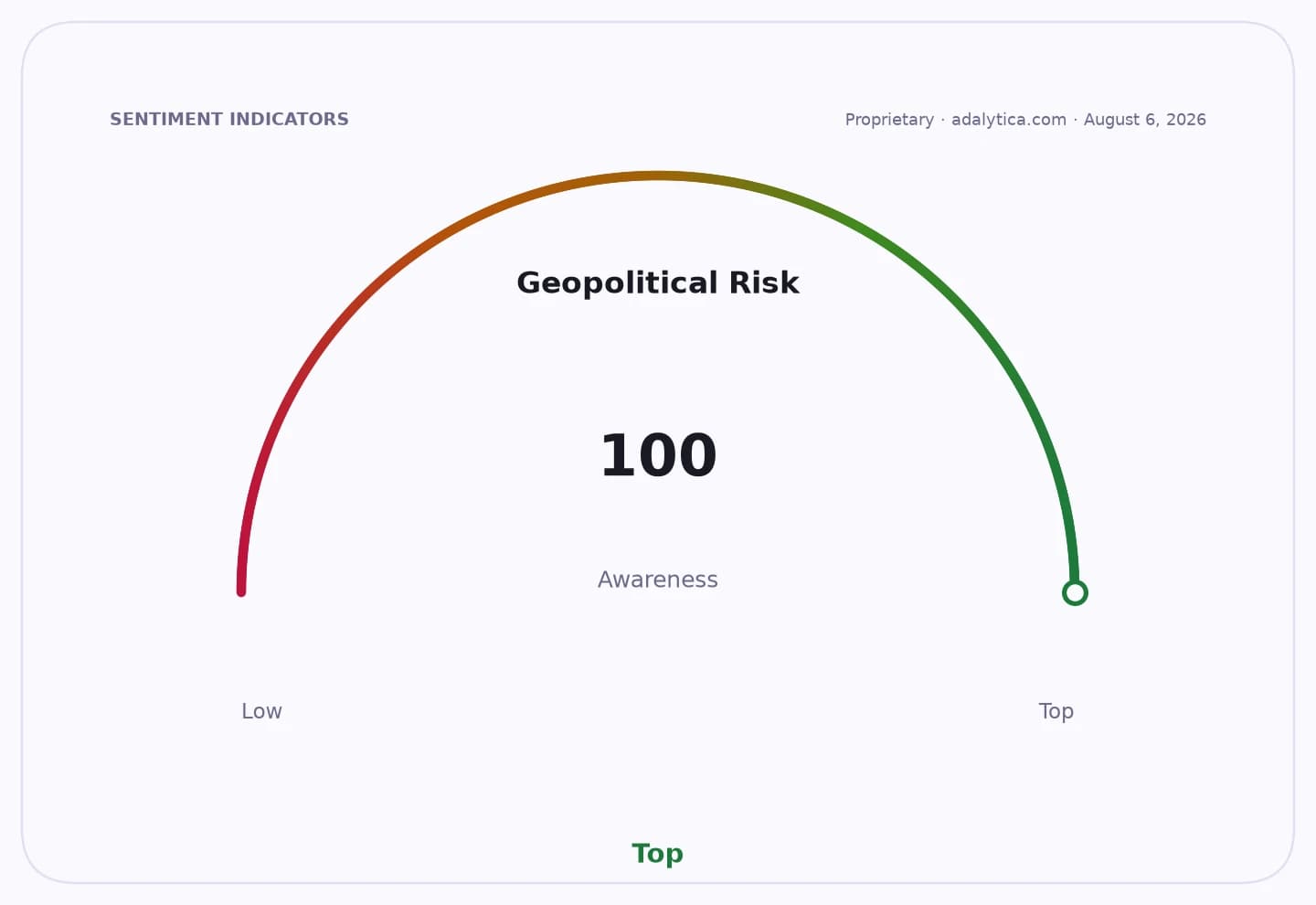
For markets, the significance is broader than symbolism. The longer Russia remains isolated from major emerging economies, the more dependent it becomes on a narrower set of buyers for its energy exports, and the more fragile the global pricing structure becomes if those trade flows are interrupted. That is one reason oil-linked equities such as Chevron and Exxon continue to flag geopolitics as a material business risk in recent filings. When the conflict escalates, the market does not just price military headlines — it reprices shipping, insurance, fertilizer, metals and the cost of capital across the emerging world.
Sentiment IndicatorsⓘProprietary · adalytica.com · August 6, 2026
This is a snapshot — live sentiment, awareness and momentum for 130+ markets update continuously in the dashboard.Open AlphaPulse
The latest escalation underscores that backdrop. Ukraine and Russia exchanged deadly strikes on Aug. 2, with 14 people killed in the fighting, while Kyiv’s drone attack on a Russian technical university that produces drone control systems showed how the war is increasingly targeting industrial and technological infrastructure as well as troops and cities. This is the kind of conflict that keeps global risk premia elevated because it is both persistent and adaptable.
That matters for investors because the market still tends to underprice the second-order winners of prolonged geopolitical fragmentation. Defense contractors, drone suppliers, cyber-security firms, energy producers and commodity-linked logistics players all gain from a world where supply chains are less reliable and governments are more willing to spend. At the same time, import-dependent manufacturers, European industrials and countries exposed to energy shocks remain the most vulnerable whenever the fighting widens.
The macro signal is one of persistent instability, not resolution. Adalytica’s Global Stability Sentiment is at 86, labeled Extreme Greed, after surging over the past week, suggesting markets are already leaning toward complacency even as the conflict keeps escalating. That disconnect is where opportunity usually lives: investors who wait for certainty tend to miss the rerating in defense, energy infrastructure and commodities that comes when geopolitics stops being background noise and becomes the market’s central variable.
My view is that this is still an accumulation phase for the beneficiaries of fragmentation. The best way to play it is through the toll roads of the new geopolitical economy — energy majors, defense names, drone and surveillance suppliers, and broad commodity exposure — while staying cautious on the sectors most exposed to trade shock and higher input costs. The Ukraine war is not fading into the background; it is hardening into a structural market theme.
| Entity | Gains | Losses |
|---|---|---|
| Defense contractors | ▲More procurement | ▼War fatigue politics |
| Energy majors | ▲Higher risk premium | ▼Export disruption |
| Russia | ▲Hard-currency inflows | ▼Diplomatic isolation |
| Importers and industrials | ▲Lower exposure to shocks | ▼Higher supply costs |