Russia is pushing for any Ukraine settlement to come with strict limits on Kyiv’s strategic autonomy — and, ideally, a change in leadership — a demand that would reshape the economics of peace as much as the politics of war.
Ukraine Peace Talks and Energy Risk
That matters because the market is too often pricing diplomacy as if a ceasefire would quickly restore normality to Ukraine and ease the wider European risk premium. Putin’s real objective, according to the supplied context, is not simply a pause in fighting but continued control over the post-Soviet space. That means any agreement that leaves Ukraine militarily independent, politically sovereign and firmly anchored to the West remains unstable from the Kremlin’s point of view.
Sentiment Indicators
The latest battlefield context reinforces that reading. Russian forces have pressured Ukrainian troops to commit reserves in the Sumy direction, showing Moscow still has both military leverage and incentives to keep the pressure on while talks continue. Diplomatic efforts, including reporting from US envoy Kushner, may be moving forward, but the data point that matters is that any final deal still depends on Russian approval. In other words, negotiations are not yet a path to certainty; they are part of the coercive strategy.
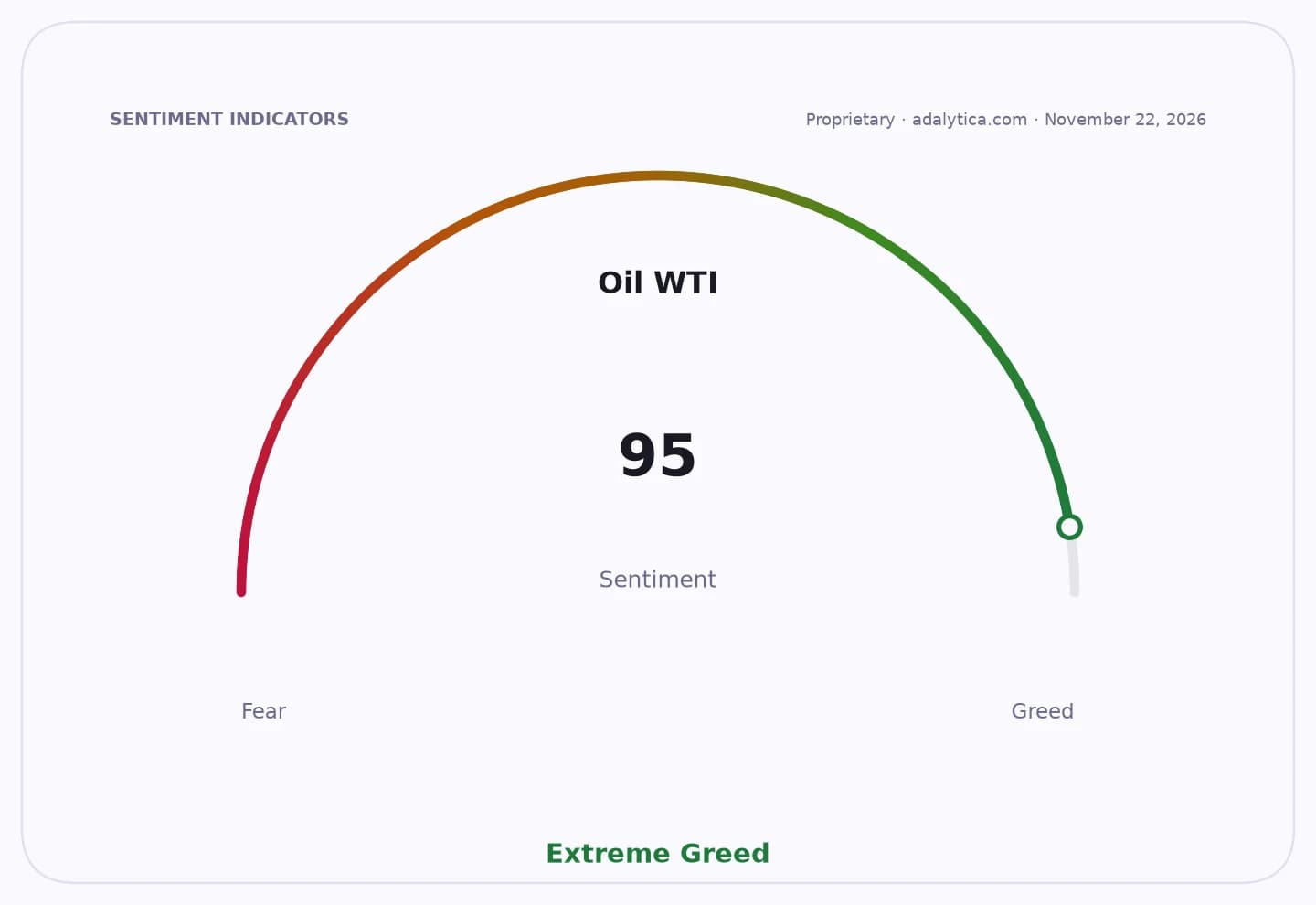
For investors, that means geopolitical risk around Ukraine is not disappearing simply because the headlines turn to peace. Energy markets, European defense spending, sovereign risk premiums and currency flows all remain sensitive to whether the war ends with a durable security architecture or merely a frozen conflict that preserves Russia’s leverage. The benchmark oil gauge in the context — US crude around $139.89, still well above its long-run averages in the supplied data — shows how war risk has kept a floor under energy pricing even as volatility has eased from earlier spikes.
US Dollar — 30-day sentimentadalytica.com
Explore this data interactively — full history, time series and cross-market comparisons.
That is why the bigger investable question is not whether peace talks continue, but whether markets are underestimating the chance of a brittle settlement. A deal that constrains Ukraine’s military and political freedom would not remove the need for rearmament in Europe; if anything, it would harden the case for higher defense budgets, longer procurement cycles and continued demand for missiles, air defense, drones and surveillance systems. It would also keep pressure on Europe’s energy strategy, especially if Russian influence remains a live factor in regional security.
There is a second-order market effect here as well. If investors start to believe the conflict will remain unresolved or only partially settled, the usual beneficiaries are defense contractors, cyber-security names, LNG-linked infrastructure and select energy producers. The losers are more obvious: businesses assuming a quick normalization in European trade, transport and industrial inputs, and any portfolio positioned for an abrupt reversal in the war-driven risk premium.
Adalytica’s US dollar trade signals show extreme fear in the currency, while the broader equity snapshot shows fear even as awareness remains elevated. That combination argues for caution in assuming a clean de-risking trade. Bond sentiment is neutral, not euphoric, which also suggests markets are not fully convinced the geopolitical backdrop is improving fast enough to justify a broad rotation out of safety assets.
My view is simple: Putin is still trying to convert battlefield pressure into political control, and that keeps Ukraine from becoming a clean postwar reopening story. The market underestimates how long this coercive phase can last. Until any agreement includes real security guarantees and a credible deterrent structure, investors should continue to own the picks-and-shovels of prolonged insecurity rather than bet on a quick peace dividend.
| Entity | Gains | Losses |
|---|---|---|
| Defense contractors | ▲Higher procurement demand | ▼No peace dividend |
| Energy producers | ▲Risk premium in prices | ▼Faster normalization |
| Ukraine | ▲Potential ceasefire relief | ▼Sovereignty constraints |
| European importers | ▲Lower war escalation risk | ▼Enduring security costs |