Russia launched multiple waves of ballistic missile attacks on Kyiv overnight after President Volodymyr Zelensky said intelligence indicated Moscow was preparing another major strike on Ukraine’s infrastructure, underscoring the risk of a renewed campaign against the power system and bridges over the Dnipro.
Ukraine reports Russian missile attacks on Kyiv

Ukraine’s air force said at least six missiles were fired at the capital in the first barrage, followed by another round of launches hours later. Kyiv Mayor Vitali Klitschko said explosions were reported in the city’s outskirts and warned Russia was using ballistic missiles against infrastructure, while local reporters said they heard repeated blasts across the city.
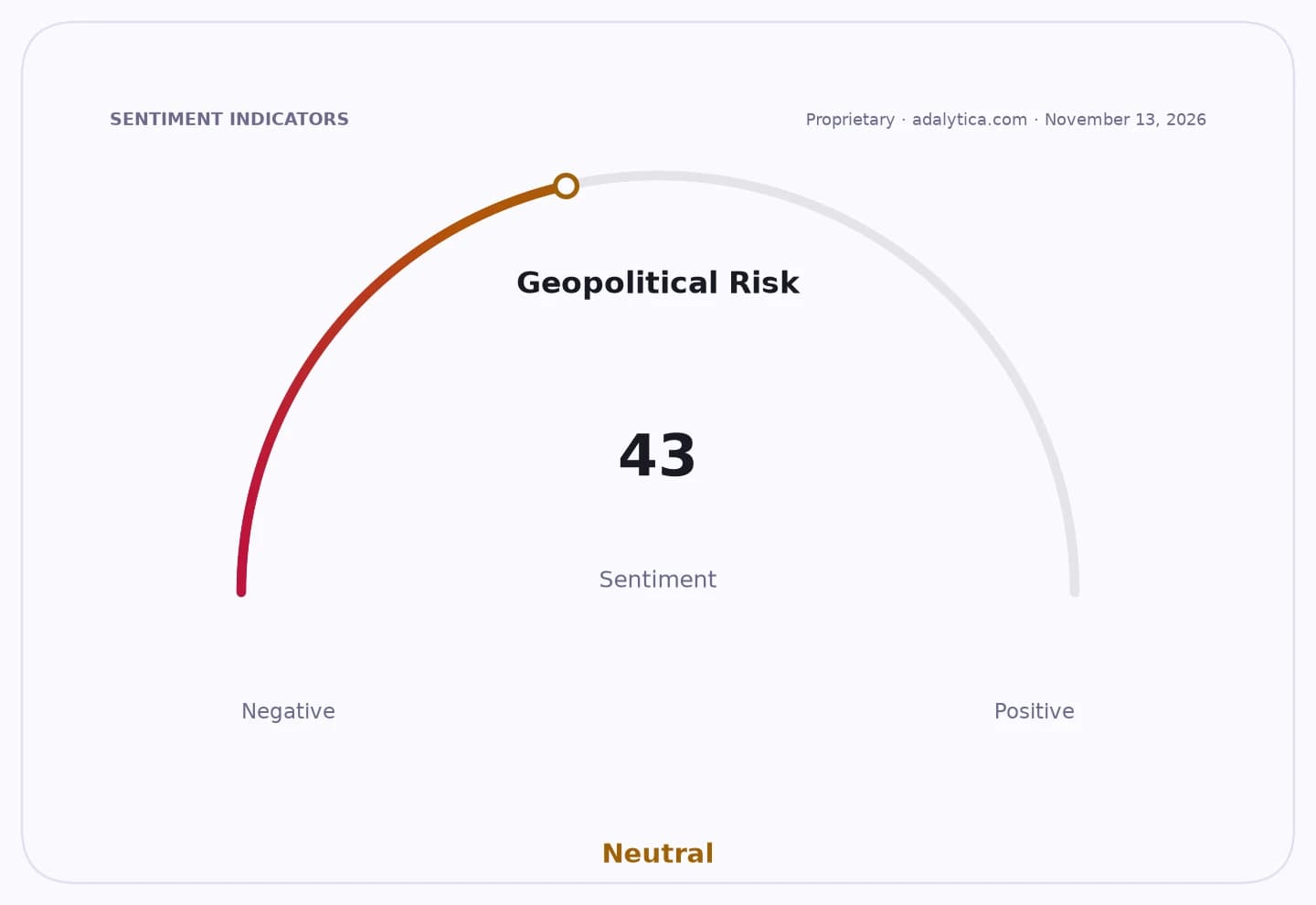
Sentiment Indicators
The attacks matter economically because Ukraine’s power grid remains a central target in the war, and any damage to generation, transformers and distribution equipment can disrupt industry, household demand and winter heating. Zelensky said Kyiv had ordered more repair crews and would involve the armed forces in cleanup work, a sign the government is bracing for repeated damage rather than a one-off strike.
The pressure is not limited to Ukraine. Zelensky said Ukrainian deep-strike operations against Russia’s refining industry are continuing, a reminder that both sides are targeting energy assets in a war that is increasingly about degrading logistics, fuel supply and critical infrastructure rather than seizing territory.
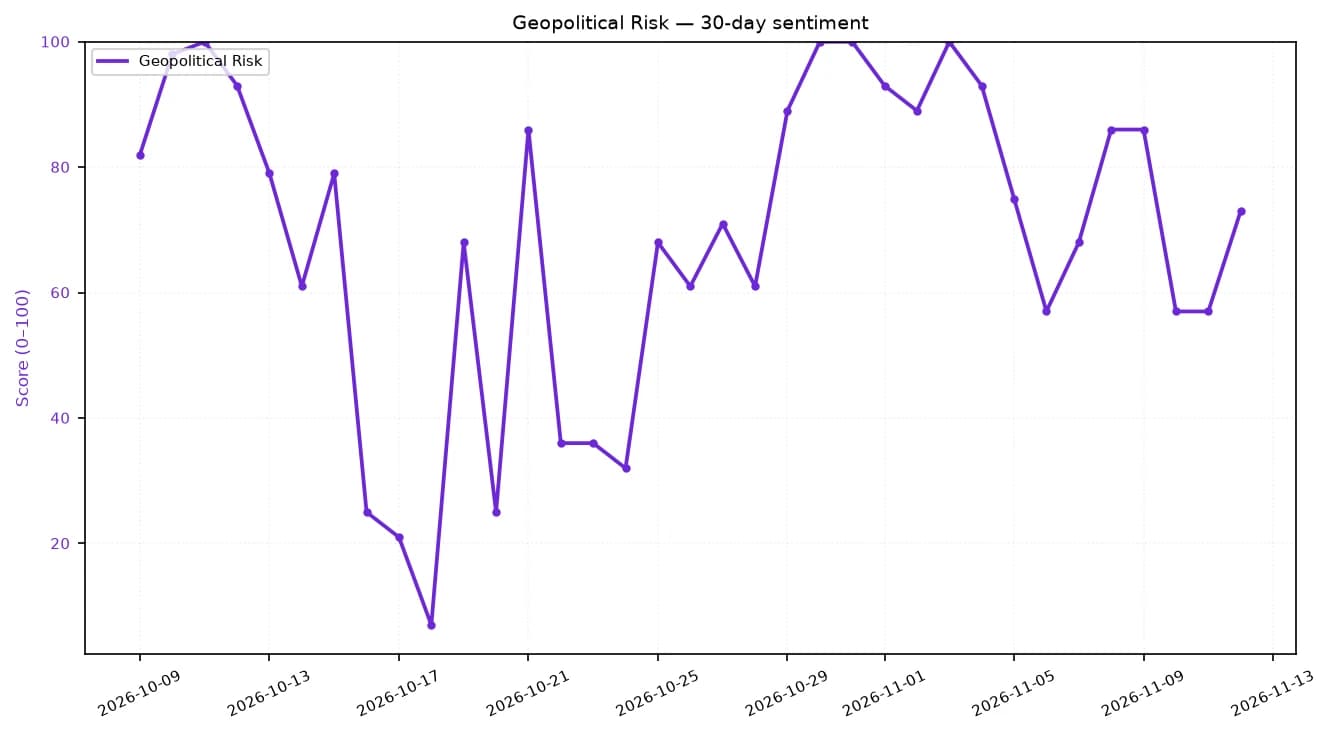
For investors, the immediate read-through is not a direct market shock but a wider geopolitical risk premium. The Adalytica Global Stability Sentiment gauge showed “Greed” at 73, even as awareness remained in “Extreme Fear,” highlighting how markets can stay complacent until attacks threaten energy assets, shipping routes or broader European security conditions.
The latest strikes also come as diplomacy remains fragile despite renewed talks involving the U.S., Russia and Ukraine and a major prisoner exchange. That makes the next escalation around Ukraine’s energy grid, air defenses and repair capacity the key risk to watch, with any sustained damage likely to keep pressure on regional risk sentiment, European energy planning and defense demand.
| Entity | Gains | Losses |
|---|---|---|
| Ukraine defense forces | ▲Stronger case for air defenses | ▼More pressure on infrastructure |
| Russia military | ▲Tactical disruption | ▼Deeper sanctions risk |
| European energy markets | ▲Higher defense and repair demand | ▼Higher geopolitical risk premium |
| Investors in safe havens | ▲Flight-to-quality support | ▼Risk assets if escalation deepens |