Russia’s shift to sustained strikes on Ukraine’s bridges, railways and energy assets is deepening the country’s economic damage, but a new poll showing 79% of Ukrainians still believe they will eventually win suggests Moscow has not broken civilian resolve.
Ukraine infrastructure strikes raise economic damage
The economic logic behind the campaign is clear: if Russia cannot advance quickly on the ground, it is trying to make Ukraine harder to govern, harder to supply and more expensive to defend. That makes transport links, power generation, data networks and industrial plants as strategically important as front-line positions. For investors and policymakers, the significance is less about battlefield headlines than about the durability of Ukraine’s economy, the scale of its reconstruction needs and the likelihood that Western financial support will have to remain elevated into next year.
Sentiment Indicators
Kyiv felt the latest phase of that strategy in early October, when Russian drones repeatedly hit the Pivdennyi bridge and then the Pivnichnyi bridge, prompting police restrictions on crossings during air raids and plans for pontoon alternatives. The Institute for the Study of War has described the pattern as a new phase of the war, with Moscow leaning on winter air power after slower territorial gains.
The damage is already showing up in hard numbers. Naftogaz said it endured more than 300 attacks on its facilities in the first nine months of this year, already above the 229 strikes it suffered in all of last year. Ukrainian railways recorded 1,700 attacks in nine months, up from 1,206 for the whole of 2025, while Agriculture Minister Taras Vysockiy told the Financial Times that the country has nearly run out of spare locomotives. September agricultural exports reached just 2.4 million tons, or 46% of potential capacity, because Black Sea routes remain heavily constrained.
Heavy industry has been hit even harder. Two Metinvest plants and ArcelorMittal Kryvyi Rih, which together produced 90% of Ukraine’s steel output, were knocked out by ballistic missile strikes, prompting a Metinvest executive to say Ukraine effectively has no steel industry left. Data centers in Kyiv have also been forced shut, underscoring that the campaign is aimed not only at power and transport but at the digital backbone of the economy.
That matters economically because Ukraine enters winter with a weaker industrial base, a stretched logistics network and a financing gap that is widening as European aid is consumed. Gas storage stood at 14.6 billion cubic meters at the end of August, above last winter’s starting level, and decentralised solar projects are helping hospitals and local authorities build resilience. But those gains only partially offset the cost of repeated damage, forced rerouting and lower export volumes.
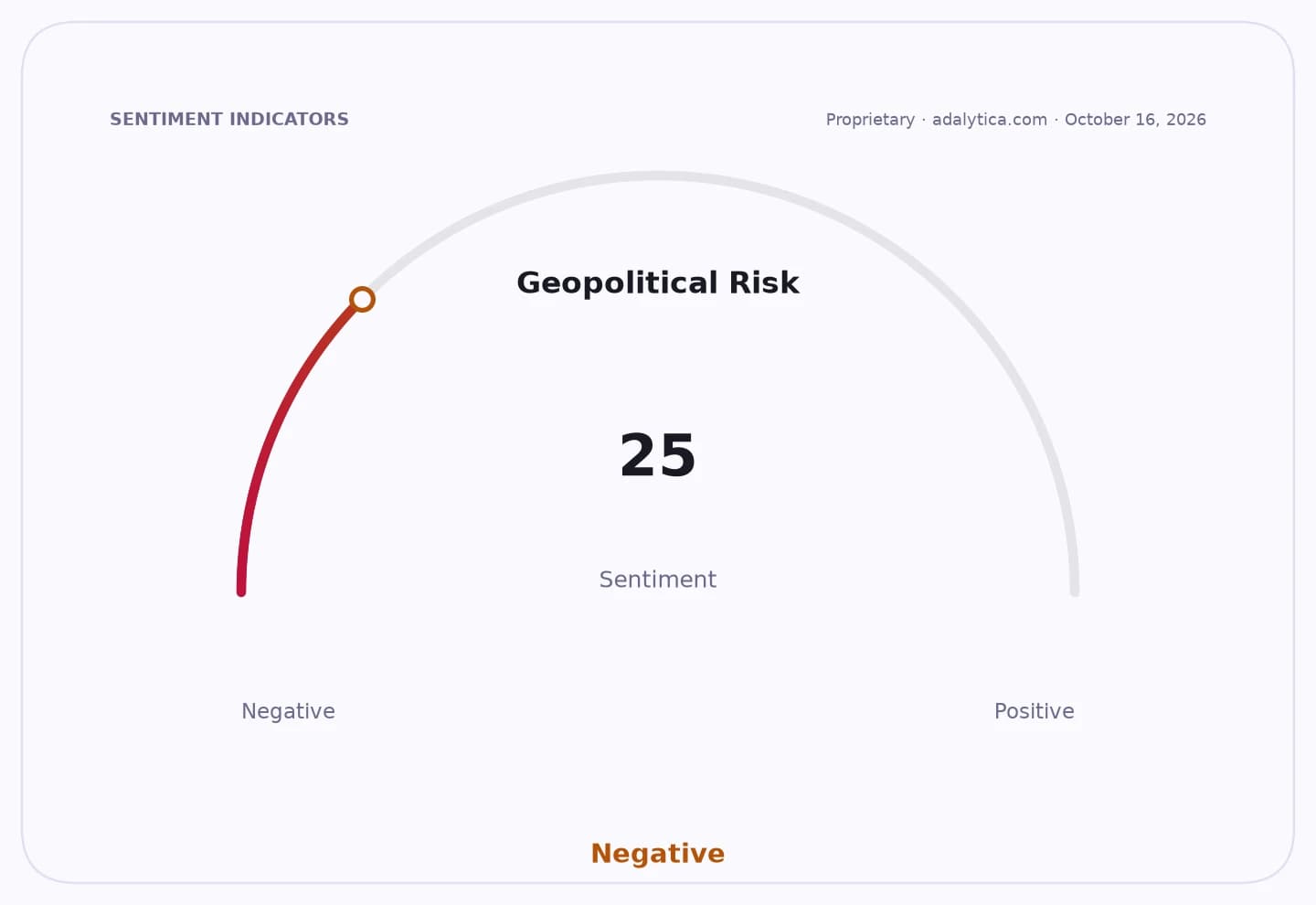
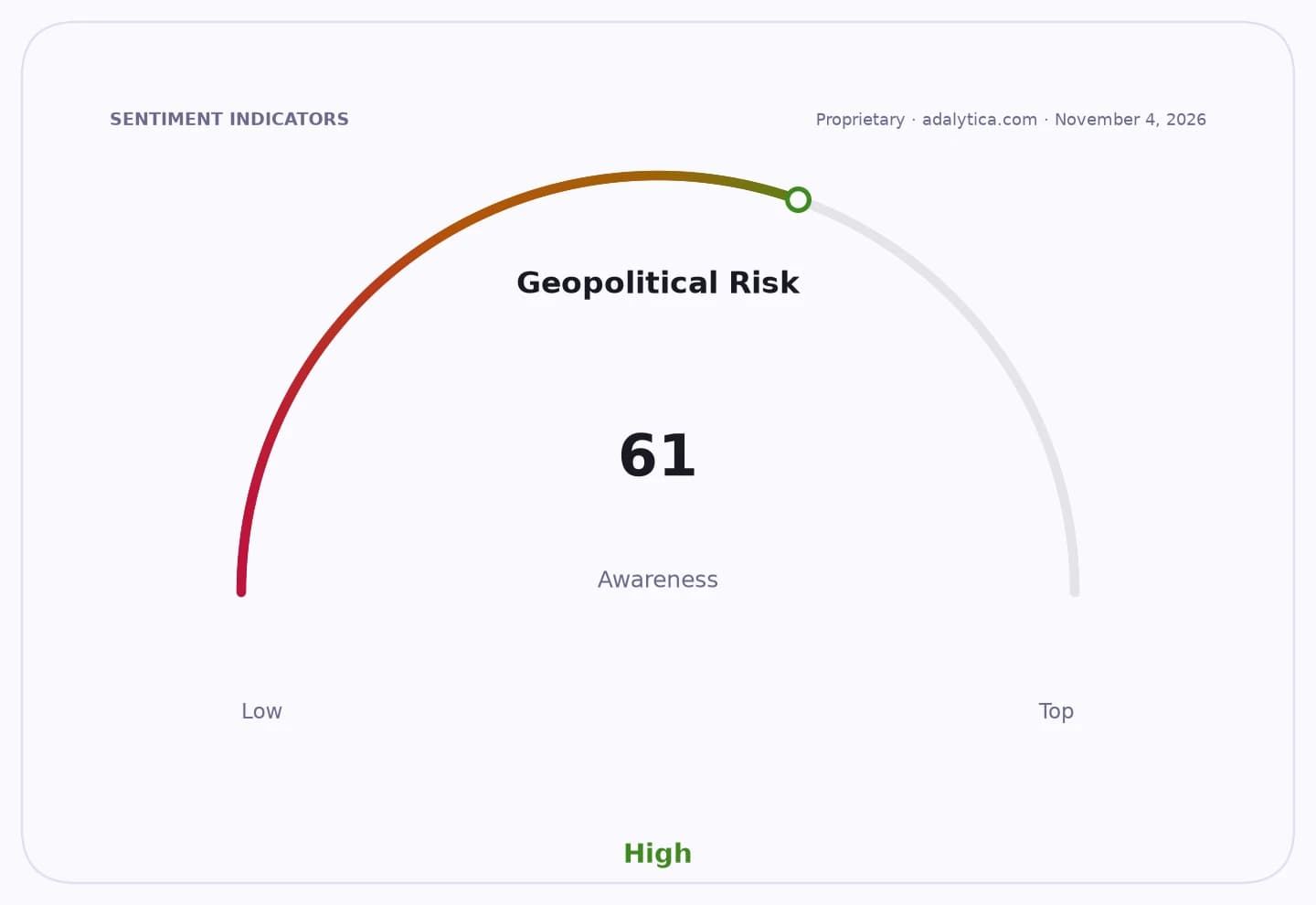
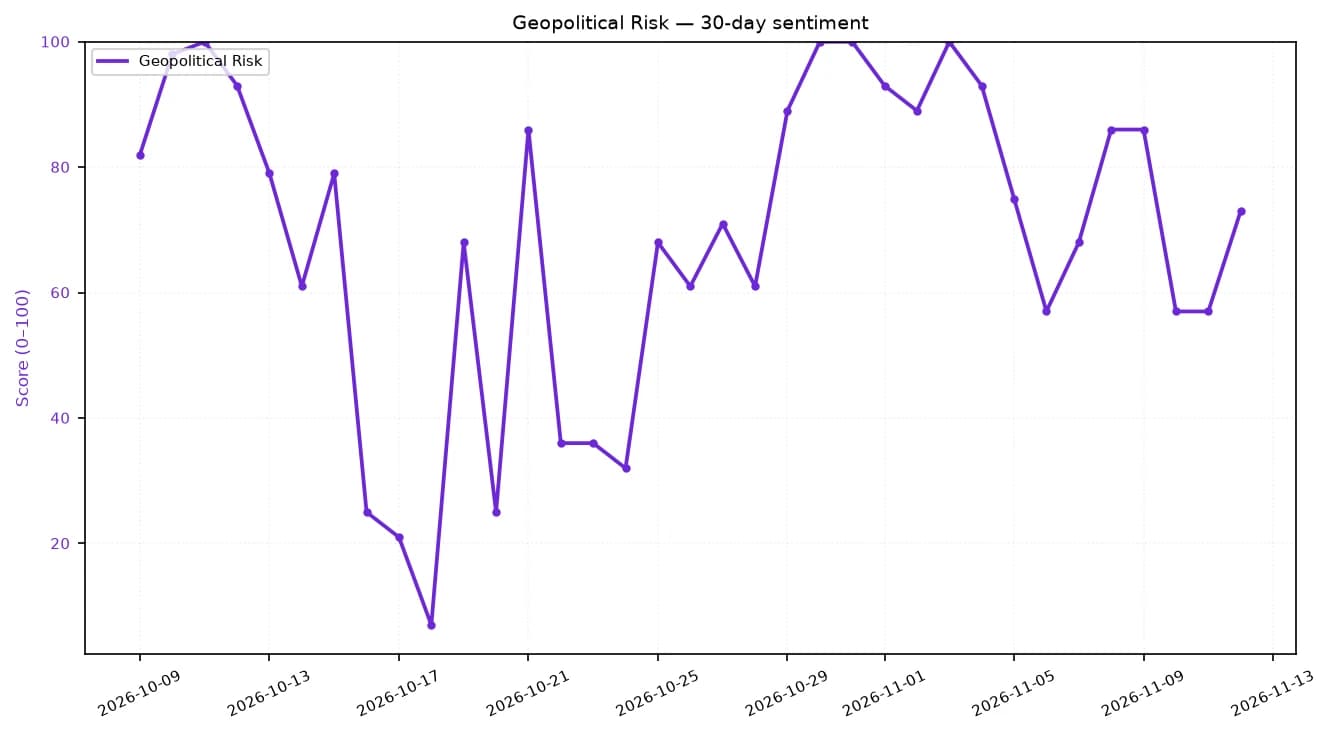
Markets are also reading the war through a wider geopolitical lens. A global stability gauge from Adalytica.com showed sentiment at 73, but awareness at an “extreme fear” level of 4, reflecting how quickly risk perceptions can turn as the conflict spills into energy, shipping and infrastructure security. For commodity markets, the pressure remains uneven: the broad U.S. energy ETF XLE has rallied sharply in recent months, while grain-linked funds WEAT and DBA have both weakened more recently, consistent with the strain on Ukrainian agricultural logistics and the broader pullback in some crop prices.
The bull case for Ukraine is that the country has adapted faster than Moscow expected. Its air defences are still intercepting a majority of drones, Western support continues, and the latest KIIS survey shows 62% of respondents are prepared to endure the war as long as needed. But the bear case is that Russia’s more advanced jet-powered drones, mass production and repeated strikes on infrastructure could keep pushing up the cost of survival faster than allies can replenish damaged assets.
For investors, the key implication is that Ukraine risk is no longer confined to the front line. It is now a story about energy, transport, exports, industrial capacity and European fiscal support. If the winter campaign continues at this intensity, the market impact will show up less in immediate price shocks than in slower growth, deeper reconstruction needs and a longer dependency on external funding.
| Entity | Gains | Losses |
|---|---|---|
| Russia | ▲Pressure leverage | ▼Sanctions relief hopes |
| Ukraine government | ▲Public resolve | ▼Infrastructure and exports |
| Western donors | ▲Strategic influence | ▼Higher funding burden |
| Energy and grain markets | ▲Risk premium | ▼Supply stability |