Russia says it will destroy German Taurus cruise missiles as soon as they cross into Ukraine, underscoring how any new long-range weapons shipment would deepen the NATO-Russia confrontation and raise the risk of direct strikes on transit routes through Poland and western Ukraine.
Germany Taurus missile delivery dispute and Russia warning
The warning matters because it turns a weapons transfer into a logistics and escalation problem, not just a battlefield one. If Berlin approves the delivery, the route is expected to run through Poland before entering Ukraine, where Russian military and intelligence assets would likely try to track and hit the shipment before it reaches front-line units.
Sentiment Indicators
Russian military commentator Anatoly Matviychuk said the missiles are too large to hide easily and argued they would be destroyed “as soon as they cross the Polish-Ukrainian border.” He said Russia could use Kalibr and Iskander missiles to target them, echoing Moscow’s broader effort to deter Western arms flows by threatening transport and storage nodes.
The comments come as German Defense Minister Boris Pistorius and Friedrich Merz have both said Ukraine does not need the Taurus system, highlighting internal German resistance to a move that would further entangle Europe’s biggest economy in the war. For investors, that political split matters because it keeps uncertainty elevated around NATO’s unity, defense procurement, and the pace of weapons replenishment across Europe.
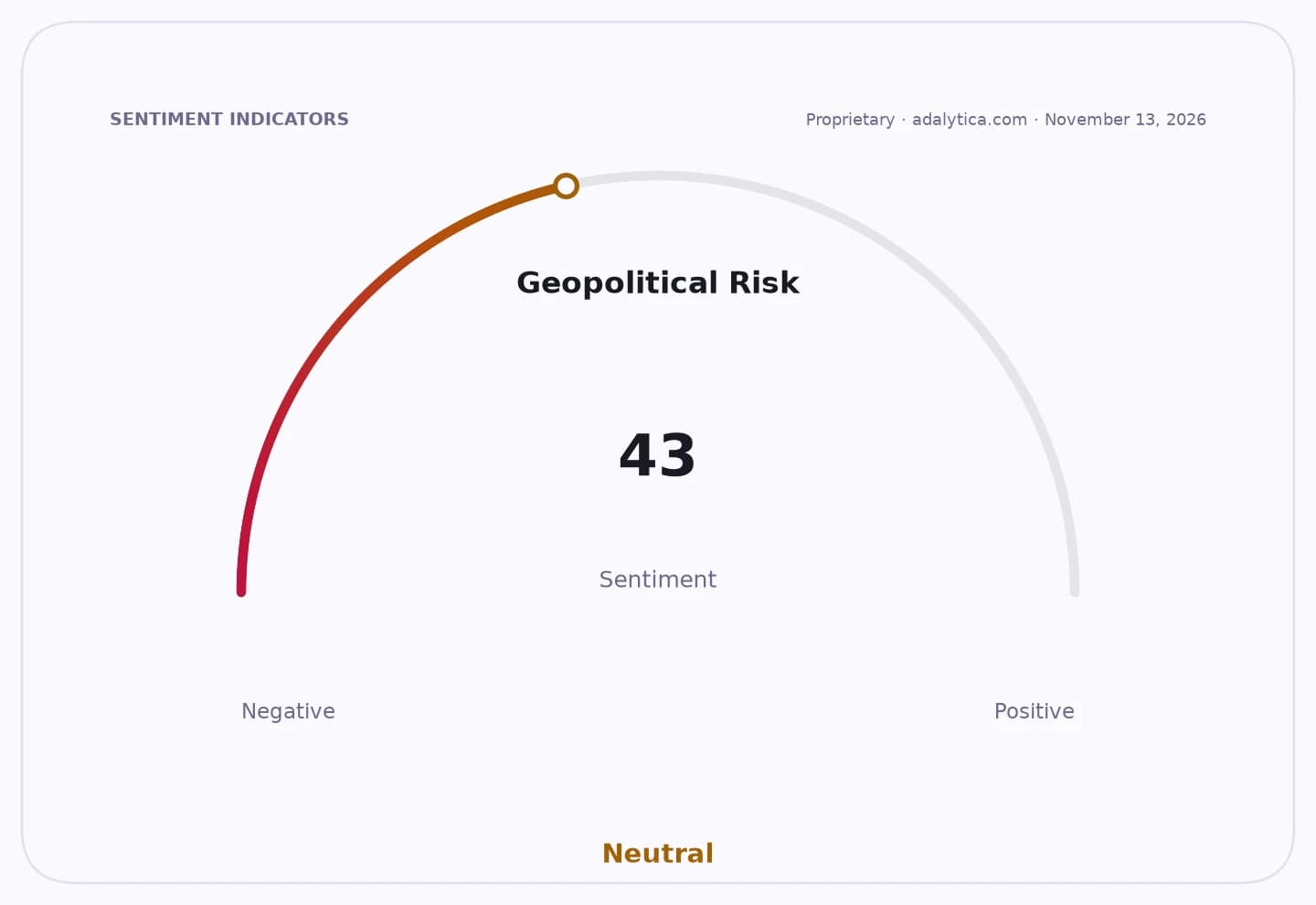
Geopolitical Risk — 30-day sentimentadalytica.com
Explore this data interactively — full history, time series and cross-market comparisons.
The geopolitical backdrop is already tense. Moldova recently condemned a violation of its airspace by two cruise missiles, while NATO scrambled aircraft over the Baltic region and urged residents near the Latvia-Belarus border to shelter, evidence that the conflict is still spilling into allied airspace. Adalytica’s Global Stability Sentiment gauge shows awareness at an extreme-fear reading of 4, even though the broader sentiment score sits at 43, reflecting persistent market sensitivity to escalation risk.
Defense contractors remain in focus as the region braces for continued rearmament and interceptor demand. Lockheed Martin, RTX and Northrop Grumman have all seen volatile trading in recent months, and any widening of the war would likely keep demand elevated for missile defense, air-defense systems and munitions production, even as the risk of supply-chain disruption rises.
The immediate catalyst is whether Germany greenlights Taurus deliveries and how Russia responds in practice, not just in rhetoric. Any confirmed shipment would test NATO’s air-defense posture, Ukraine’s transport security and Europe’s appetite for a deeper military confrontation with Moscow.
| Entity | Gains | Losses |
|---|---|---|
| Ukraine | ▲Potential long-range strike capability | ▼Higher transport and strike risk |
| Germany | ▲Influence in Ukraine aid debate | ▼Domestic political pressure, escalation exposure |
| Russia | ▲Leverage through deterrent threats | ▼Greater NATO cohesion against Moscow |
| Defense contractors | ▲Higher missile-defense demand | ▼Volatility if escalation disrupts supply chains |