July 3, 2026 — The United Nations’ creation of an “AI for Good Committee” marks a shift in artificial intelligence oversight from fragmented national regulation toward global rule-setting, raising the prospect of higher compliance costs and tighter scrutiny for the technology giants leading the AI race.
UN AI Oversight Raises Pressure on Tech Giants
The economic significance is that AI is no longer just a capital spending cycle for cloud providers and internet platforms. It is becoming a regulated infrastructure industry, with rules on data use, model safety and deployment likely to shape productivity gains, cross-border technology flows and corporate margins. For investors, that puts a policy discount on one of the market’s biggest growth trades.
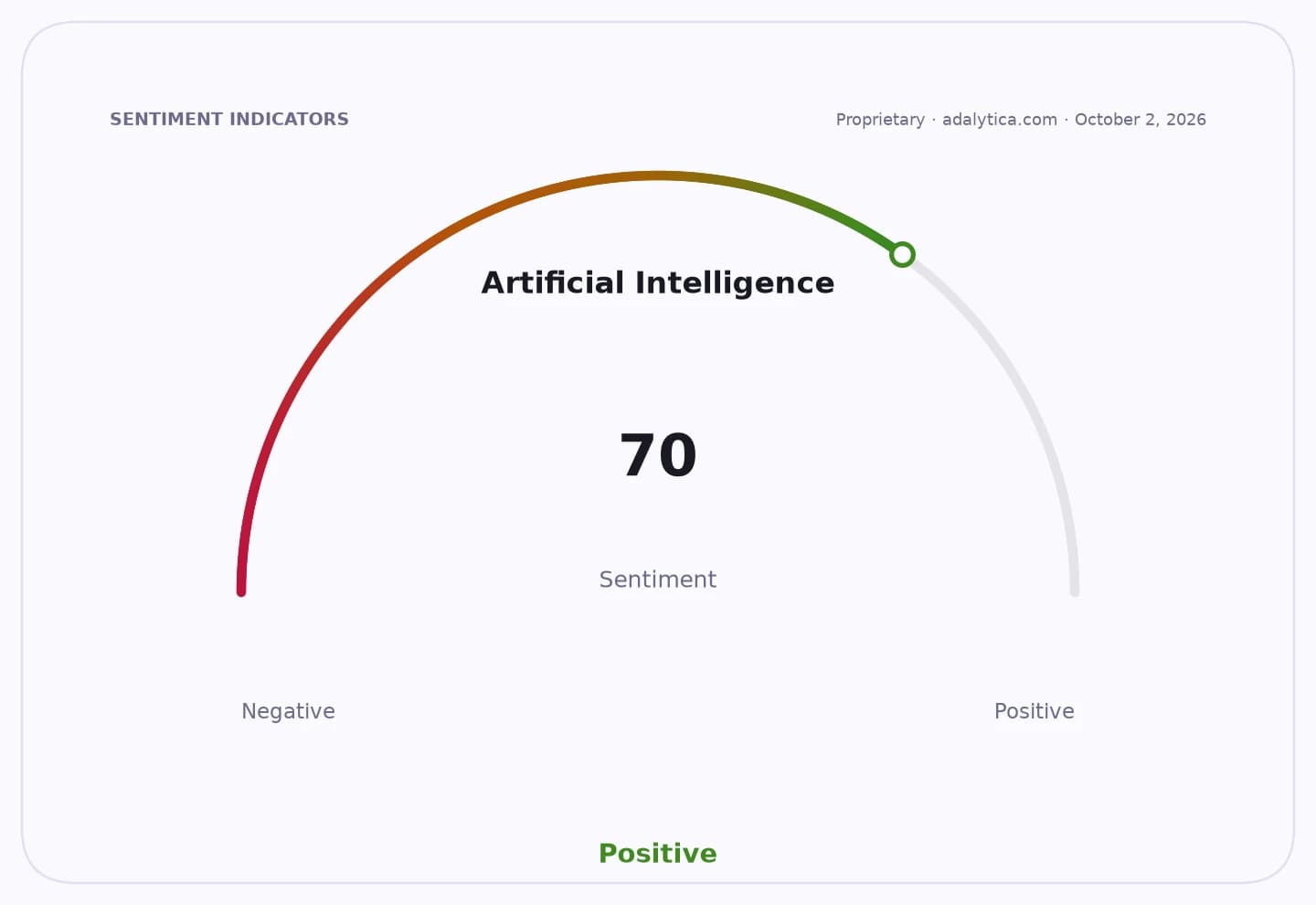
Sentiment IndicatorsⓘProprietary · adalytica.com · July 3, 2026
This is a snapshot — live sentiment, awareness and momentum for 130+ markets update continuously in the dashboard.Open AlphaPulse
Alphabet and Amazon sit at the center of that trade. Alphabet shares closed at $359.91 on July 2, below their conventional 50-day moving average of $370.83 but above the 200-day average of $315.81, suggesting the stock has lost near-term momentum without breaking its longer-term uptrend. Amazon closed at $242.67, also below its 50-day average of $255.42 and above its 200-day average of $232.98.
The technical picture shows investors have not abandoned the AI platform trade, but they have become more selective after a volatile June. Alphabet has rebounded about 6.7% from its June 26 close, while Amazon is up roughly 6.9% from June 25. RSI readings near neutral for both stocks point to stabilization rather than a fresh breakout.
The UN initiative matters because global standards could reach into the core economics of AI: what data companies can use, how models are audited, who bears liability for harmful outputs and whether governments restrict deployment across borders. Those issues directly affect cloud demand, advertising systems, e-commerce recommendation engines and enterprise AI products.
Alphabet’s own shareholder base has already shown the tension between governance demands and management control. At a June 11 shareholder meeting, proposals calling for reports on AI data-usage oversight and board-level AI oversight were not approved, according to company filings. The UN move means outside pressure may keep building even where shareholders decline to force internal changes.
Alibaba brings the geopolitical dimension. Proprietary indicators from Adalytica.com showed Alibaba earnings sentiment fell to 4 on July 3, classified as “Extreme Fear,” down sharply from 26 a day earlier and 37 on July 1. That suggests investors are increasingly nervous about the Chinese internet group’s earnings backdrop as AI competition, consumer weakness and regulatory uncertainty converge.
The broader narrative is that AI leadership is moving from a corporate arms race into a regulated global contest. U.S. companies such as Alphabet and Amazon have the scale to absorb new compliance burdens, but tighter rules could slow product rollouts and compress returns on AI investment. Chinese platforms such as Alibaba face the added risk that global governance becomes another arena for geopolitical scrutiny.
The next test for markets will be whether global AI oversight remains a principles-based framework or hardens into rules that affect data access, model approval and cross-border deployment. The former may support confidence in responsible AI adoption; the latter could force investors to reprice the sector’s growth assumptions.
| Entity | Gains | Losses |
|---|---|---|
| Global regulators | ▲Standard-setting leverage | ▼National flexibility |
| Alphabet and Amazon | ▲Scale advantage | ▼Higher compliance costs |
| Alibaba and Chinese platforms | ▲Clearer rules if aligned | ▼More geopolitical scrutiny |
| AI customers | ▲Safer deployment | ▼Slower product rollout |