United Community Banks is showing how a regional lender can turn a high-rate environment into an earnings engine: prune risk, grow loans through relationship banking and lean into floating-rate assets while the Federal Reserve keeps policy restrictive and the 10-year Treasury sits near 5%.
United Community Banks Earnings Rise on Higher Rates

That combination matters because it gives UCB operating leverage at a time when many banks are still fighting for deposits and managing credit quality. On its third-quarter earnings call, the company said operating earnings came in at $0.77 a share after a balance-sheet restructuring that included the sale of equipment finance subsidiary Navitas. Management said the move lowered nonperforming loans and credit losses while freeing capital for the core franchise.
Sentiment Indicators
For investors, the key is that this is not a one-off cleanup trade. It is a repositioning toward a simpler, higher-return model that should compound if rates stay elevated. UCB said roughly half its loans and securities are floating rate, which means higher short-term yields can feed directly into net interest income. In a sector where margin pressure is often the first casualty of competition for deposits, that structure gives UCB a built-in tailwind.
The other growth lever is organic lending. Management said production from senior bankers hired over the past year reached about $170 million in the third quarter and accounted for almost 40% of funded loan growth. That tells you the bank is still buying share the old-fashioned way — by recruiting lenders with existing customer relationships — rather than chasing volume through looser credit. In a slower credit cycle, that is exactly the sort of discipline long-term shareholders should want.
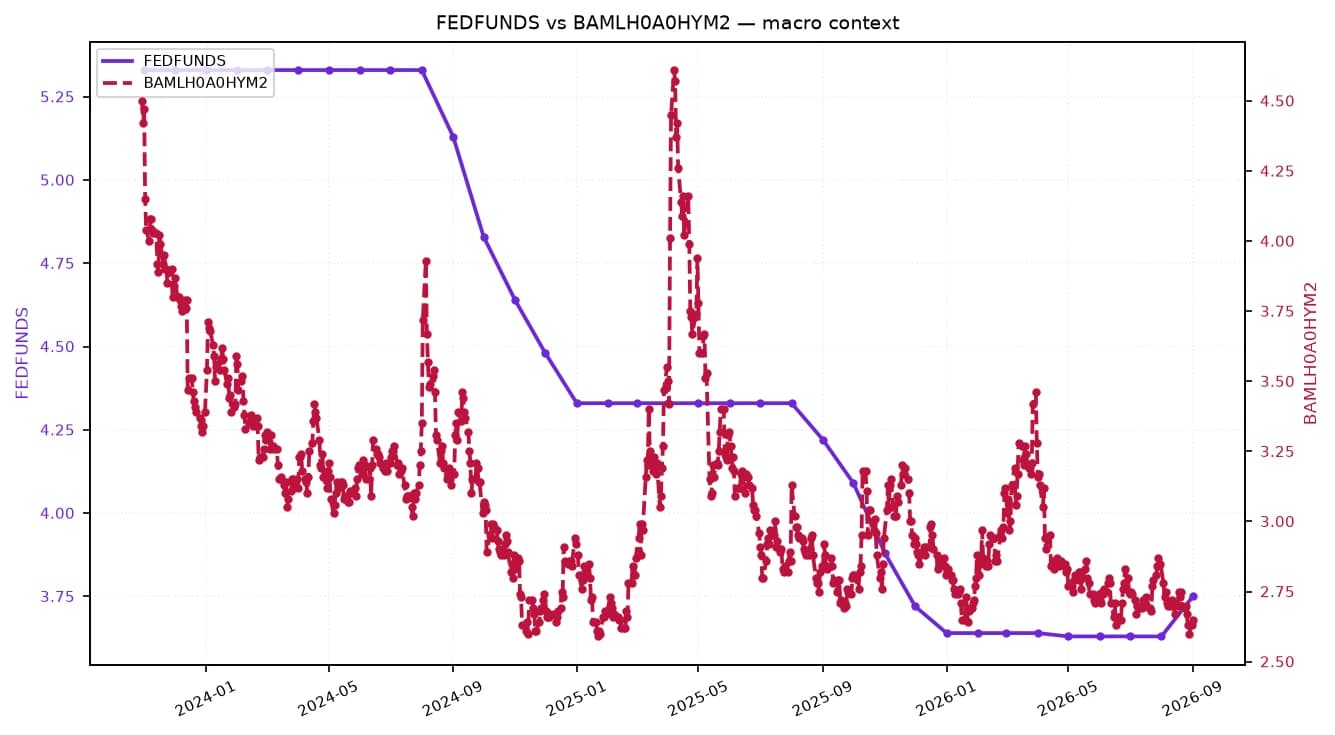
There is also a macro backdrop working in UCB’s favor. With the Fed holding rates at 4.5% and Treasury yields still elevated, the market is rewarding banks that can preserve funding discipline and benefit from floating-rate assets. UCB said its loan-to-deposit ratio is 77%, giving it room to grow without stretching the balance sheet. That flexibility is valuable if credit conditions tighten or if deposit costs remain sticky.
The market appears to be recognizing the setup. UCB closed at $36.56 on Oct. 28, above its 50-day moving average of $34.68 and 200-day moving average of $33.65, while RSI readings in the low 70s suggest strong momentum. That does not guarantee upside, but it does reinforce the idea that investors are starting to price in better earnings durability.
Our thesis is simple: the market underestimates how much earnings power a streamlined regional bank can generate when it combines a cleaner balance sheet, rate-sensitive assets and disciplined loan growth. If rates remain higher for longer, UCB has the ingredients to deliver a multi-quarter upside surprise in margins, returns and capital generation.
For investors looking for asymmetric exposure to a prolonged rate backdrop, United Community Banks deserves attention as a quality regional bank with earnings leverage still underappreciated. The story here is not just recovery — it is compounding.
| Entity | Gains | Losses |
|---|---|---|
| United Community Banks | ▲Higher net interest income | ▼Navitas-related credit risk |
| Long-term shareholders | ▲Earnings leverage | ▼Balance-sheet complexity |
| Rival regional banks | ▲— | ▼Share to UCB’s hiring and growth |
| Borrowers/funding-sensitive banks | ▲— | ▼Higher-for-longer rate pressure |