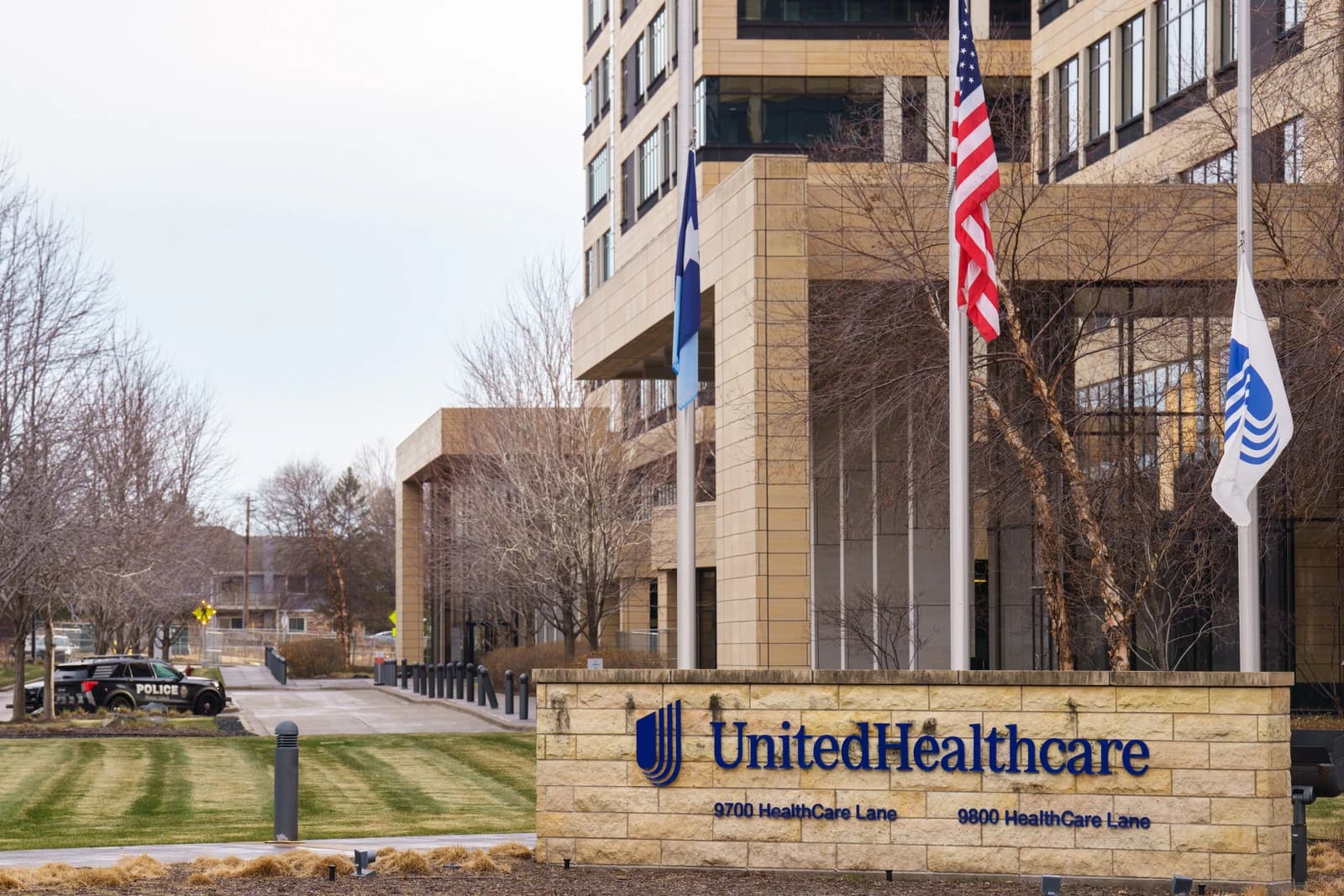
Newly released body-camera footage of Luigi Mangione’s arrest is keeping the UnitedHealth murder case in the spotlight just as the convicted defendant heads toward sentencing on Dec. 18.
UnitedHealth Faces Ongoing Headline Risk After Footage
The video matters because the killing of UnitedHealthcare chief executive Brian Thompson was not just another criminal case. It became a flashpoint for the broader backlash against US health insurers, exposing how quickly anger over premiums, claims denials and medical costs can harden into reputational risk for one of the market’s most powerful sectors.
For investors, that is the real overhang. UnitedHealth Group has already absorbed a severe share-price shock this year, and the stock’s technical picture shows the damage has not been fully repaired. At about $371.90, the shares remain below the 50-day moving average of roughly $392 and far under the 200-day average near $353, while the RSI around 36 suggests the stock has recovered from deeply oversold conditions but still lacks decisive momentum. The market is telling a simple story: sentiment can rebound, but trust in the franchise is slower to rebuild.
The newly unsealed footage does not change the legal outcome, but it does extend the public lifecycle of a case that has become symbolic. Mangione appears calm as officers approach him in a Pennsylvania McDonald’s on Dec. 9, 2024, before he gives a false name and is handcuffed. That scene has now been shown in court and will continue to circulate in the public debate around the killing, the man accused of it and the industry Thompson led.
That matters economically because UnitedHealth sits at the center of a massive cash-generating ecosystem spanning Medicare Advantage, commercial insurance and healthcare services. Any event that intensifies political scrutiny or consumer hostility toward the insurer can translate into a higher risk premium across managed care, especially if regulators, lawmakers or plaintiffs’ lawyers use the case to keep pressure on the sector’s business model.
The bigger market takeaway is that the episode reinforces a theme investors should not ignore: health insurers are increasingly being priced not only on earnings power, but on social license. In a market where AI, data and automation can improve margins, firms with the scale to absorb operating shocks may still be vulnerable to narrative shocks. UnitedHealth remains a structural giant, but the stock’s volatility shows how quickly a dominant business can become a public target.
For now, the approach is to treat UnitedHealth as a company with durable fundamentals but elevated headline risk. The opportunity is not in chasing a quick rebound on the arrest video; it is in recognizing that any sustained recovery in the shares will likely require proof that legal, political and reputational pressure has stopped escalating. Until then, investors should stay selective across managed care and look for beneficiaries of the same turbulence, including healthcare services providers, compliance technology and specialty firms less exposed to public backlash.
| Entity | Gains | Losses |
|---|---|---|
| UnitedHealth | ▲eventual clarity if case fades | ▼reputational pressure |
| Managed care rivals | ▲relative comparison | ▼sector-wide scrutiny |
| Plaintiffs/lawmakers | ▲more attention to insurers | ▼none |
| Long-term investors | ▲potential oversold rebound | ▼headline volatility |