Uruguay has turned its small size into a political advantage, using a stable democratic system to push through some of Latin America’s boldest social reforms while larger neighbors remain mired in polarised debate.
Uruguay’s institutions attract investor trust

That matters economically because the country’s rule-based approach has helped build a reputation for institutional predictability in a region often marked by policy volatility. Investors may not price social legislation directly into GDP, but they do price the credibility of the legal system, the durability of institutions and the odds that governments can still make decisions when politics turns contentious.
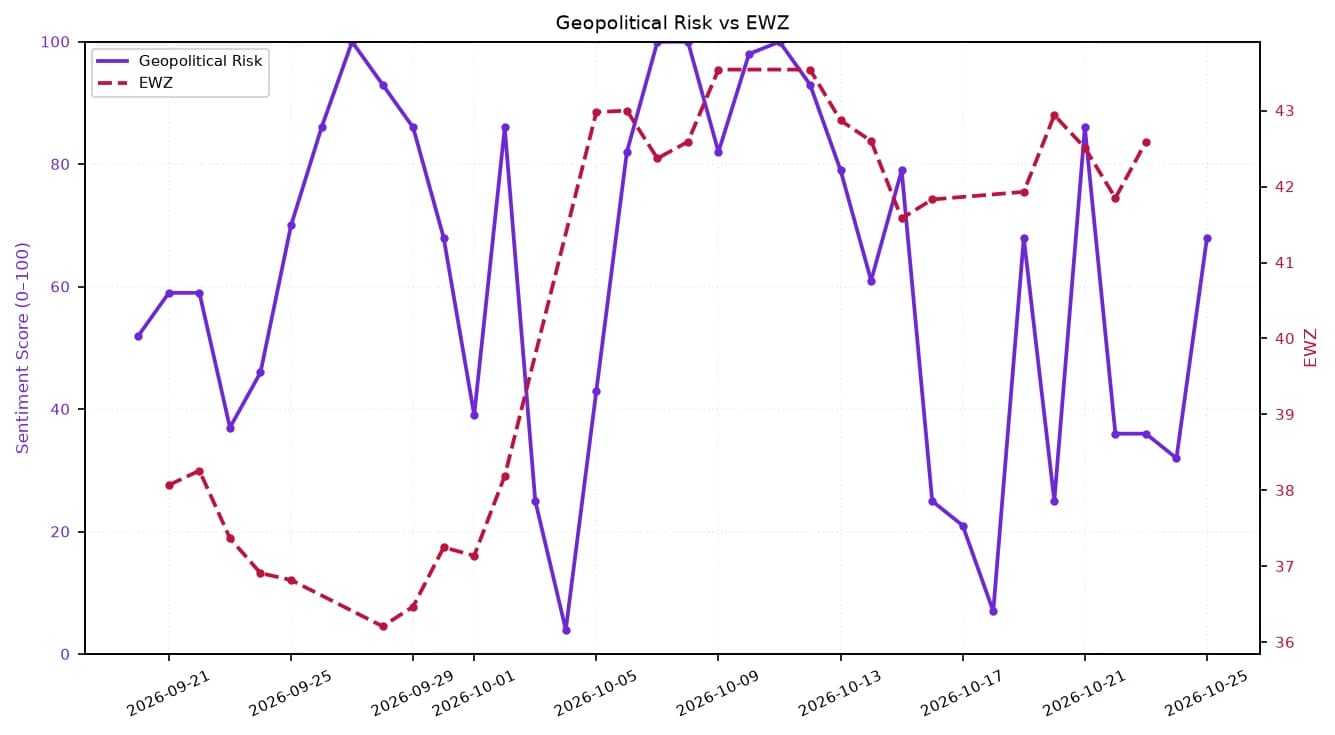
Sentiment Indicators
The contrast with Brazil is what makes the story resonate. Uruguay, with about 3.4 million people, has legalized same-sex marriage, regulated cannabis, expanded access to abortion and, most recently, approved euthanasia under tightly defined conditions. Each step was passed through parliament rather than imposed by decree, reinforcing a model of democratic consensus-building that has become part of the country’s brand.
That brand has value beyond symbolism. A state that can legislate on disputed issues without breaking its institutions tends to send a favorable signal to long-term capital, especially in a region where policy reversals and ideological whiplash often raise the cost of doing business. Uruguay’s relatively steady growth path and established rule of law have already made it one of South America’s more investable smaller markets, even if the economy remains exposed to the same external shocks that hit its neighbors.
The legislative record also suggests why Uruguay can sustain a progressive agenda where bigger countries struggle: a compact electorate, strong party discipline and a tradition of secular governance. The country’s constitutional separation of church and state, consolidated more than a century ago, removed one of the main sources of resistance that still shapes debates in Brazil and elsewhere in the region.
The economic backdrop is not transformational on its own, but it helps explain why the country has repeatedly punched above its weight. Uruguay’s GDP has climbed to about 32,563 as of April 2026 in the data set provided, after weathering the pandemic shock and recovering steadily. Unemployment has fallen back to around 4.2% in September from 14.8% at the height of the 2020 crisis. That combination of recovery and institutional continuity is what underpins the perception of a small but durable economy.
Markets have reflected that relative resilience even as broader Latin American risk appetite has turned choppy. Brazil-focused funds EWZ and regional ETF ILF both suffered sharp swings in late October, with EWZ falling to $33.62 from $42.59 in three sessions and ILF dropping to $32.98 from $37.70. Those moves were driven by broader risk-off behavior, not Uruguay specifically, but they underscore how investors continue to differentiate between regional stories of stability and instability.
For Brazil, the lesson is uncomfortable but practical: size alone does not guarantee political capacity. Uruguay’s experience shows that even a small economy can win international attention — and a measure of investor trust — by reducing uncertainty around the rules of the game. The next test is whether it can keep that model intact while managing security, inequality and slower growth, challenges that may matter more for returns than any headline-grabbing reform.
| Entity | Gains | Losses |
|---|---|---|
| Uruguay | ▲Institutional credibility | ▼Policy complacency |
| Long-term investors | ▲Legal predictability | ▼Regional risk premium |
| Social reform advocates | ▲Civil-rights momentum | ▼Status quo politics |
| Brazil’s reform debate | ▲Regional benchmark | ▼Polarized consensus-building |