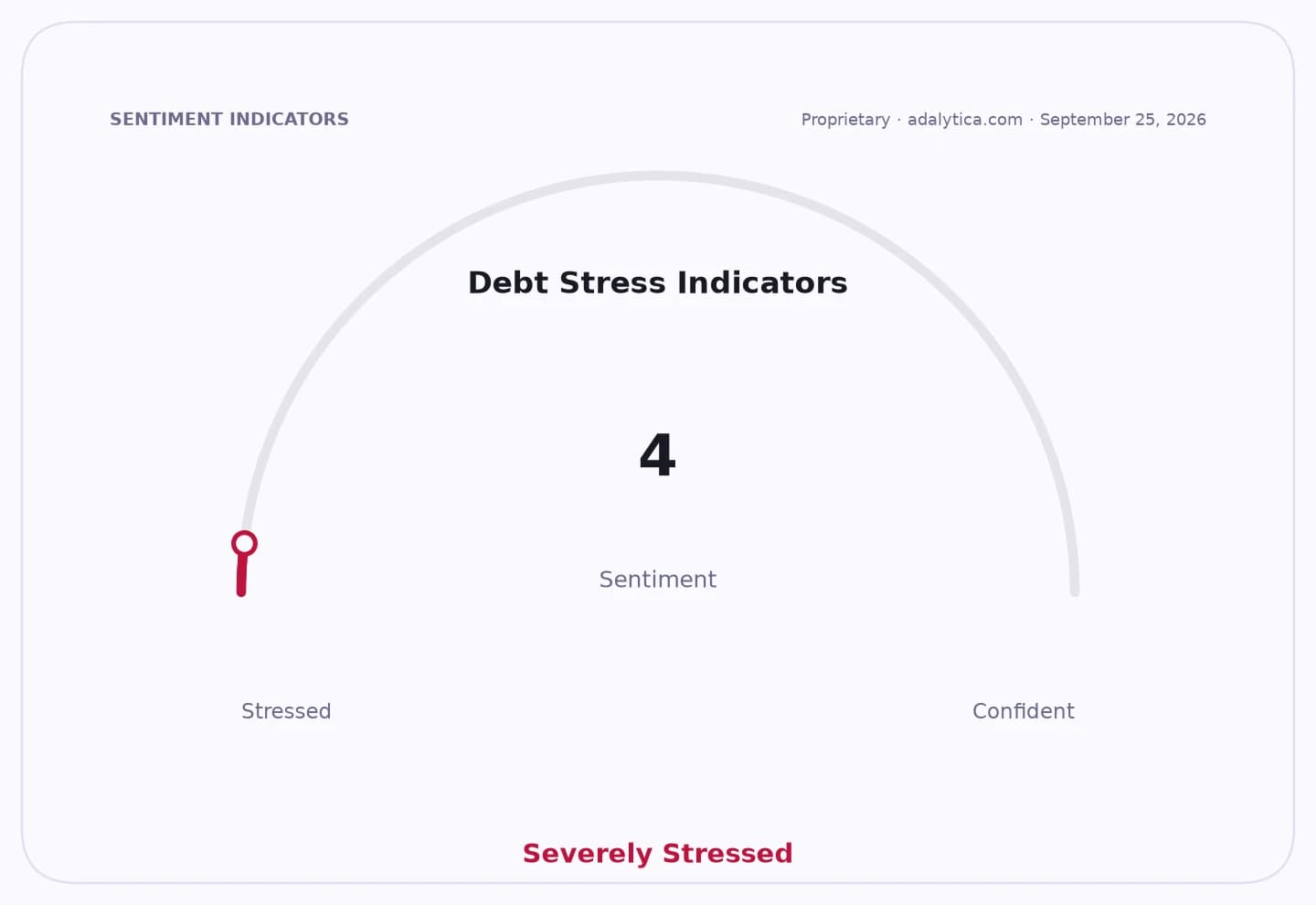
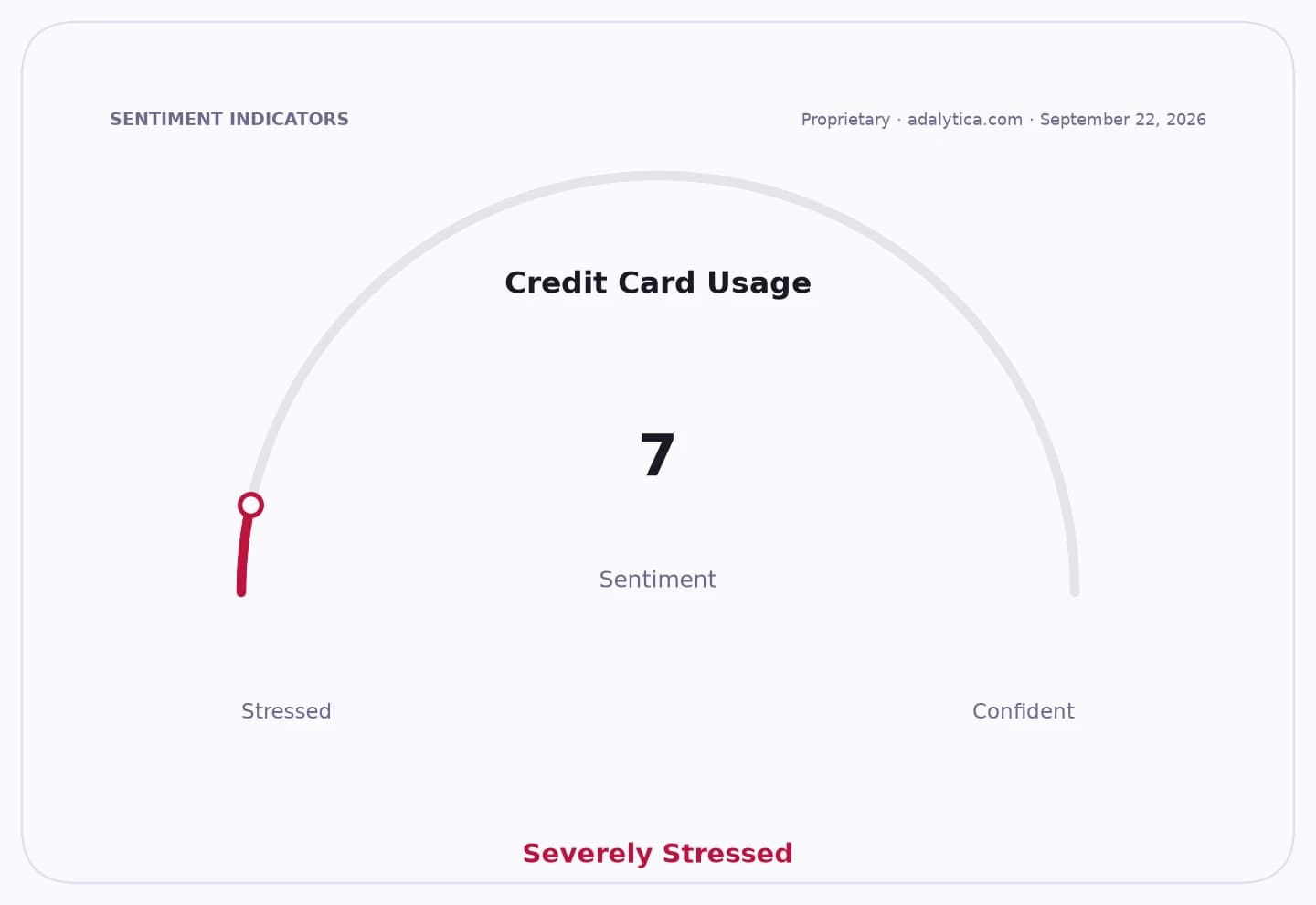
Rising inflation and softer consumer spending are threatening to slow the rebound in loan performance at the biggest US banks, even as credit losses have eased from their peak and the economy remains broadly resilient.
US banks face slower loan recovery as inflation stays firm

The warning matters because the loan books of JPMorgan Chase, Bank of America and Wells Fargo are closely tied to household cash flow, delinquency trends and the direction of the consumer credit cycle. If inflation stays sticky while spending weakens, borrowers have less room to absorb higher living costs, raising the risk that charge-offs and reserve building stop improving or begin to worsen again.
Sentiment IndicatorsⓘProprietary · adalytica.com · August 22, 2026
This is a snapshot — live sentiment, awareness and momentum for 130+ markets update continuously in the dashboard.Open AlphaPulse
Recent macro data underline the tension. Consumer prices are expected to rise 0.35% in August after a flat-to-slightly firmer summer, with the CPI index near 333.97, while the unemployment rate is projected to edge down to 4.09%. That combination suggests the labor market is still holding up, but price pressure has not fully faded. For banks, that is a less comfortable backdrop than a simple slowdown: jobs are still there, but real disposable income is being squeezed.
That squeeze is visible in spending and confidence gauges. Adalytica’s Consumer Spending Sentiment sits at 25, in “Fear,” while Consumer Confidence Recession Sentiment is at 14, or “Extreme Fear.” Retail-goods spending sentiment has also weakened sharply, a sign that households are becoming more defensive even if the headline unemployment rate remains low.
The banking sector has benefited over the past year from a normalization in credit. Wells Fargo said in its latest filing that commercial net charge-offs fell in the second quarter from a year earlier, helped by lower losses in commercial and industrial and commercial real estate loans. Bank of America said provisions for credit losses fell in the second quarter from a year ago. JPMorgan, meanwhile, reported that year-to-date provisions for credit losses were $5 billion, with net charge-offs at $4.7 billion, showing that the industry is still managing meaningful stress even as some metrics improve.
That is why a consumer-led slowdown would be important. Household lending is usually the first place where an inflation-income mismatch shows up, particularly in credit cards, auto loans and unsecured consumer products. If spending continues to weaken, the improvement banks have seen in delinquencies and charge-offs could flatten sooner than expected, forcing lenders to hold capital against a more cautious outlook on borrowers.
Investors have already rewarded the major lenders for stronger earnings and better-than-feared credit trends. JPMorgan’s shares have climbed to above $351, Bank of America’s to around $61.69 and Wells Fargo’s to about $83.84, but the latest technical readings suggest some momentum has cooled, especially for Wells Fargo and Bank of America, where recent RSI readings have moved back toward neutral. That leaves bank stocks vulnerable if incoming data confirm that consumers are pulling back rather than merely pausing.
The bull case is that a 4.1% jobless rate and still-solid wage income can keep losses contained, giving banks room to manage through a slower patch. The bear case is that persistent inflation erodes purchasing power faster than credit metrics can normalize, especially if households keep trimming discretionary spending and leaning more heavily on debt.
For now, the message from banks is not that credit is breaking again. It is that the recovery in loans may be longer and more uneven than investors hoped. The next test will come from inflation prints, retail spending and the banks’ own third-quarter credit data, which will show whether consumers are stabilizing or starting to slip.
| Entity | Gains | Losses |
|---|---|---|
| Major US banks | ▲Stable credit if jobs hold up | ▼Slower loan recovery |
| Consumers with debt | ▲Short-term access to credit | ▼Higher repayment strain |
| Bank investors | ▲Better-than-crisis loan losses | ▼Re-rating risk if credit worsens |
| Card and consumer lenders | ▲Higher loan demand in stress | ▼Rising delinquencies |