Banks are finding the clearest path to loan growth not in households, but in government-backed and investment-led borrowing as consumer demand cools.
US banks shift loan growth toward business credit

That matters because consumer spending still drives the bulk of the U.S. economy, and when it slows, lenders have to look elsewhere to keep balance sheets growing. The latest data show a bank credit backdrop that is improving only gradually: non-government credit has been slipping, while credit tied to public spending, housing support and investment activity is doing more of the heavy lifting. For investors, that shifts the question from whether banks can grow loans at all to where that growth will come from, how durable it will be and how much risk will be attached to it.
Sentiment IndicatorsⓘProprietary · adalytica.com · September 3, 2026
This is a snapshot — live sentiment, awareness and momentum for 130+ markets update continuously in the dashboard.Open AlphaPulse
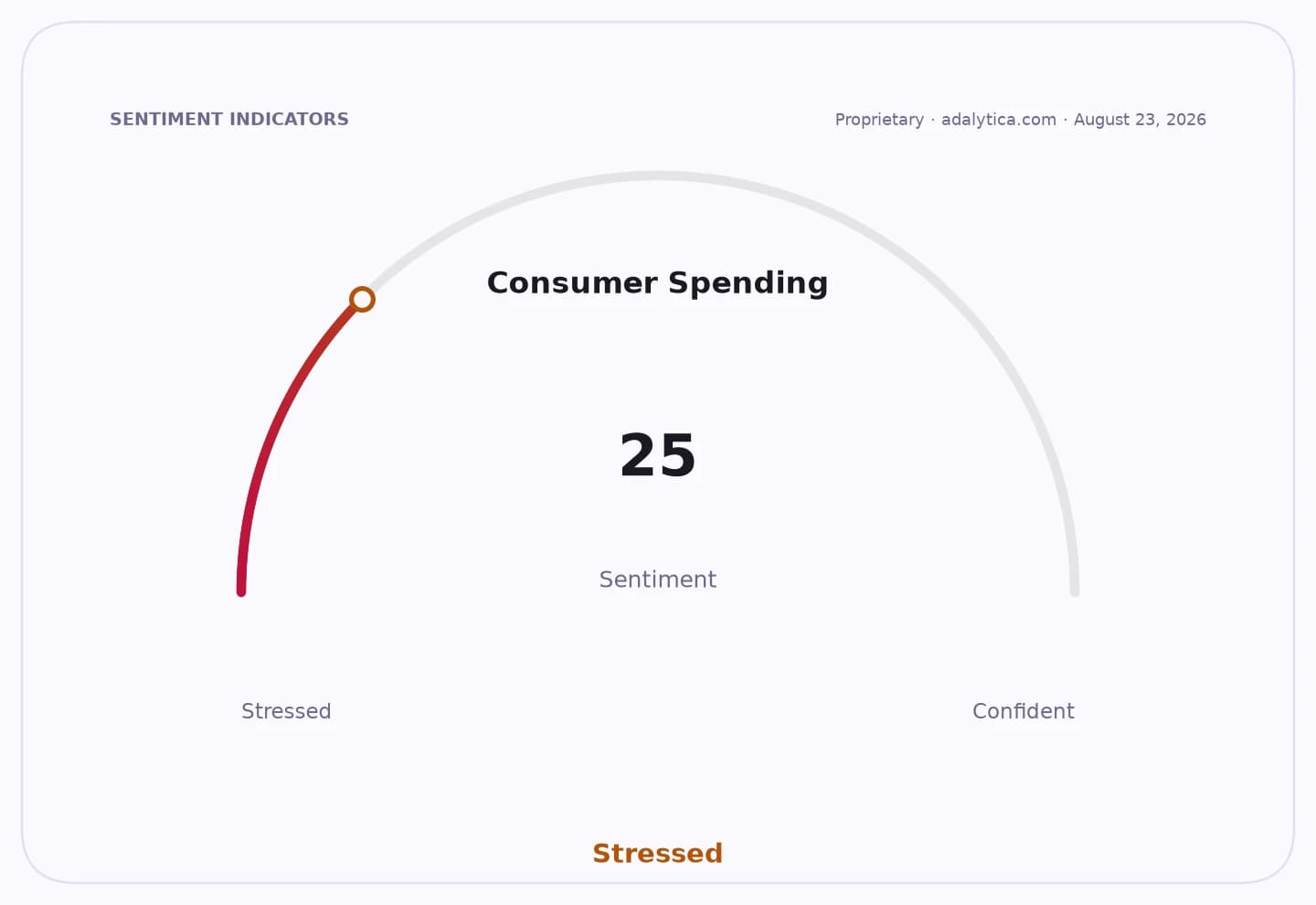
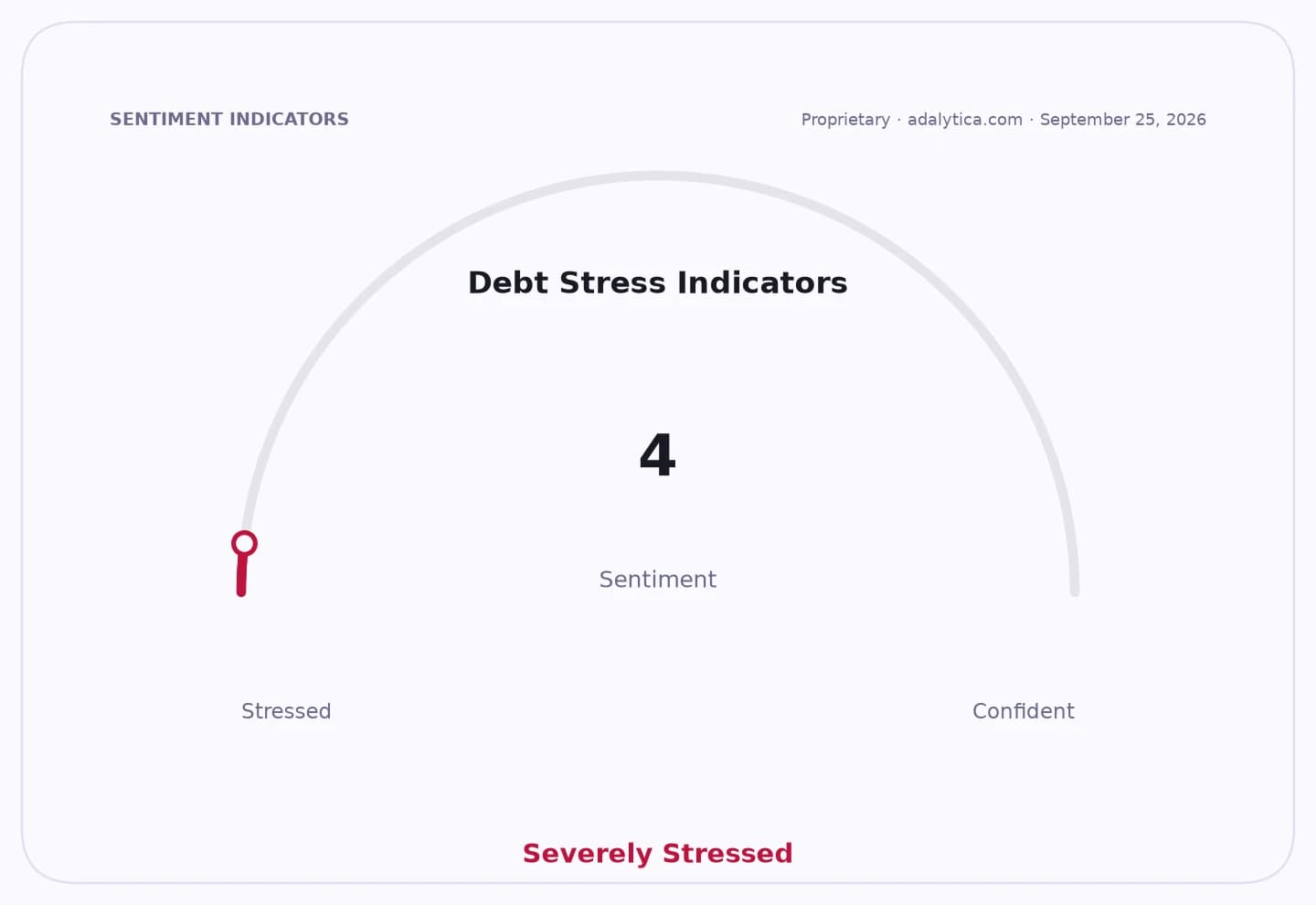
The clearest sign is that consumers are getting more cautious. Adalytica’s Consumer Confidence Recession Sentiment gauge is in Fear territory at 19, while its Consumer Spending Sentiment sits at a neutral 48 after a sharp drop from earlier peaks. That kind of weakening typically shows up first in revolving credit, discretionary borrowing and loan demand tied to big-ticket purchases. It is exactly the sort of environment in which banks become choosier, even when they have ample liquidity and the ability to lend.
At the same time, the macro backdrop is not one of stress so much as reallocation. U.S. unemployment has edged down to 4.1%, suggesting the labor market is not forcing a broad credit crunch. Home prices, meanwhile, remain elevated, with the Case-Shiller index at 336.663 in June and still near record levels, helping support mortgage-related borrowing and collateral values. In other words, consumers are strained, but the economy is not breaking. That leaves room for credit to be redirected toward housing, infrastructure, public works and corporate investment rather than broad-based household consumption.
That pattern is already visible in bank filings. Wells Fargo said commercial and industrial loans rose in the second quarter, while large lenders including Bank of America and JPMorgan continue to emphasize liquidity and funding strength rather than aggressive loan expansion. PNC and U.S. Bancorp have also pointed to commercial loan growth and revolving credit balances as key drivers. This is the kind of loan mix investors tend to prefer late in a cycle: less dependent on consumer exuberance, more anchored in business activity and capital spending.
For bank stocks, that is both a stabilizer and a ceiling. The XLF financials ETF has climbed back above its 50-day and 200-day moving averages, and regional lenders such as KRE have also recovered, but the credit story is still uneven. Banks can benefit if government spending and investment cycles keep commercial borrowing healthy, yet a weak consumer limits fee growth, card balances and the kind of broad loan acceleration that powers stronger earnings expansions. If credit demand improves, it may do so in narrow pockets rather than across the board.
Long term, that makes diversified bank exposure more important than chasing whichever lender looks strongest for one quarter. The winners are likely to be the institutions with durable deposit franchises, disciplined underwriting and the flexibility to serve corporate, real estate and public-sector borrowers when households are under pressure. For investors, the message is simple: bank lending is still growing, but the center of gravity has shifted away from consumers and toward investment and government spending. That is worth watching, and for patient investors, it can still be a constructive setup.
| Entity | Gains | Losses |
|---|---|---|
| Commercial lenders | ▲Steadier loan demand | ▼Less consumer-led growth |
| Government and infrastructure borrowers | ▲Easier access to credit | ▼Higher scrutiny of funding needs |
| Household borrowers | ▲Lower leverage pressure | ▼Weaker credit availability |
| Bank stock investors | ▲More resilient earnings mix | ▼Slower broad loan growth |