Credit is expanding faster than banks are building capital, leaving lenders with tighter liquidity cushions, higher funding costs and less room to cut loan rates.
U.S. banks face sticky funding costs and tight capital

That squeeze matters because the cost of credit is being set not just by policy rates, but by banks’ own balance-sheet constraints. Even as the market prices in easing in money markets, bank funding costs remain sticky, which limits how much institutions can pass lower rates through to borrowers.
Sentiment IndicatorsⓘProprietary · adalytica.com · August 26, 2026
This is a snapshot — live sentiment, awareness and momentum for 130+ markets update continuously in the dashboard.Open AlphaPulse
The pressure shows up across the sector. The iShares U.S. Financials ETF, XLF, rose to $58.31 on Aug. 25, above its 50-day average of $56.18 and 200-day average of $52.99, but the move has been uneven: the ETF’s relative strength index was 53.6, suggesting neither a strong overbought nor oversold condition. Regional lender KRE, by contrast, closed at $74.33, below its 50-day average of $75.35, with its RSI at 28.8, a technical reading that points to weaker momentum in the regional-bank segment.
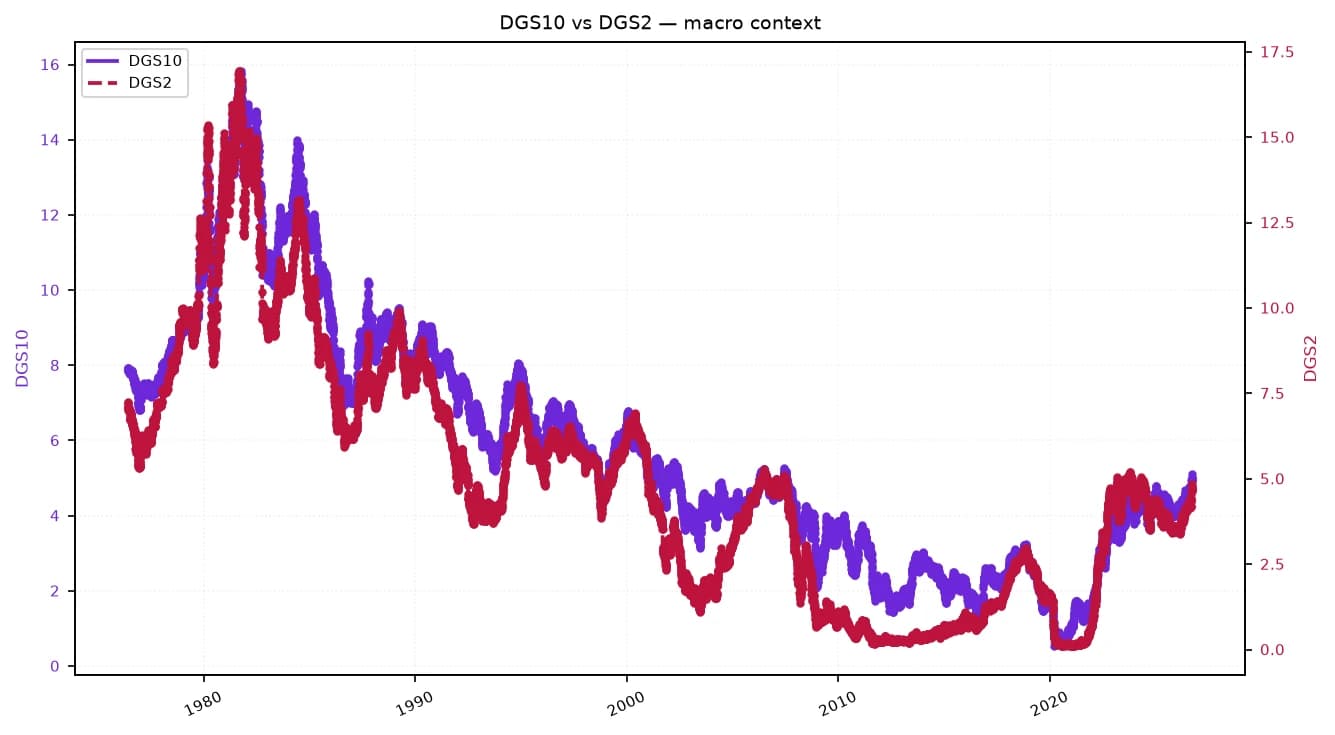
At the same time, Treasury yields are keeping bank financing conditions from loosening much. The 10-year U.S. Treasury yield was 4.69% on Aug. 20 and was forecast at 4.719% for Aug. 25, still high enough to keep deposit pricing and wholesale funding expensive. High-yield credit stress has also improved only modestly, with the ICE BofA U.S. High Yield index at 2.69%, down from 2.75 on Aug. 20, but not low enough to suggest banks can relax balance-sheet discipline.
DGS10 vs BAMLH0A0HYM2 — macro contextadalytica.com
Explore this data interactively — full history, time series and cross-market comparisons.Open AlphaPulse
For investors, the key question is margin durability. Big banks such as JPMorgan Chase ended the latest quarter with $303 billion of CET1 capital and a 14.2% CET1 ratio, while Bank of America and Wells Fargo have also reported strong liquidity positions in recent filings. But even well-capitalized lenders still face a trade-off: support faster loan growth, or preserve capital and liquidity as credit demand rises.
That tension is most visible in the broader money supply backdrop. U.S. M2 reached 23.218 trillion in July and is forecast to rise further to 23.403 trillion in August, reinforcing the point that credit is still expanding. Until capital generation catches up, banks may have to defend spreads rather than compete aggressively on lending rates, keeping borrowing costs elevated for households and companies.
The next catalyst is whether lower market rates filter through to bank funding and deposit pricing, or whether capital and liquidity requirements keep lending spreads wider for longer.
| Entity | Gains | Losses |
|---|---|---|
| Big banks | ▲Wider lending spreads | ▼Slower loan growth |
| Borrowers | ▲Easier access to credit | ▼Lower chance of rate cuts |
| Shareholders | ▲Stable margins | ▼Pressure if capital needs rise |
| Regional banks | ▲Credit demand tailwind | ▼Funding-cost squeeze |