US and Chinese trade chiefs held a video call on Friday to keep a fragile thaw on track ahead of President Donald Trump’s planned meeting with Xi Jinping in Shenzhen later this month, even as Washington says Beijing still has work to do on commitments made in Busan.
US, China trade chiefs hold call before Xi meeting
Geopolitical Risk
The call between Treasury Secretary Scott Bessent, Trade Representative Jamieson Greer and Chinese Vice-Premier He Lifeng matters because the next few weeks could determine whether the world’s two largest economies extend their truce or slip back into tariff and export-control brinkmanship. For investors, the stakes run from Chinese equities and commodity demand to the tech supply chain, where any hint of renewed restrictions can quickly hit sentiment.
Sentiment Indicators
The Treasury Department said Bessent stressed the need for China to “fully and immediately” implement the Busan commitments and raised concerns over “recent Chinese actions.” He also said continued progress would depend on “concrete results,” underscoring that the White House is treating the arrangement as conditional rather than settled.
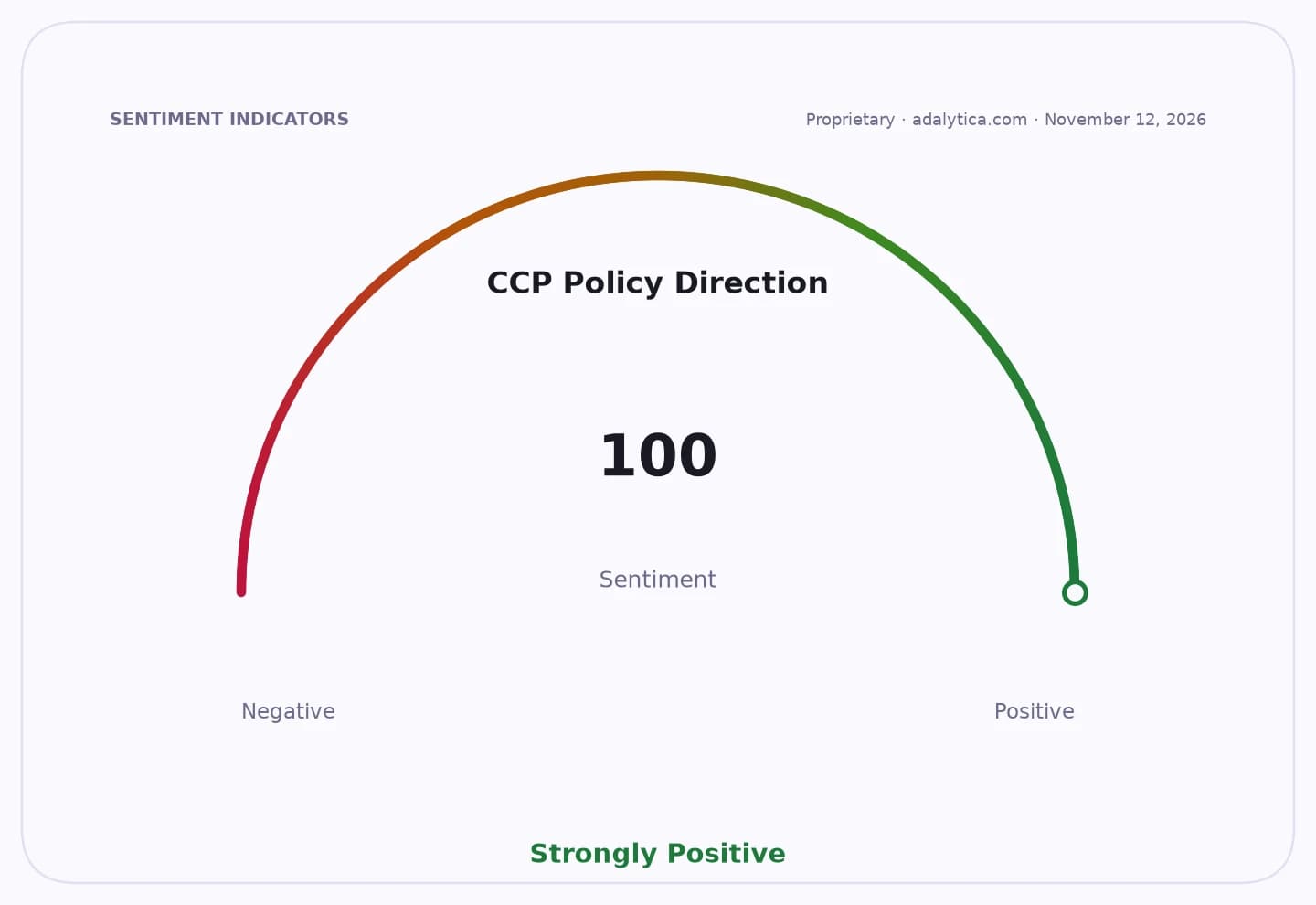
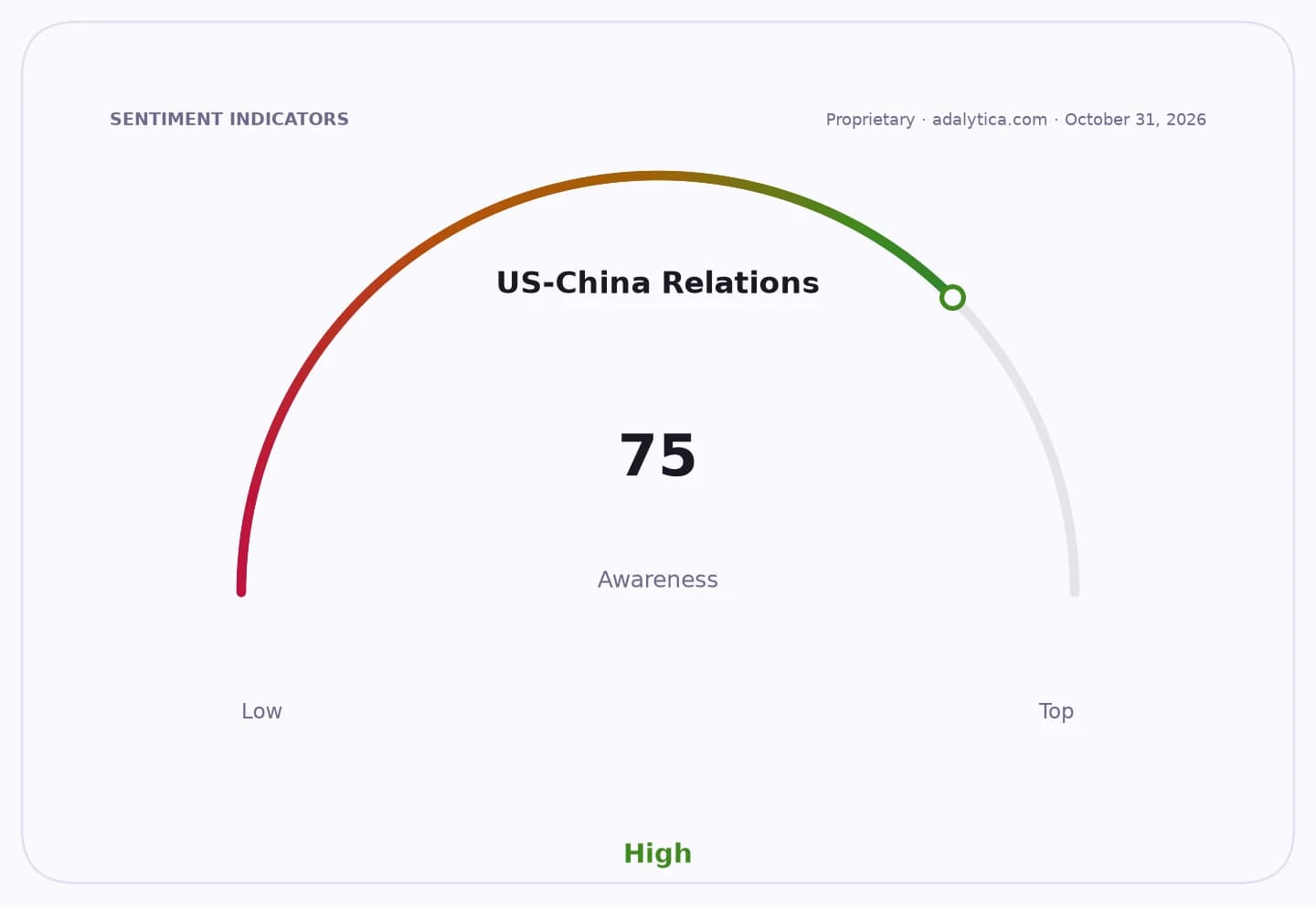
That tone keeps pressure on Beijing as both sides prepare for the Trump-Xi summit, which markets will read as a test of whether diplomacy can prevent another round of escalation. The backdrop is already uneasy: Adalytica’s US-China Relations Sentiment gauge is at 11, in “Extreme Fear,” while the broader Global Stability Sentiment sits at 73, indicating investors are still pricing geopolitical risk even as headline risk briefly eases.
Geopolitical Risk — 30-day sentimentadalytica.com
Explore this data interactively — full history, time series and cross-market comparisons.
The stakes are especially high for companies exposed to trade controls and China demand. Nvidia has warned in filings that export controls can disrupt supply chains and damage sales, while Apple has said trade disputes can hurt its supply chain and broader consumer demand. Any improvement in the dialogue could support Chinese shares and related ETFs, while a breakdown would likely lift volatility across semiconductors, internet stocks and industrials with China exposure.
Chinese-listed equity trackers have already reflected the uneasy backdrop. FXI closed at 33.54 on Nov. 12, below its 200-day moving average of 35.29, while KWEB ended at 22.90, also under its 200-day average of 27.45. YINN, the leveraged China bull fund, finished at 23.27, well under its 200-day average of 29.95, showing how cautious investors remain despite periodic bursts of optimism.
Bond and currency markets also have reason to watch the summit closely. US policy rates are still near 3.89% on the fed funds forecast, with the 10-year Treasury yield around 4.83% and the 2-year at 4.49%, leaving global risk assets sensitive to any trade-driven shift in growth expectations, inflation pressures or safe-haven demand.
The immediate focus now is whether Busan becomes a durable framework or just another short-lived pause. Traders will be watching for any sign of tariff relief, export-control concessions or follow-through from Beijing before Trump and Xi meet, with the outcome likely to set the tone for China-linked equities, the dollar and broader global risk appetite into year-end.
| Entity | Gains | Losses |
|---|---|---|
| US and China negotiators | ▲diplomatic leverage | ▼room for delay |
| Chinese equities and internet stocks | ▲lower trade-war risk | ▼headline volatility |
| US exporters and multinationals | ▲clearer trade rules | ▼renewed tariff threats |
| Semis and China suppliers | ▲potential easing in controls | ▼export restrictions |