American corporate profits are still rising fast, but the gains are increasingly flowing to capital spending and equity markets rather than payrolls, helping explain why U.S. job creation has slowed even as the economy avoids an outright slump.
U.S. corporate profits rise as hiring slows

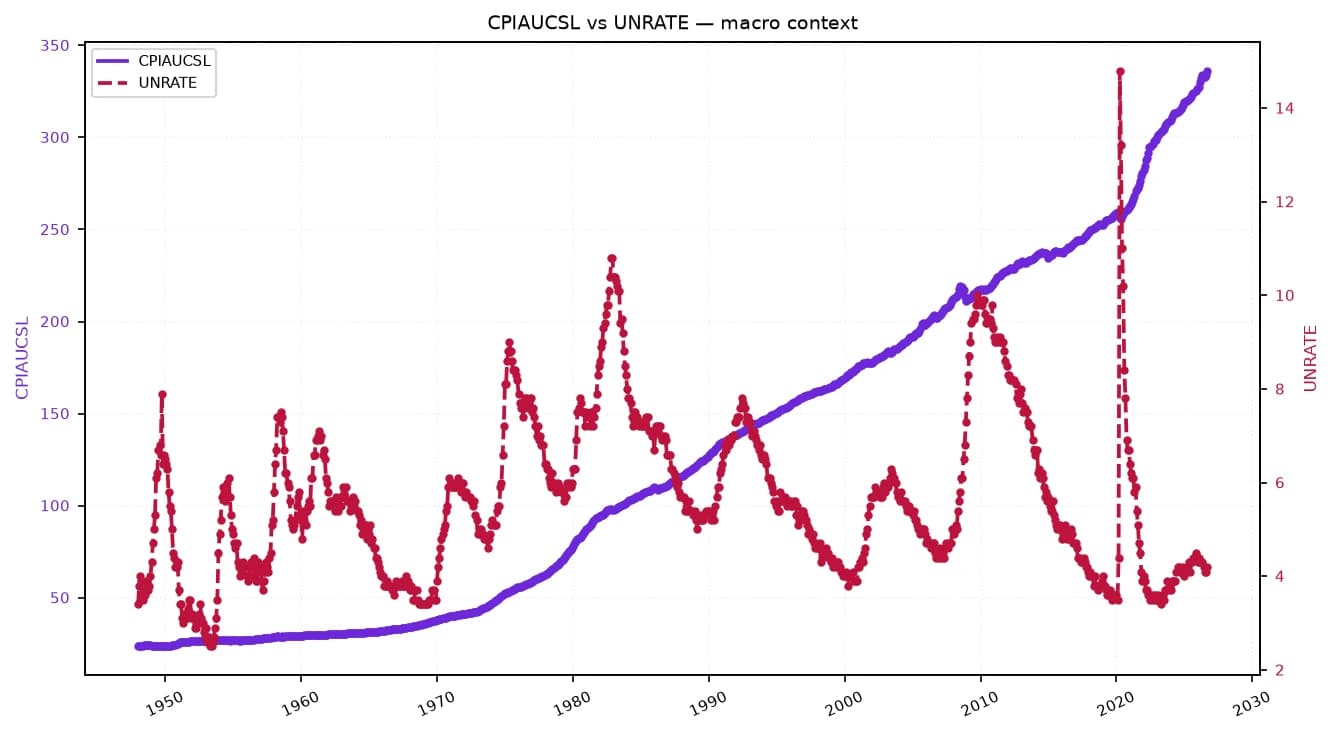
The latest U.S. data show corporate profits from current production climbing to about $4.71 trillion in the second quarter, up from roughly $4.33 trillion in the first. That strength has helped keep the expansion alive and lifted equities, even as real GDP growth cooled to a 2.2% annual rate from 2.5% in the prior quarter. But the labor market is losing momentum: the U.S. added just 29,000 nonfarm jobs in September and unemployment was 4.2%, a combination that points to an economy in which firms are investing heavily without translating that spending into broad hiring.
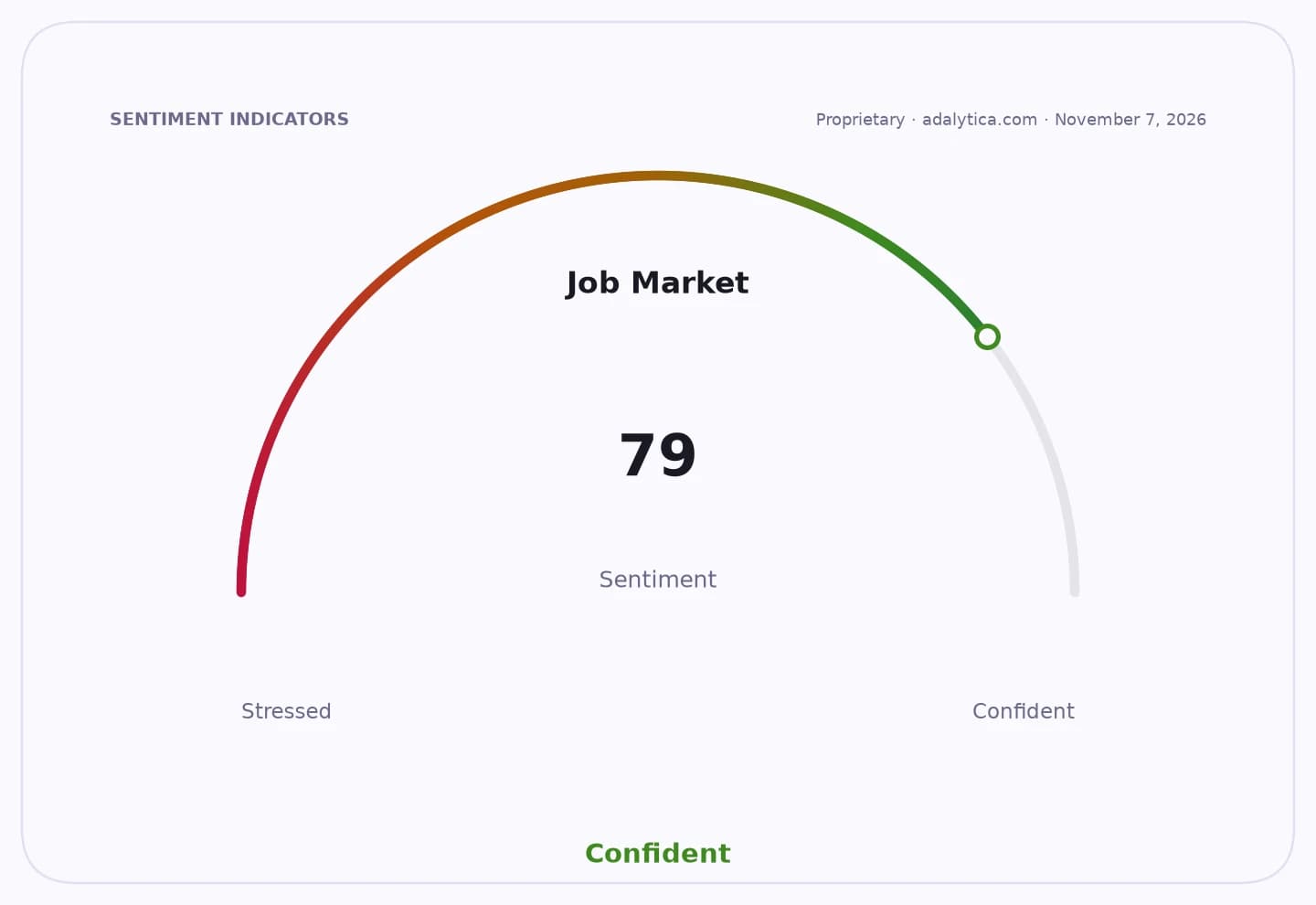
Sentiment Indicators
Wages
The divergence matters because it changes the way growth is being generated. Large U.S. companies, particularly in technology, are plowing money into data centers, cloud infrastructure and artificial intelligence at a pace that is unusually powerful for profits and stocks, but much less labor intensive than a conventional expansion. Amazon, Microsoft, Alphabet and Meta are expected to spend nearly $725 billion on capital expenditures in 2026, up about 77% from last year. Apollo has estimated that the biggest cloud companies alone could spend about $646 billion this year, equal to roughly 2% of U.S. GDP. That is enough to support industrial activity, equipment orders and earnings at chipmakers and cloud providers, but not necessarily enough to generate comparable hiring across the economy.
That helps explain why the stock market has looked healthier than the labor market. The S&P 500 had risen about 12% this year through Oct. 1, with earnings growth doing much of the work despite higher rates, tighter monetary policy and geopolitical shocks. FactSet expects S&P 500 earnings growth of about 29% in the third quarter, which would mark a third straight quarter above 25% if it holds. Much of that strength is concentrated in artificial intelligence-linked businesses, but the advance is not limited to the so-called Magnificent Seven, suggesting the profit cycle is broadening even as payroll growth weakens.
Wages
For investors, the key question is sustainability. Strong earnings can justify high valuations, keep financing channels open and support household wealth through stocks. But if comparisons get harder next year, as several portfolio managers warn, the market could become more sensitive to any sign that capex is peaking or that AI monetization is lagging the scale of spending. The risk is not just lower share prices. A pullback in profits or market multiples could feed back into hiring, investment and consumer spending through what analysts describe as a three-channel transmission: frozen headcount, reduced capex and weaker wealth-driven consumption.
There is also a macroeconomic tension underneath the headline numbers. A growing share of the investment boom appears tied to imported equipment, servers and chips, which limits the domestic value added and blunts the effect on U.S. output relative to the scale of the spending. At the same time, automation may lift productivity but also displace workers or slow the reallocation of labor. Fed Governor Lisa Cook has warned that mismatches between worker skills and available jobs could temporarily lift unemployment.
The result is an economy that remains supported by corporate balance sheets but not yet by broad labor income. That is why jobs are slowing even as profits and investment keep rising: the expansion is being led by capital, not labor. The next test is whether AI-heavy spending can convert into durable revenue fast enough to keep earnings growth ahead of the cost of capital — or whether firms start to defend margins by hiring less, spending less and passing the strain onto workers.
| Entity | Gains | Losses |
|---|---|---|
| Big U.S. tech firms | ▲Higher profits, capex leverage | ▼Higher execution risk |
| Equity investors | ▲Wealth gains, earnings support | ▼Valuation risk |
| Workers / job seekers | ▲Slower inflation from weaker demand | ▼Slower hiring, wage pressure |
| U.S. economy | ▲Capex-led GDP support | ▼Narrower, less job-rich growth |