Donald Trump can point to a still-growing U.S. economy, but the deeper picture is less about a boom than a costly balancing act between growth, inflation, and higher borrowing costs.
U.S. Economy Grows as Inflation and Debt Rise
That matters because the United States is expanding faster than other major developed economies even as tariffs, energy shocks and heavy federal borrowing are squeezing households and complicating the outlook for interest rates. For investors, the message is simple: the economy is not breaking down, but the earnings and market winners will be very uneven.
Sentiment IndicatorsⓘProprietary · adalytica.com · October 26, 2026
This is a snapshot — live sentiment, awareness and momentum for 130+ markets update continuously in the dashboard.Open AlphaPulse
On the headline numbers, the case for resilience is real. U.S. gross domestic product is growing at an annualized 2.2% and is up about 3.2% from late 2024, the strongest performance among the G7 over that period. A wave of artificial-intelligence spending has helped prop up activity, especially through data-center construction, where company outlays reached $5 billion in August 2026, nearly double the monthly level at the start of Trump’s second term.
But the sources of that growth matter. Part of the boost has come from businesses racing to build AI infrastructure, while lower-than-feared damage from tariffs has helped the economy avoid a sharper slowdown. That does not mean the policy mix is painless. The administration’s new import taxes have added to costs, and economists say inflation would likely be slower without them. Add in disruptions to oil and fuel supply tied to the war involving the U.S., Israel and Iran, and the result is an economy that is growing, but not cheaply.
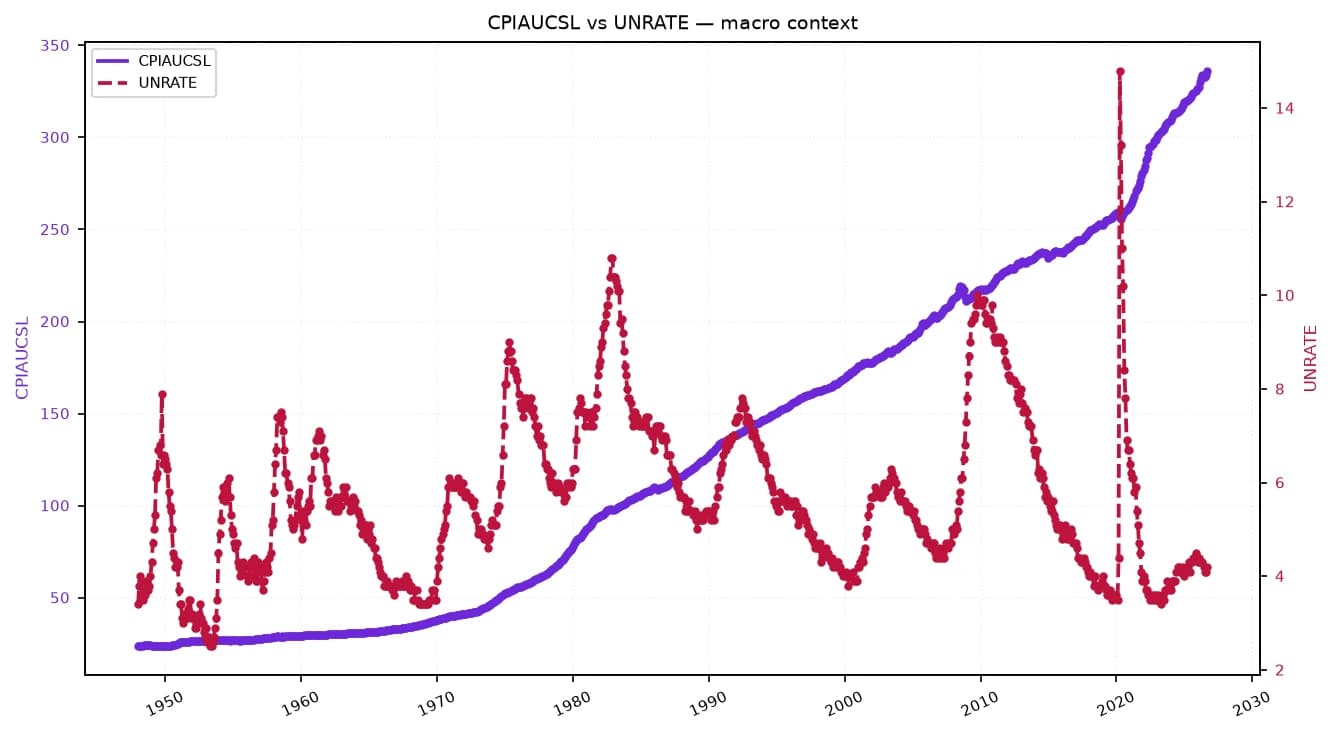
Inflation is still the clearest point of friction. Consumer prices are up 3.7% year over year, above the 3% rate when Trump took office in January 2025. Diesel has climbed to a record $6.52 a gallon, a big deal not just for motorists but for trucking, agriculture and freight. Basic groceries such as beef and coffee have also become more expensive. For households, that is the difference between a strong-looking macro story and a more painful lived experience.
The labor market tells a similar story of moderation rather than collapse. The economy has added an average of just 34,000 jobs a month since Trump returned to the White House, far below the 122,000 monthly pace in the final year of the Biden administration. Manufacturing has not delivered the rebound Trump promised, with employment at 12.6 million in September 2026, slightly below the start of his second term. Yet unemployment remains low at 4.2%, helped in part by tighter immigration policies that have reduced the available labor force.
That is one reason the economy can look solid on paper while still feeling tight to many Americans. Median household income, adjusted for inflation, rose 2.6% in 2025 to a record $87,460. But that gain is not spread evenly. According to estimates cited from the Institute on Taxation and Economic Policy, middle-income households are about $1,700 worse off in 2026 than they would have been otherwise, while the bottom fifth is down roughly $750. The top 1% is the clear winner, benefiting by an estimated $12,560, largely from tax cuts.
For investors, the biggest long-term implication may be that the U.S. is buying growth with more debt. The federal budget deficit hit about $2 trillion in the year through September 2026, equal to around 6% of GDP, and is projected to climb above 8% by 2030. That swelling financing need has helped push the 10-year Treasury yield above 5%, the highest since before the 2008 financial crisis, while a 30-year mortgage now runs about 7.4%, up from 6.9% in January 2025. Higher rates cool housing, raise corporate borrowing costs, and can eventually crowd out more productive investment.
The bottom line for long-term investors is that Trump’s economy is neither the boom he describes nor the bust critics might fear. It is a resilient, uneven expansion powered by AI spending, tax cuts and still-healthy demand, but constrained by inflation, weaker hiring and expensive debt. That tends to reward companies with pricing power, strong free cash flow and little reliance on cheap financing, while punishing consumers, homebuyers and businesses that need easy credit. This is a market to watch carefully, not to chase blindly, and a reminder that over three to 10 years, the best portfolios are usually built on diversification, patience and quality.
| Entity | Gains | Losses |
|---|---|---|
| AI infrastructure builders | ▲Higher capital spending | ▼Valuation pressure if spending slows |
| U.S. exporters | ▲Stronger domestic growth | ▼Higher input costs from tariffs |
| Households with top incomes | ▲Tax cuts | ▼Less policy urgency on affordability |
| Middle- and lower-income families | ▲Some wage gains | ▼Inflation and higher borrowing costs |