Voters are increasingly judging Donald Trump’s second-term economy by what they pay at the pump and grocery store, not by the 4.2% unemployment rate or still-solid GDP growth.
US inflation keeps pressure on consumers and Fed
That is the political and economic fault line now shaping the run-up to the 2026 midterms. An AP-NORC poll found just 17% of Americans approve of Trump’s handling of the cost of living, while 65% blame his policies for persistently high prices. For investors, that matters because inflation is no longer just a macro data point — it is becoming the lens through which markets may read consumer demand, Federal Reserve policy and the durability of the current expansion.
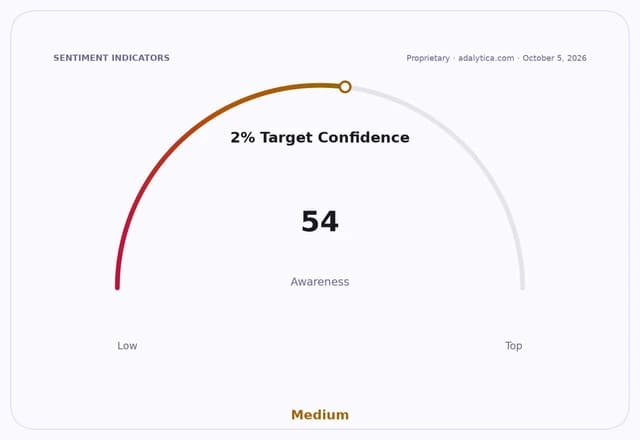
Sentiment IndicatorsⓘProprietary · adalytica.com · October 5, 2026
This is a snapshot — live sentiment, awareness and momentum for 130+ markets update continuously in the dashboard.Open AlphaPulse
The official numbers do give Trump ammunition. The economy grew at a 2.2% annualised pace in the second quarter, unemployment remains low and AI-related capital spending is still supporting growth. But that strength is uneven. September payrolls rose by just 29,000, July and August job gains were revised down, and real household purchasing power is being squeezed by inflation that remains sticky even after the post-pandemic surge has faded.
That is why the politics of inflation still bite. August consumer prices were up 3.4% from a year earlier, and while that is well below the peaks earlier in the decade, households are not reacting to the rate of change alone. They are reacting to the cumulative level of prices. Fuel oil is up 52% over the past year, ground beef 7.2%, coffee 6.1% and electricity 3.8%. Eggs are cheaper, but the relief is too narrow to offset the broader burden.
CPIAUCSL vs CPILFESL — macro contextadalytica.com
Explore this data interactively — full history, time series and cross-market comparisons.Open AlphaPulse
Gasoline is especially potent because consumers see it every week, and that is showing up in sentiment. Roughly half of Americans told AP-NORC they were extremely or very concerned about affording gasoline, up sharply from July, while a similar share said the same about food. The University of Michigan’s consumer sentiment index has fallen to one of its weakest readings in 74 years. In practical terms, that means the market for discretionary spending could stay under pressure even if headline GDP looks healthy.
The policy mix is adding to the strain. The Fed’s benchmark rate was raised to 3.75% to 4% in September, keeping borrowing costs elevated for mortgages, auto loans and revolving credit. Trump’s tariffs are also feeding the inflation debate. The Yale Budget Lab says the tariffs could cost the average household about $1,100 this year, while the White House argues the hit will be offset over time by tax cuts, deregulation and more domestic manufacturing. That may be a long-run industrial policy argument, but the ballot box is a short-run price test.
Energy is another channel. The Iran conflict has helped lift fuel costs, and Moody’s Analytics estimates the average US household could spend about $1,000 more this year because of higher fuel, food and related prices tied to the war. For investors, that is a reminder that geopolitics is still flowing directly into inflation-sensitive sectors, from transport to consumer staples to utilities. Higher power bills also collide with the AI buildout, where data centres are driving large new electricity demand and raising local costs.
The investment takeaway is that inflation keeps the Fed cautious, keeps consumers defensive and keeps politically sensitive sectors in play. If prices stay elevated, retailers, grocers, discount chains, energy producers and select utilities should keep outperforming while rate-sensitive and cyclical consumer names remain vulnerable. Bond investors, meanwhile, are being told not to fight the inflation trade too aggressively until the market sees clear evidence that price pressure is fading faster than household frustration.
The deeper message is simple: Trump can point to growth, jobs and investment, but voters live in nominal prices. If inflation remains sticky into 2026, it may not just decide the tone of the midterms — it could determine how the market prices the entire economic cycle.
| Entity | Gains | Losses |
|---|---|---|
| Discount retailers | ▲Traffic from budget-conscious shoppers | ▼Margin pressure from cautious spending |
| Energy producers | ▲Stronger pricing power | ▼Demand backlash from consumers |
| Treasury bulls | ▲If inflation cools later | ▼If sticky prices keep rates elevated |
| Trump administration | ▲If growth stays resilient | ▼If voters blame policy for higher costs |