US President Donald Trump’s push for lower borrowing costs is running into the Middle East before it reaches the Federal Reserve, because the war with Iran has become the bigger driver of oil prices, inflation expectations and Treasury yields.
Oil prices drive Treasury yields amid Iran war

The immediate economic significance is that the market is now pricing the path of long-term rates through energy, not just monetary policy. The 10-year Treasury yield hit 5.34% and the 30-year reached 5.7% on Oct. 5, both the highest since 2002, after moving up sharply during the Iran conflict. Over the same period, US crude oil has swung violently, and that volatility is feeding directly into bond markets through higher inflation expectations and a higher term premium.
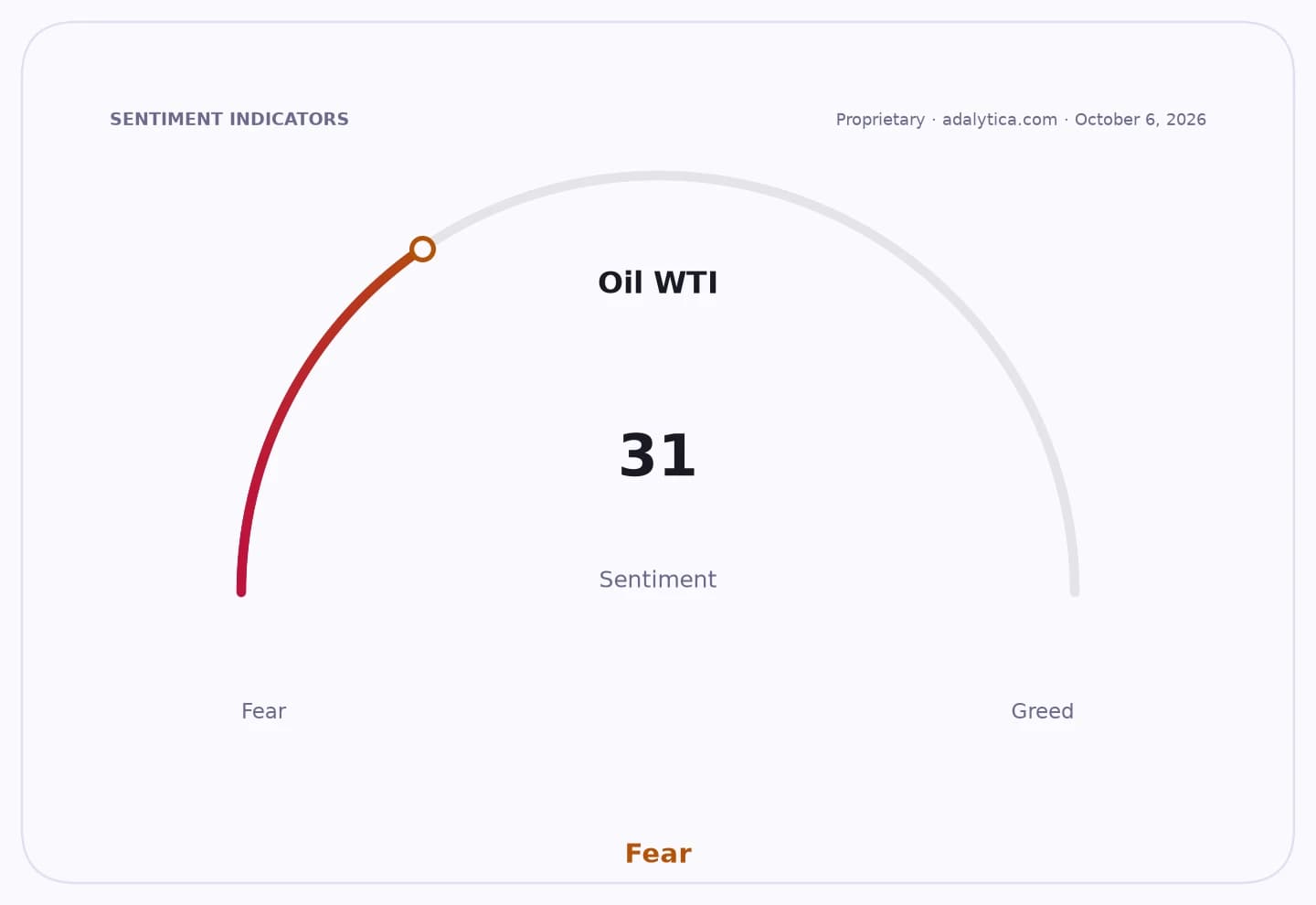
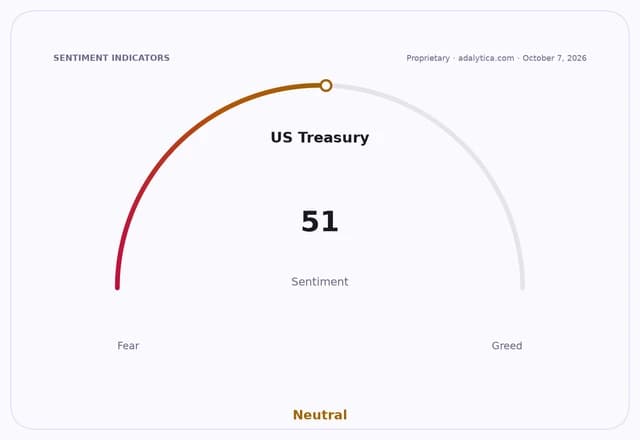
Sentiment IndicatorsⓘProprietary · adalytica.com · October 7, 2026
This is a snapshot — live sentiment, awareness and momentum for 130+ markets update continuously in the dashboard.Open AlphaPulse
That matters because the Fed can slow demand, but it cannot create more oil. In September, the US added just 29,000 jobs, far below economists’ expectations, while second-quarter GDP grew at a 2.2% annualized pace, well below last year’s 4%. That weakens the case for the central bank to hike aggressively to fight an oil shock it did not cause. If it tightens too hard, the risk is not just slower growth but a sharper rise in unemployment.
The linkage between crude and Treasuries has become unusually tight. Haver Analytics’ Mickey Levy has tracked a broad move in which oil and long yields have climbed and fallen together this year. Data from Cboe show the correlation between WTI and the 10-year Treasury yield reached 65% this month, close to the 66% peak seen in 1990. TS Lombard estimates each extra dollar in WTI adds about 0.02 percentage point to the 10-year yield. That is the market logic Trump is up against: lower rates depend less on Fed messaging than on whether oil stops rising.
DCOILWTICO vs DGS10 — macro contextadalytica.com
Explore this data interactively — full history, time series and cross-market comparisons.Open AlphaPulse
The inflation channel is visible in the data. Oxford Economics estimates energy contributed 1.07 percentage points to US inflation in the second quarter and 1.2 points in the third, close to one-third of the increase in overall prices across those periods. Gasoline prices in the US have risen more than 48% since the start of the conflict, according to the American Automobile Association, giving households an immediate squeeze and keeping inflation expectations elevated. Adalytica’s CPI sentiment gauge sits at 98, or extreme greed, while confidence in the Fed’s 2% inflation target remains high but has eased from recent peaks, suggesting markets still see inflation as the main transmission channel rather than a purely policy-driven one.
For investors, the implications are broader than the next Fed meeting. Higher oil and inflation expectations keep pressure on bond prices, raise funding costs for leveraged borrowers and threaten equity valuations, especially in rate-sensitive sectors. The S&P 500’s long-duration names and small-cap stocks typically struggle when yields rise on inflation rather than growth, while energy producers benefit from the same backdrop that hurts consumers and bondholders. USO, an oil ETF, remains well above its 50-day and 200-day moving averages even after a recent pullback, a sign that traders still see geopolitical risk embedded in crude.
The political arithmetic is also awkward for Trump. He has repeatedly argued that lower rates would help mortgages, business borrowing and government interest costs, but the lever that matters most is increasingly in Tehran and Jerusalem, not at the Fed. The White House can either seek a diplomatic deal that lowers oil prices or continue a military posture that risks keeping crude elevated. Reuters and the Wall Street Journal have reported that Washington is sending more military assets to the region even as indirect talks continue, a combination that does little to calm the market in the near term.
The bullish case for bonds is that any ceasefire, temporary truce or negotiated de-escalation could pull crude sharply lower and give Treasuries room to rally. The bearish case is that escalation keeps oil near or above $100 a barrel, locks in higher inflation expectations and leaves the Fed with less flexibility than the market wants. For now, the direction of US borrowing costs is being set less by Jerome Powell than by the possibility that Trump may need a deal with Iran before he gets the lower rates he wants.
| Entity | Gains | Losses |
|---|---|---|
| Oil producers | ▲Higher crude prices | ▼Lower oil prices |
| Bond investors | ▲Easier inflation outlook | ▼Higher yields |
| US consumers | ▲Cheaper fuel | ▼Rising gasoline costs |
| Trump administration | ▲Diplomatic de-escalation | ▼Prolonged Iran conflict |